Kū‘ena‘ena
Kū‘ena‘ena
Site: 5
Kapiʻolani Park
Phase 2: Now Open
Graphic Sign Installation
Title
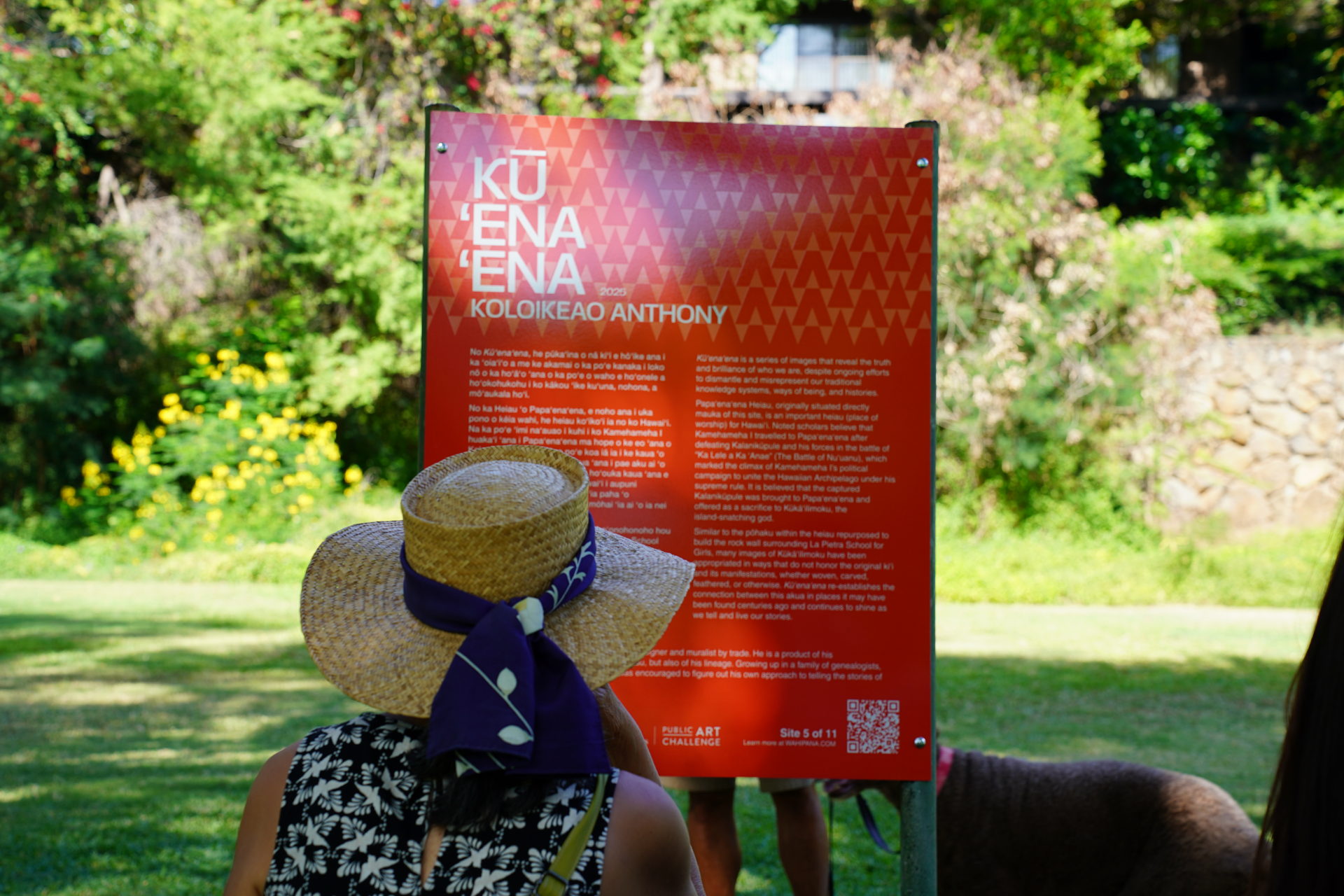
Kū‘ena‘ena
(2025)
Artist(s)
Koloikeao Anthony
Collaborators
Daniel Kauwila Mahi
Site: 5
Kapiʻolani Park
Phase 2: Now Open
Graphic Sign Installation
Title
Kū‘ena‘ena
(2025)
Artist(s)
Koloikeao Anthony
Collaborators
Daniel Kauwila Mahi
Kū‘ena‘ena
(2025)
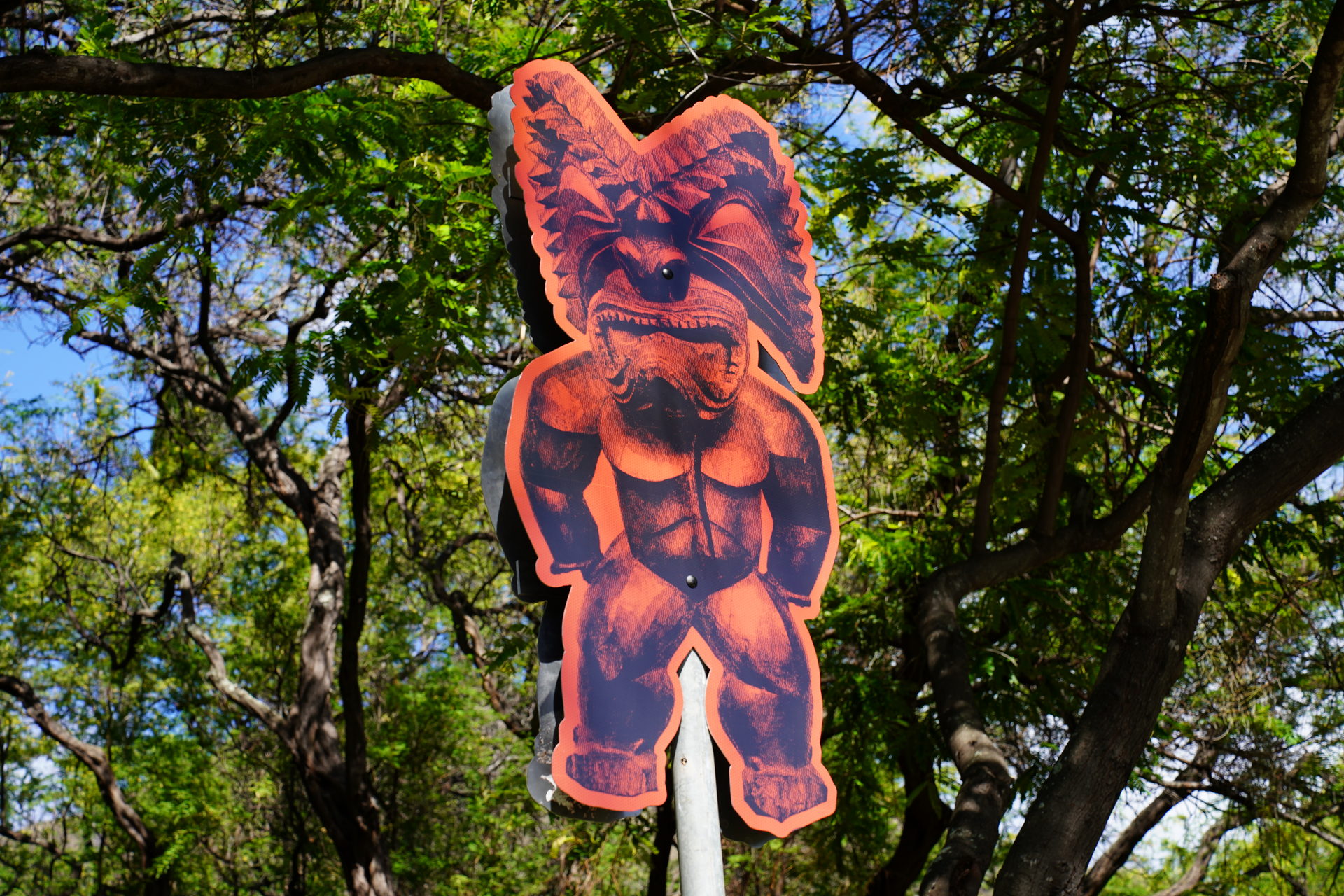
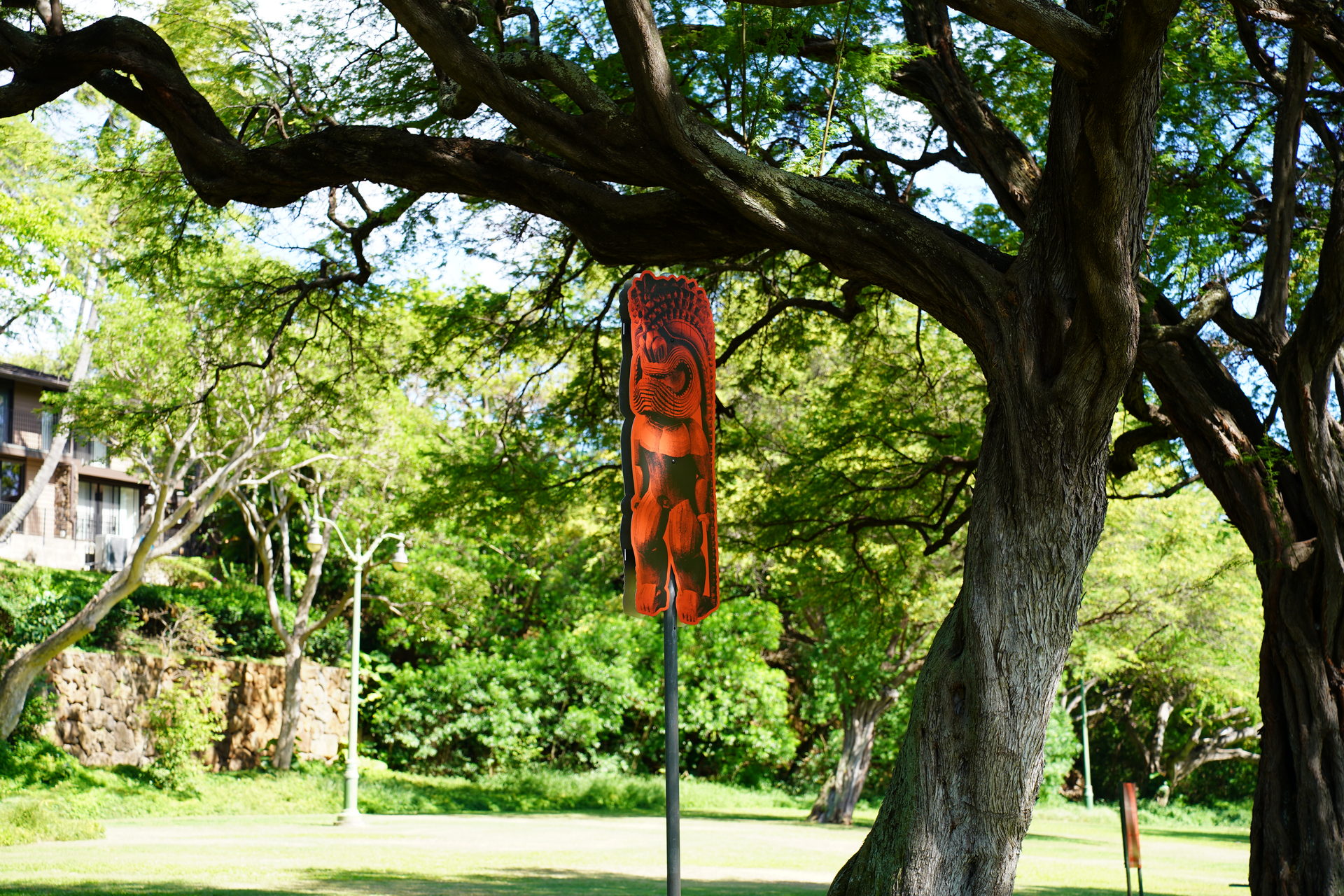
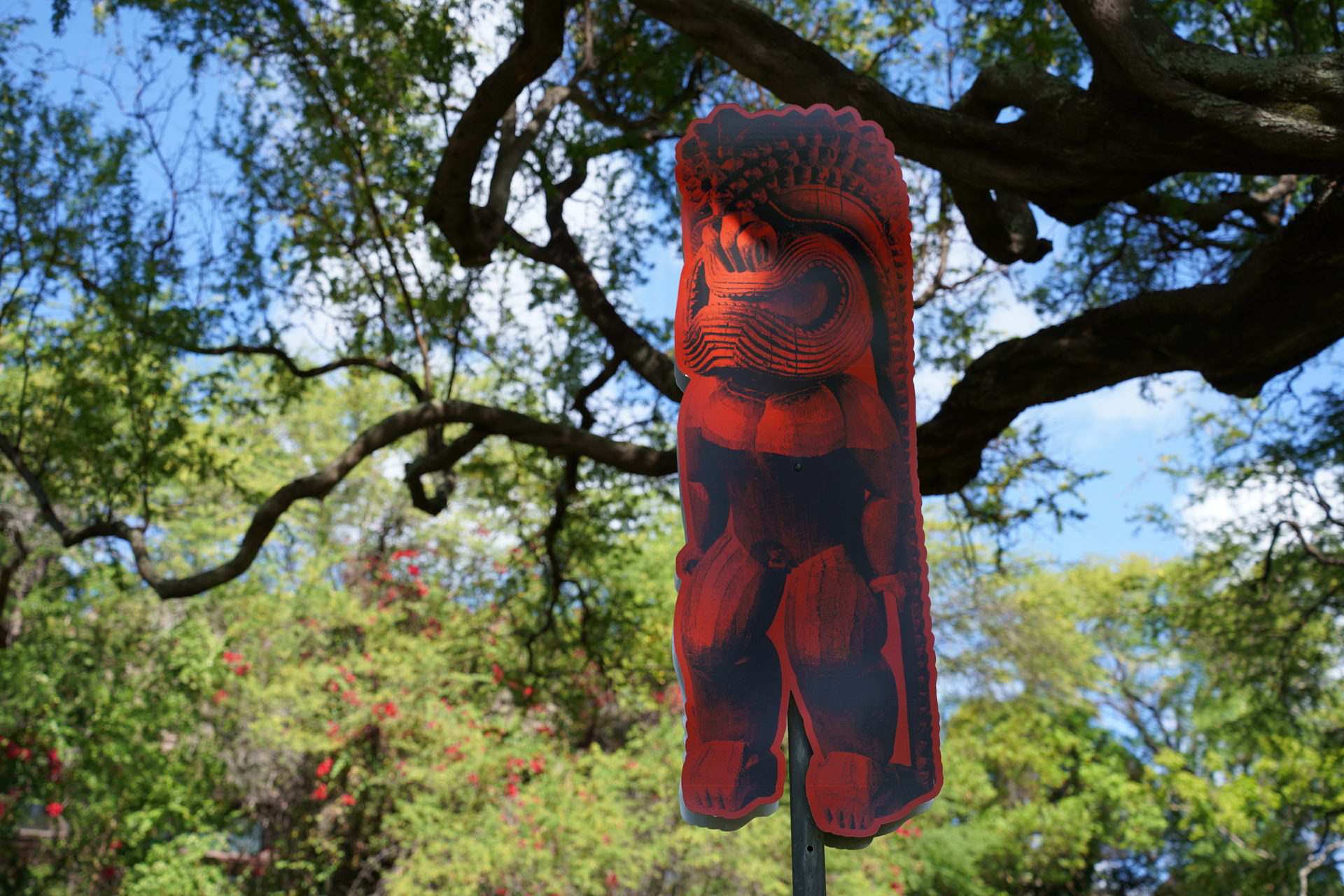
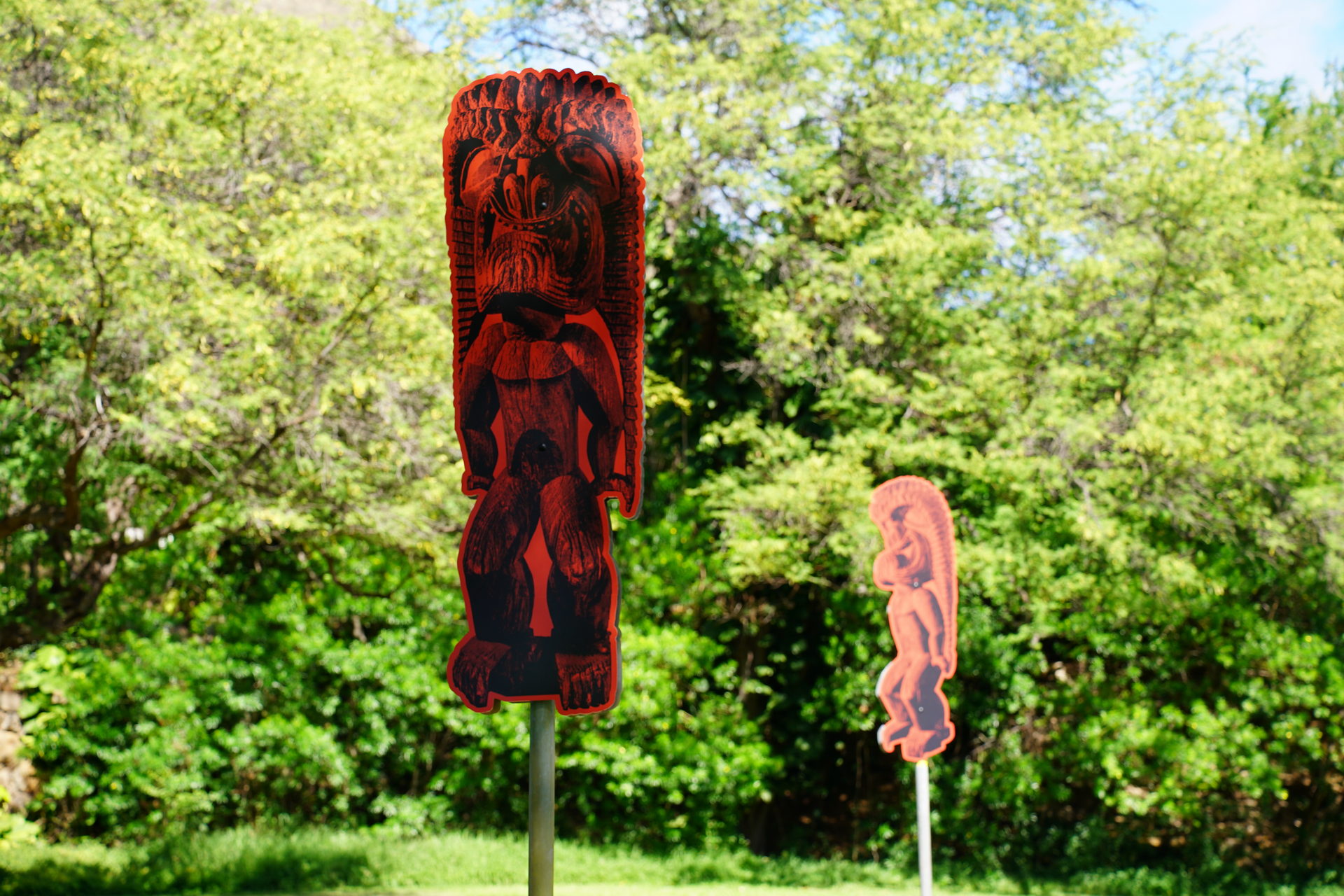
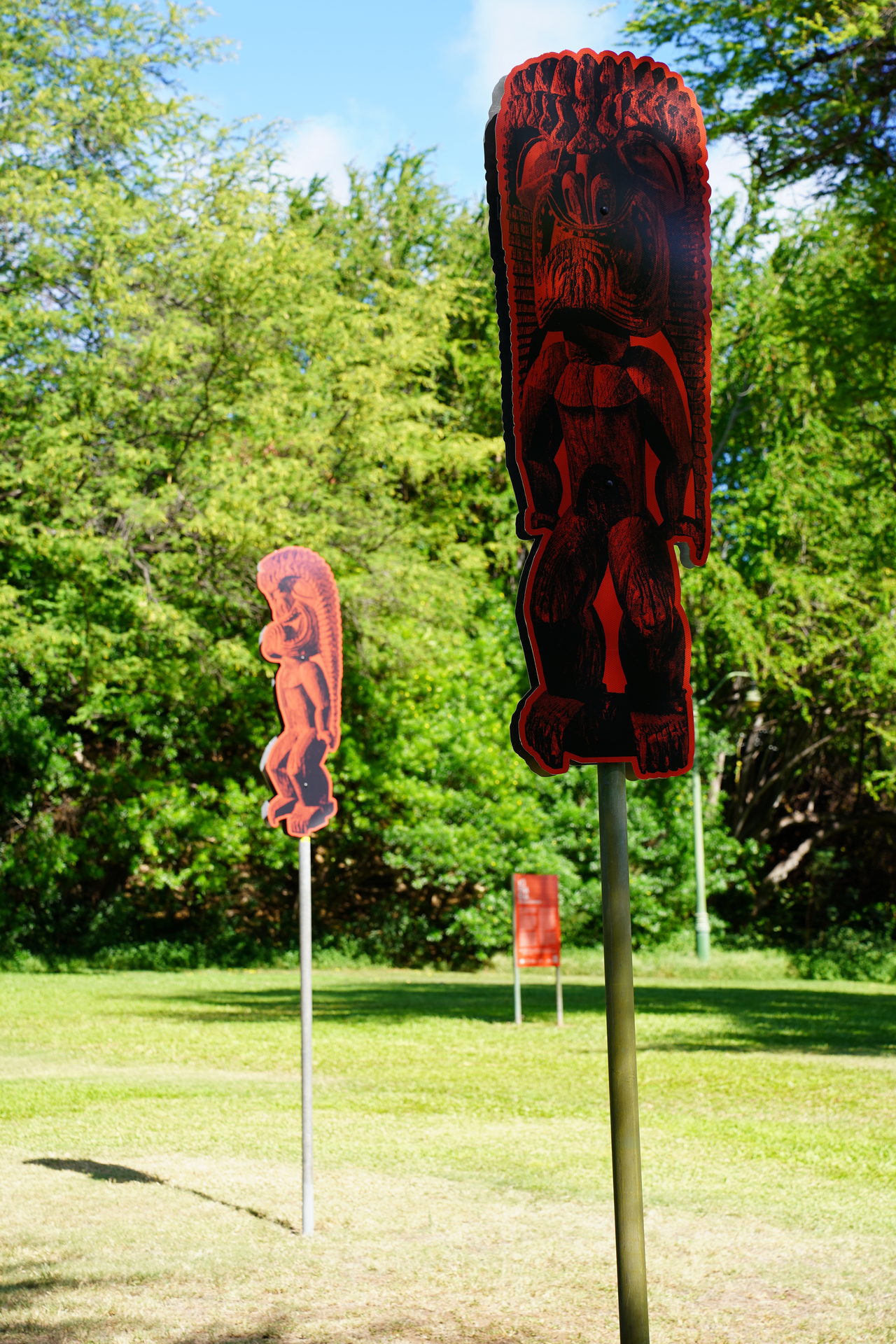
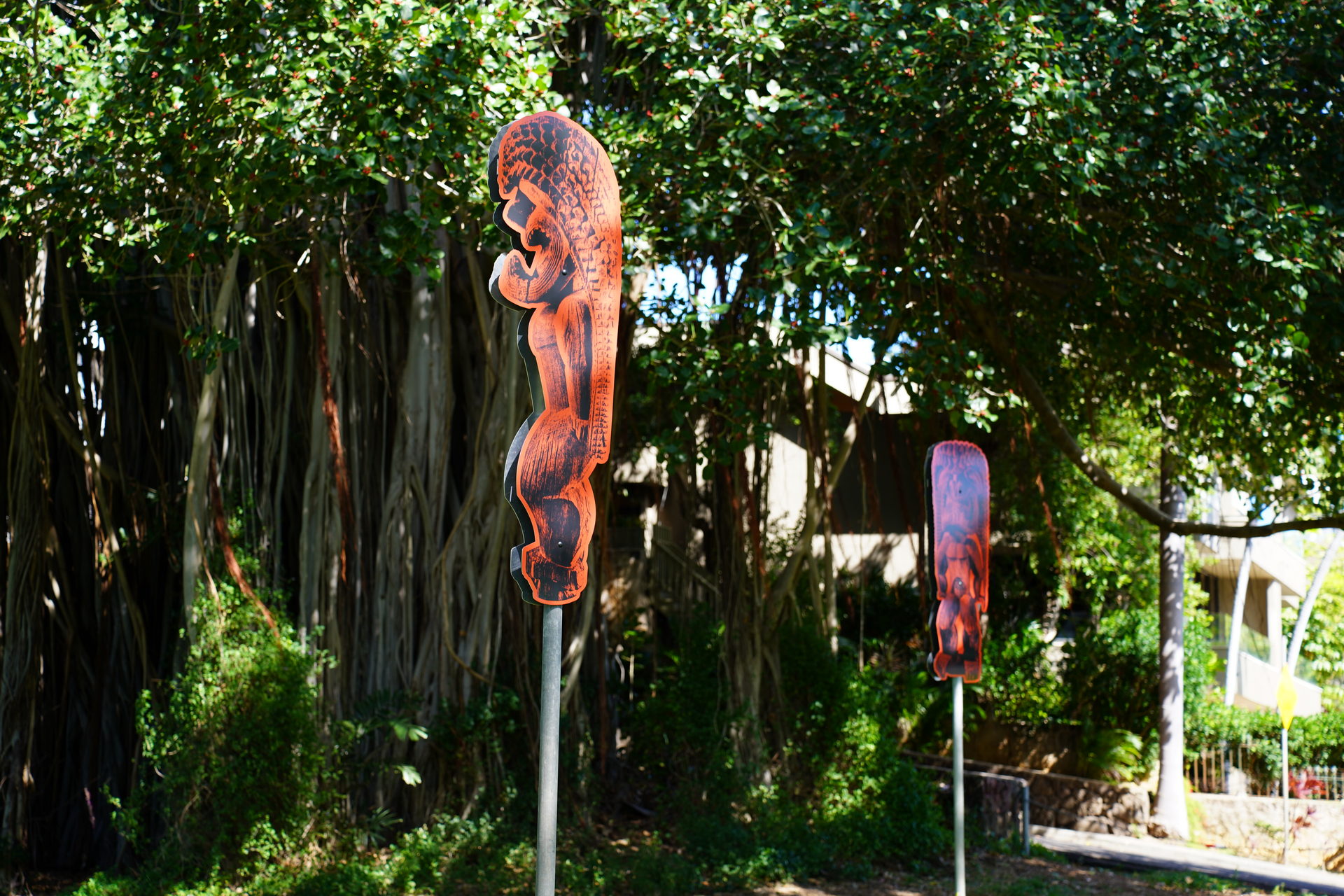
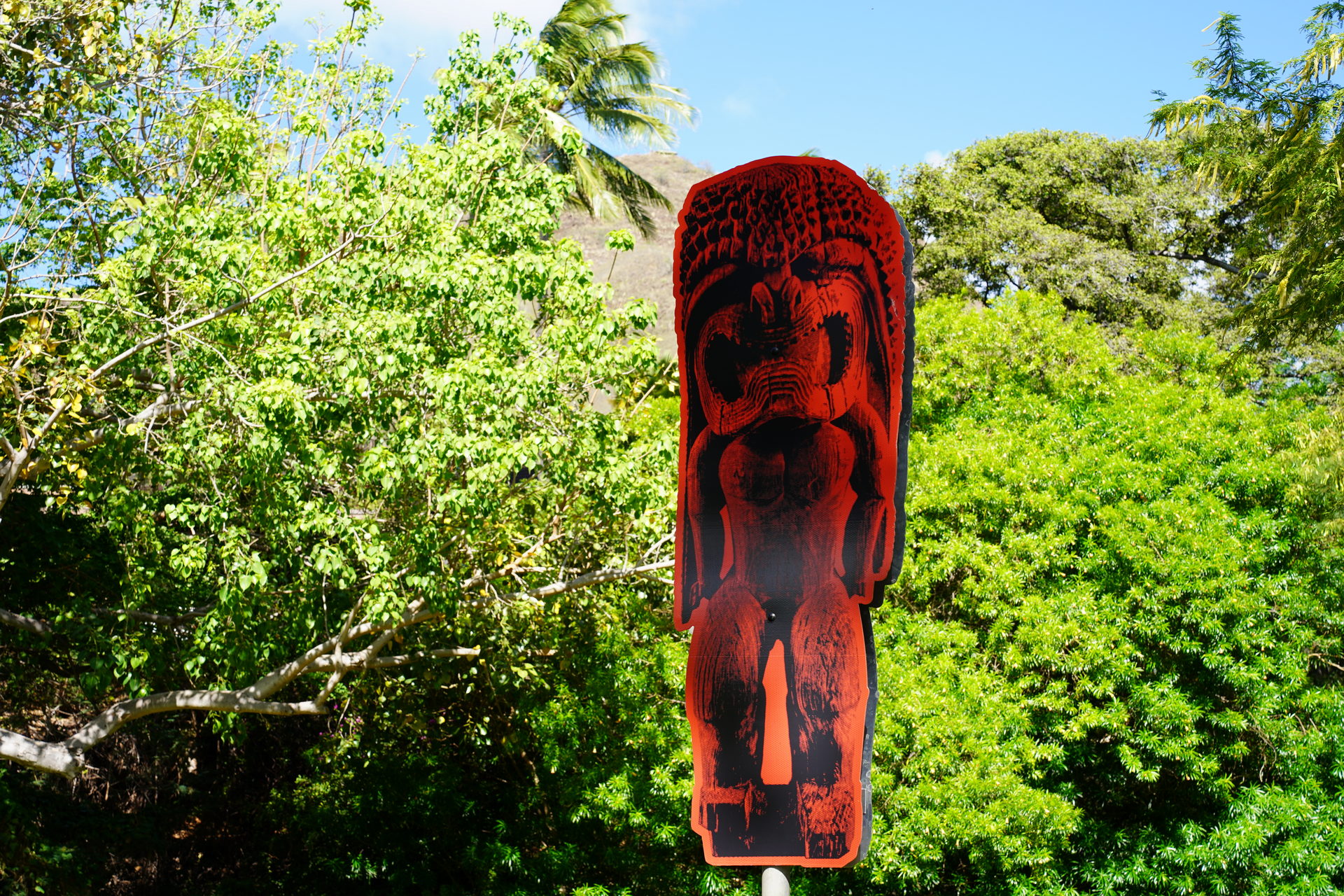
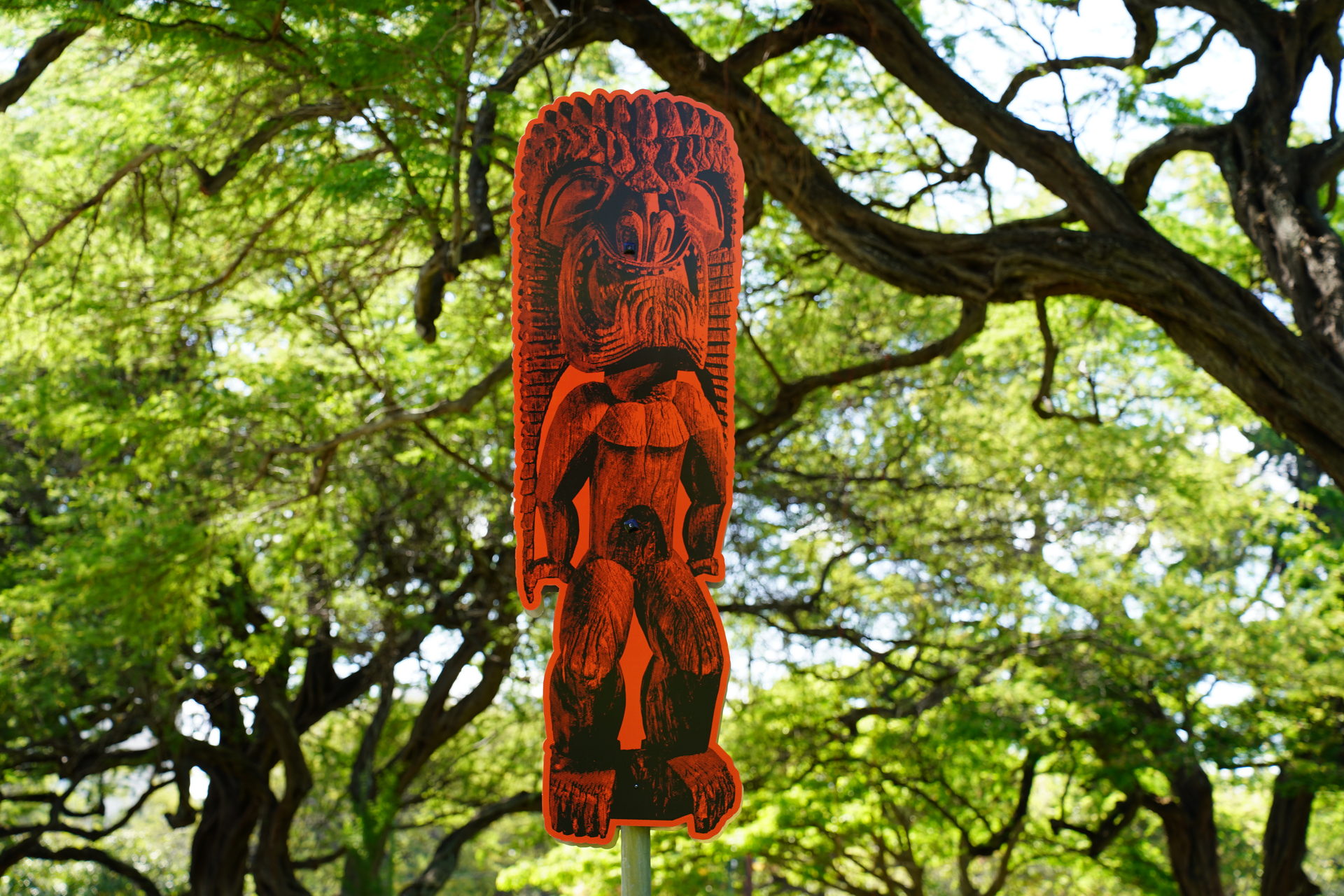
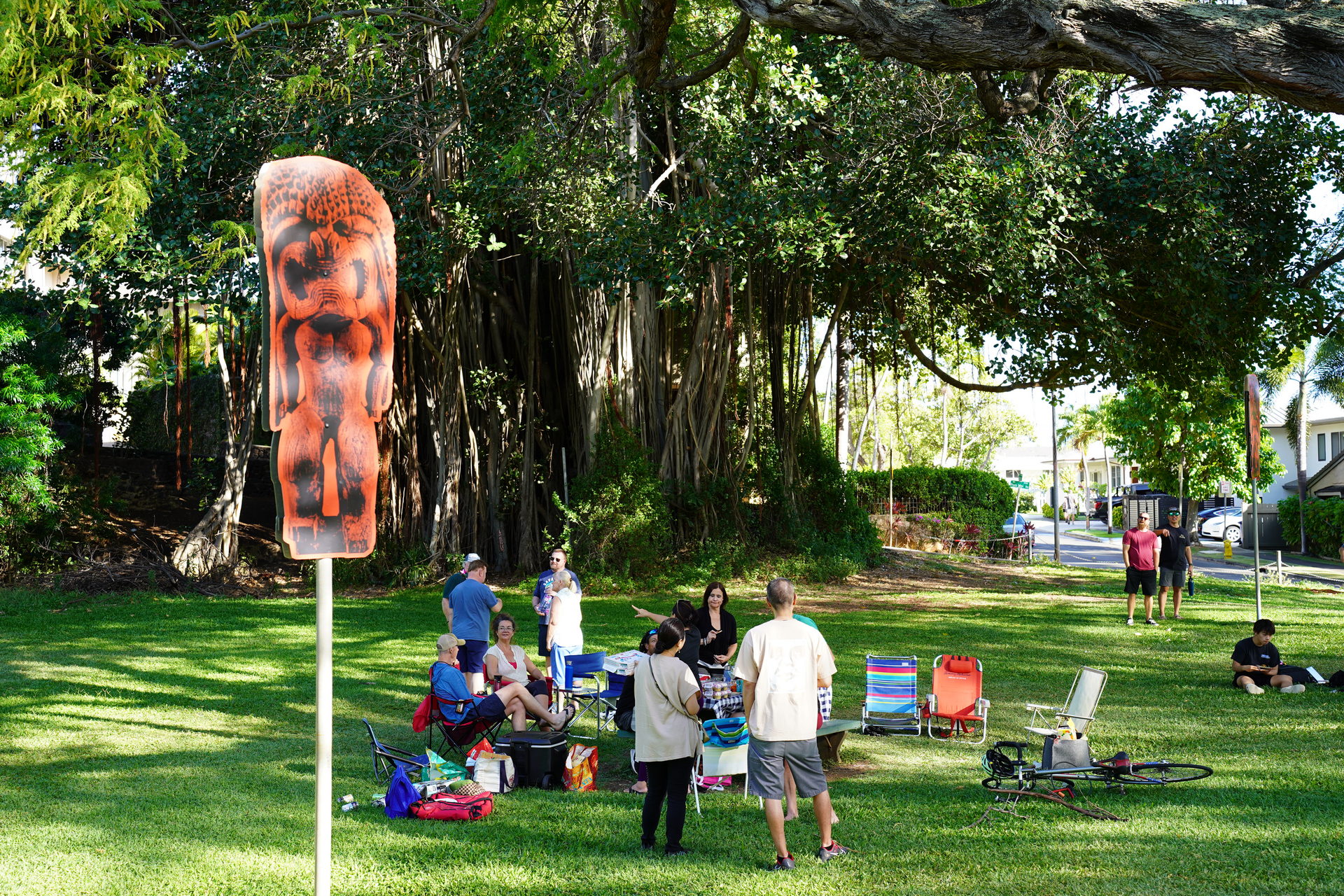
Kū‘ena‘ena is a series of images that reveal the truth and brilliance of who we are, despite ongoing efforts to dismantle and misrepresent our traditional knowledge systems, ways of being, and histories.
Papa‘ena‘ena Heiau, originally situated directly mauka of this site, is an important heiau (place of worship) for Hawai‘i. Noted scholars believe that Kamehameha I travelled to Papa‘ena‘ena after defeating Kalanikūpule and his forces in the battle of “Ka Lele a Ka ‘Anae” (The Battle of Nu‘uanu), which marked the climax of Kamehameha I’s political campaign to unite the Hawaiian Archipelago under his supreme rule. It is believed that the captured Kalanikūpule was brought to Papa‘ena‘ena and offered as a sacrifice to Kūka‘ilimoku, the island-snatching god.
Similar to the pohaku within the heiau repurposed to build the rock wall surrounding La Pietra School for Girls, many images of Kūka‘ilimoku have been appropriated in ways that do not honor the original ki‘I and its manifestations, whether woven, carved, feathered, or otherwise. Kū‘ena‘ena re-establishes the connection between this akua in places it may have been found centuries ago and continues to shine as we tell and live our stories.

Kū‘ena‘ena
Daniel Kauwila Mahi
Kūkāʻilimoku is an akua Hawaiʻi that has the capacity to seize ea, pre-colonial forms of self-determination and liberation rooted in Hawaiian cosmogony. For centuries, Kūkāʻilimoku has been central in contests for governance over whole islands and guided many aliʻi (chiefs) on their political campaigns to rupture whole systems and provide protection for their makaʻāinana (subjects). Oral accounts of Kūkāʻilimoku were well-established and eventually published in archives such as Hawaiian Language Newspapers. Detailed accounts of Kūkāʻilimoku are especially prevalent in the writing of S. M. Kamakau. Excerpts detail that the dainty-sacred feathers named Hinawaikoliʻi from atop the forehead of Kīwaʻa, a legendary bird that was captured and slain by Waikelenuiaʻīkū, and amassed more mana after brushing the thighs of another akua named Nāmakaokahaʻi. Kūkāʻilimoku was then brought by Pāʻao to Hawaiʻi from Kahiki and was eventually in the possession of Līloa, ʻUmi-a-Līloa, Kalaniʻōpuʻu, and finally Kamehameha. It is said that whoever is in possession of Kūkāʻilimoku is destined to rule.
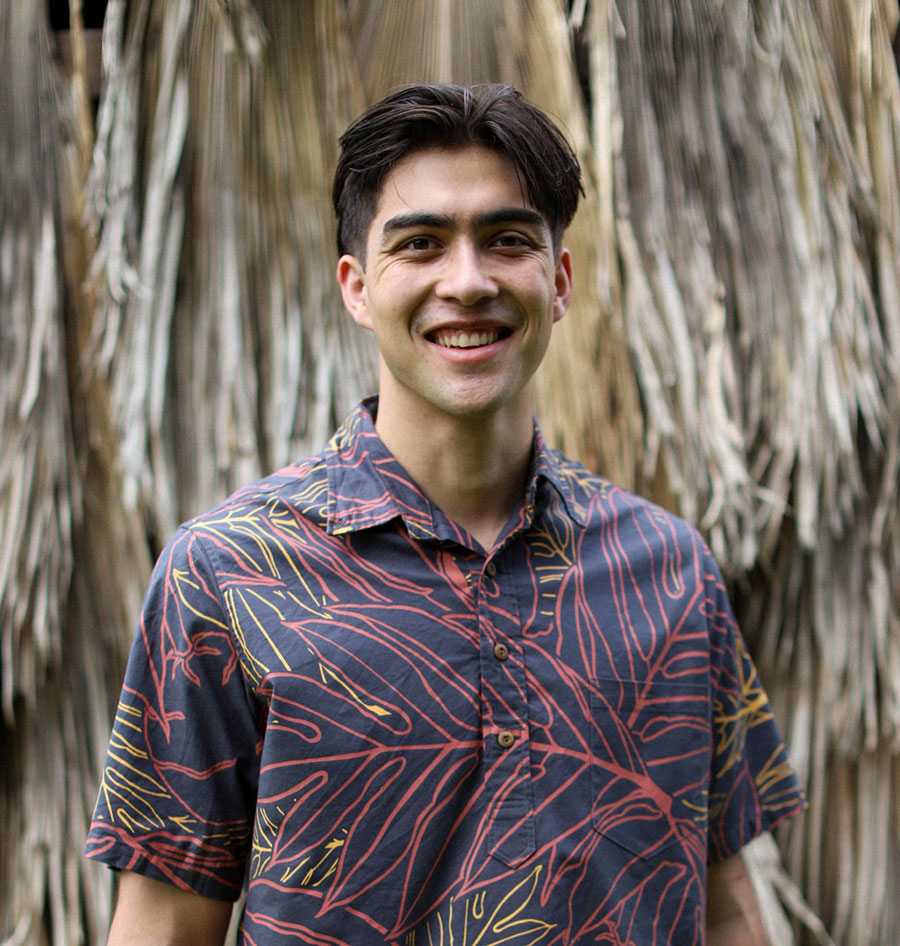
Koloikeao Anthony
Photos: City & County of Honolulu