Laniwahine
Laniwahine
Site: 10
Hale‘iwa Beach Park
Phase 3: Now Open
Sculpture
Title
Laniwahine
2026
Artist(s)
Amber Khan
Jordan Souza
Collaborators
Paige Okamura
Site: 10
Hale‘iwa Beach Park
Phase 3: Now Open
Sculpture
Title
Laniwahine
2026
Artist(s)
Amber Khan
Jordan Souza
Collaborators
Paige Okamura
Laniwahine
2026
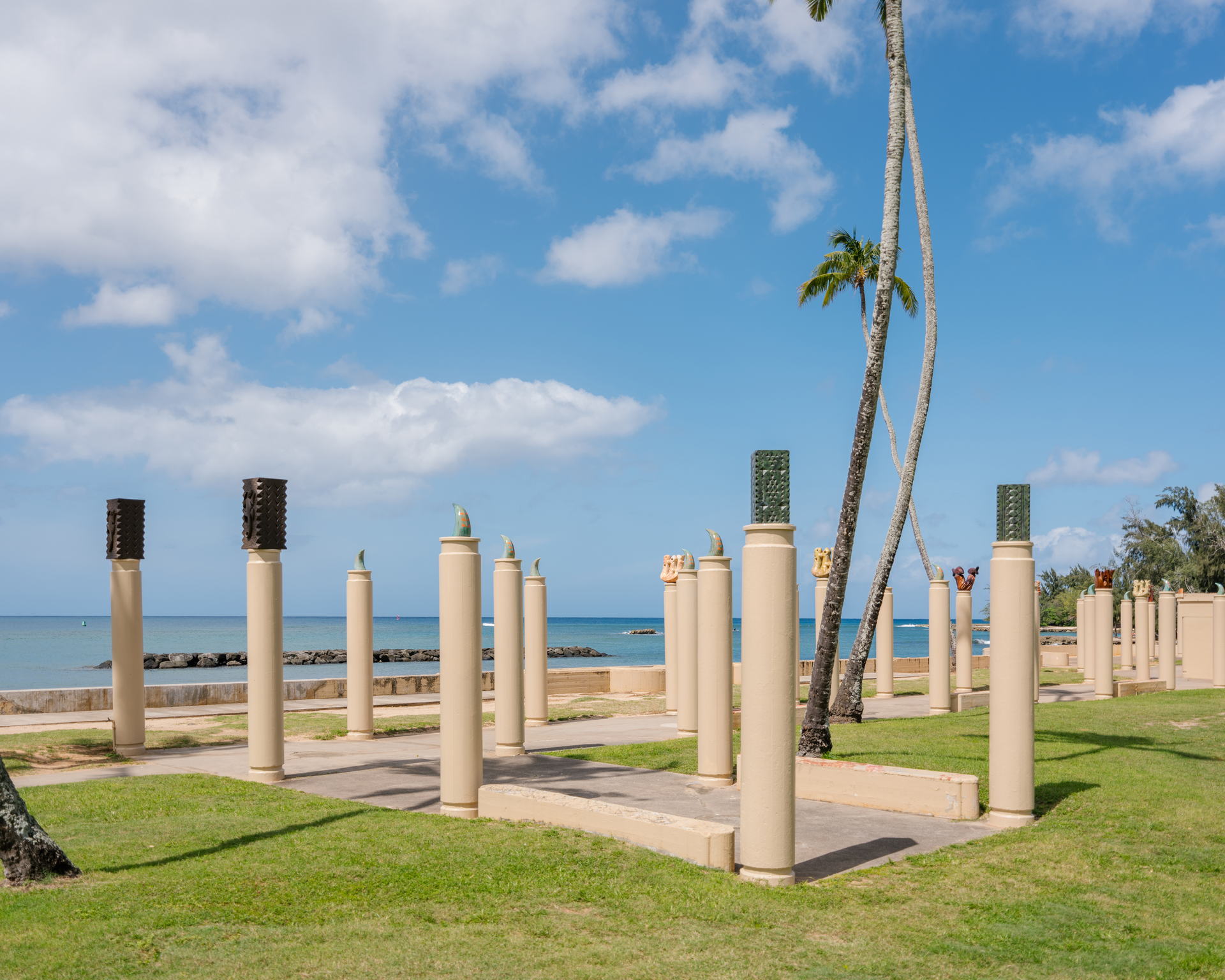
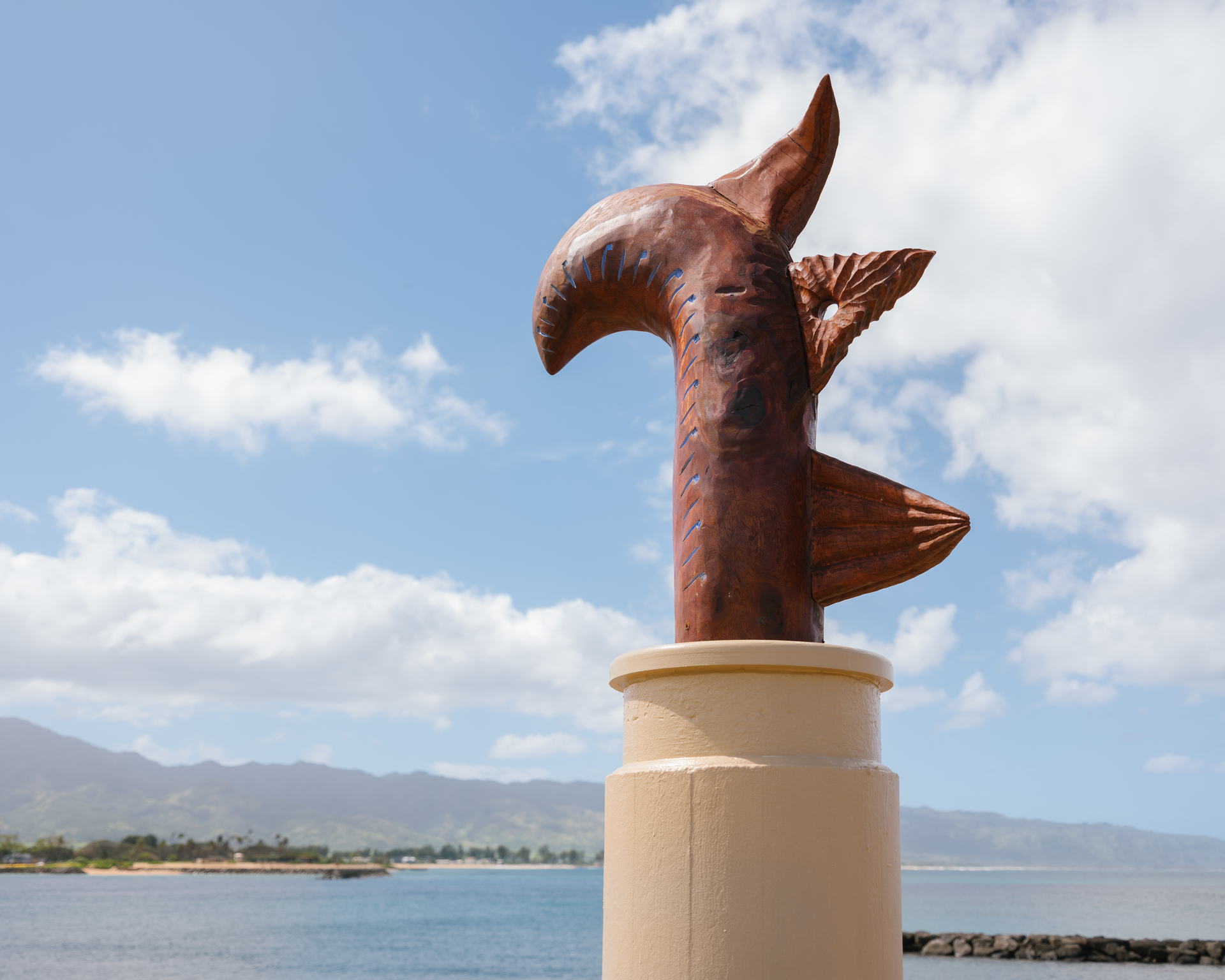
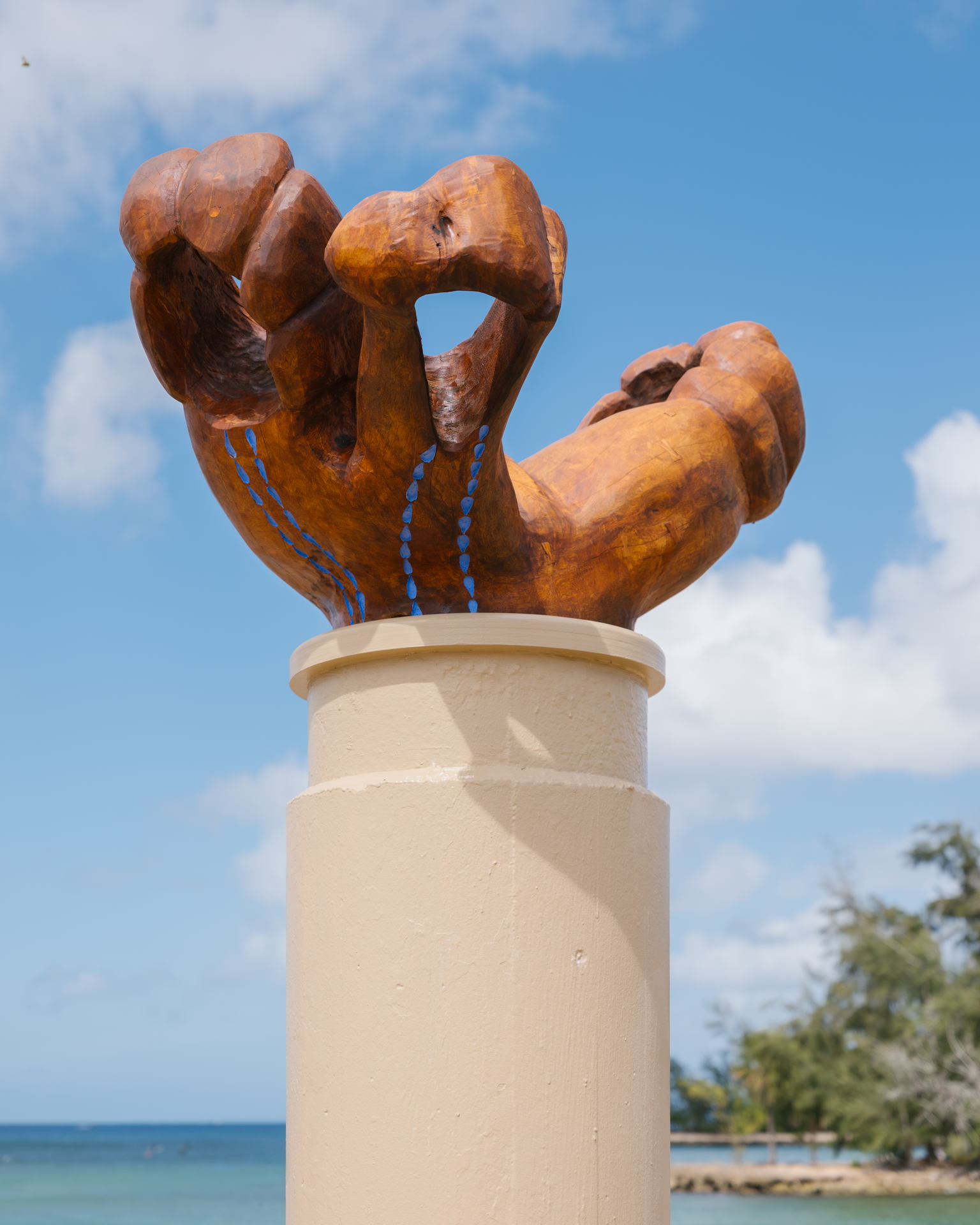
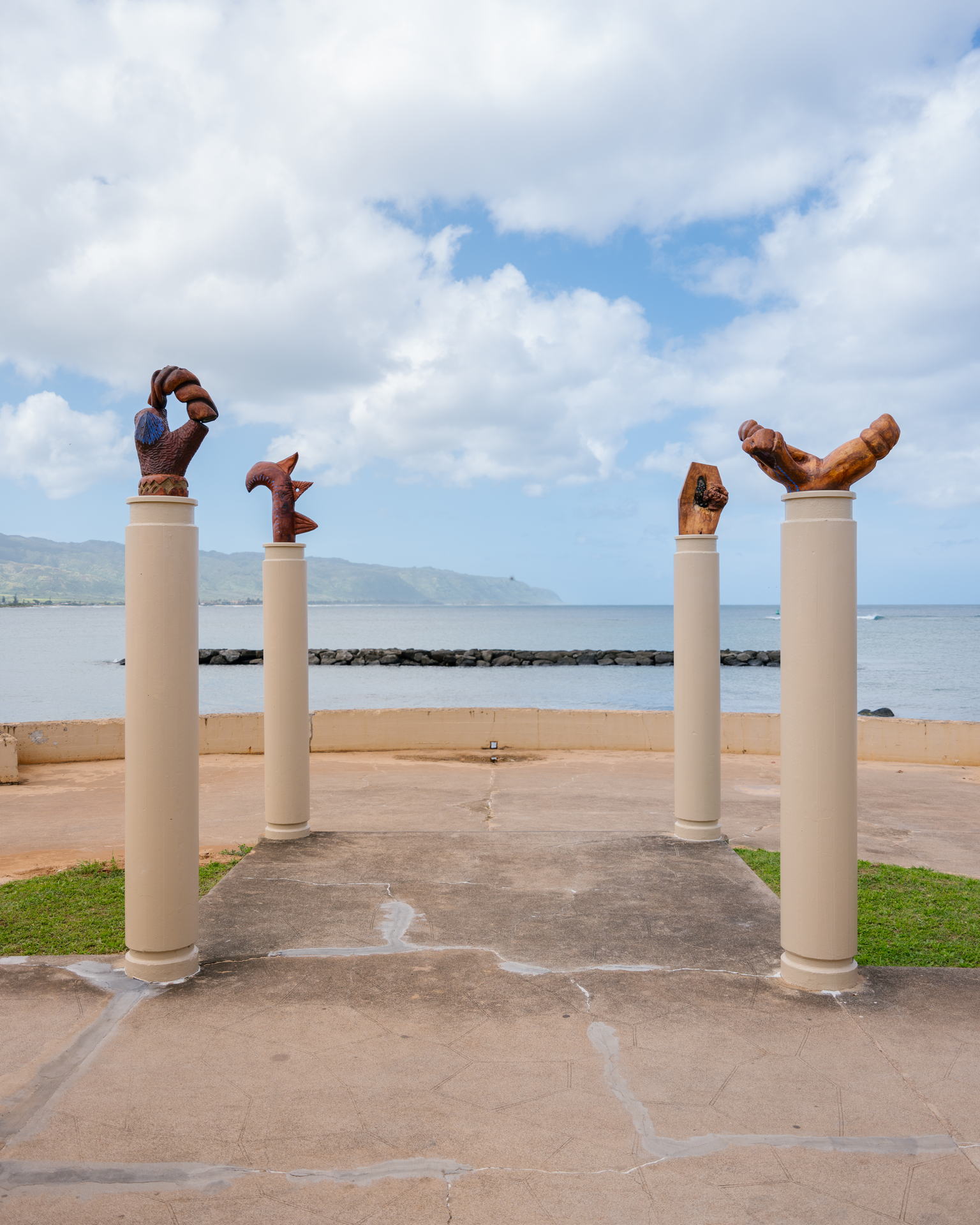
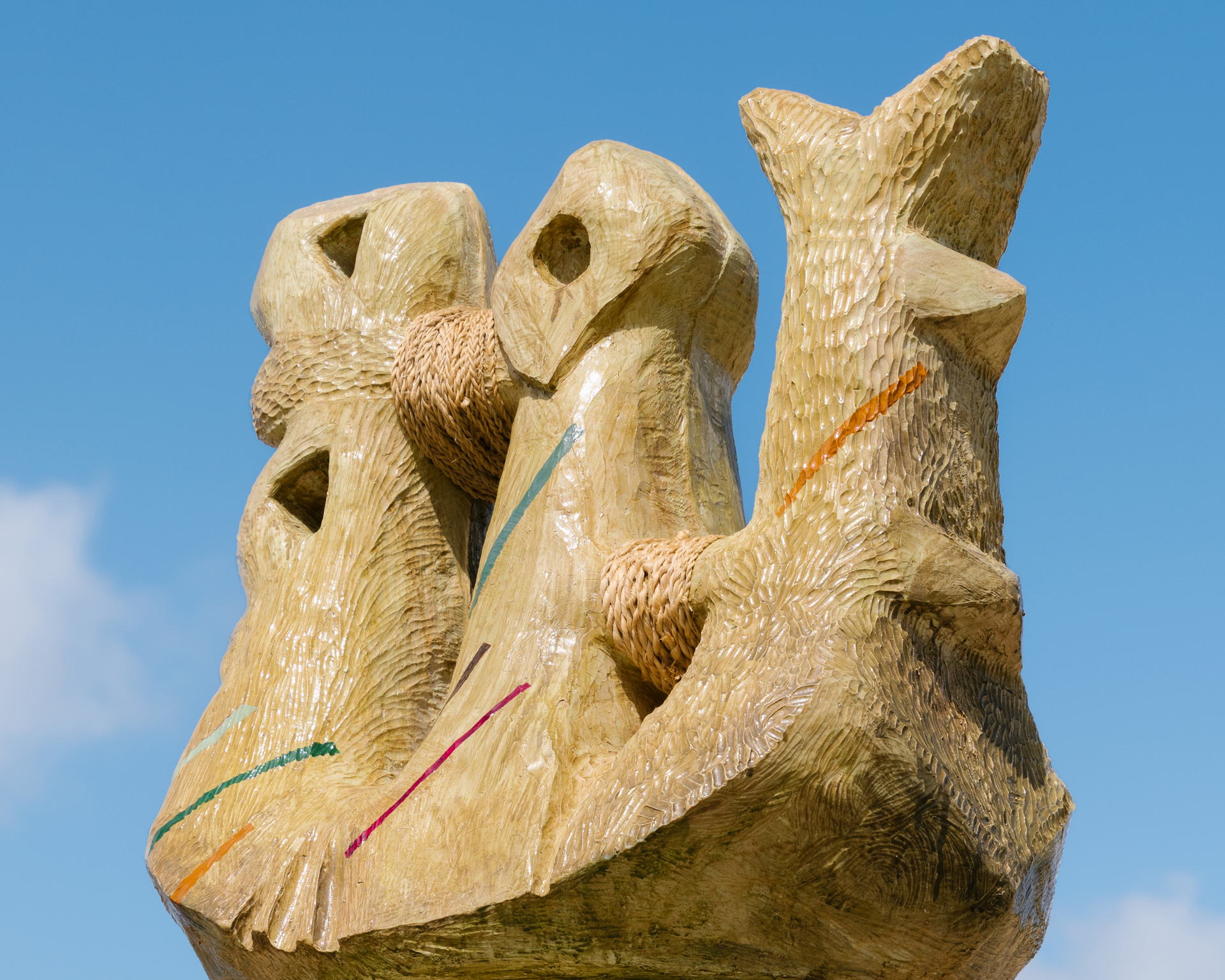
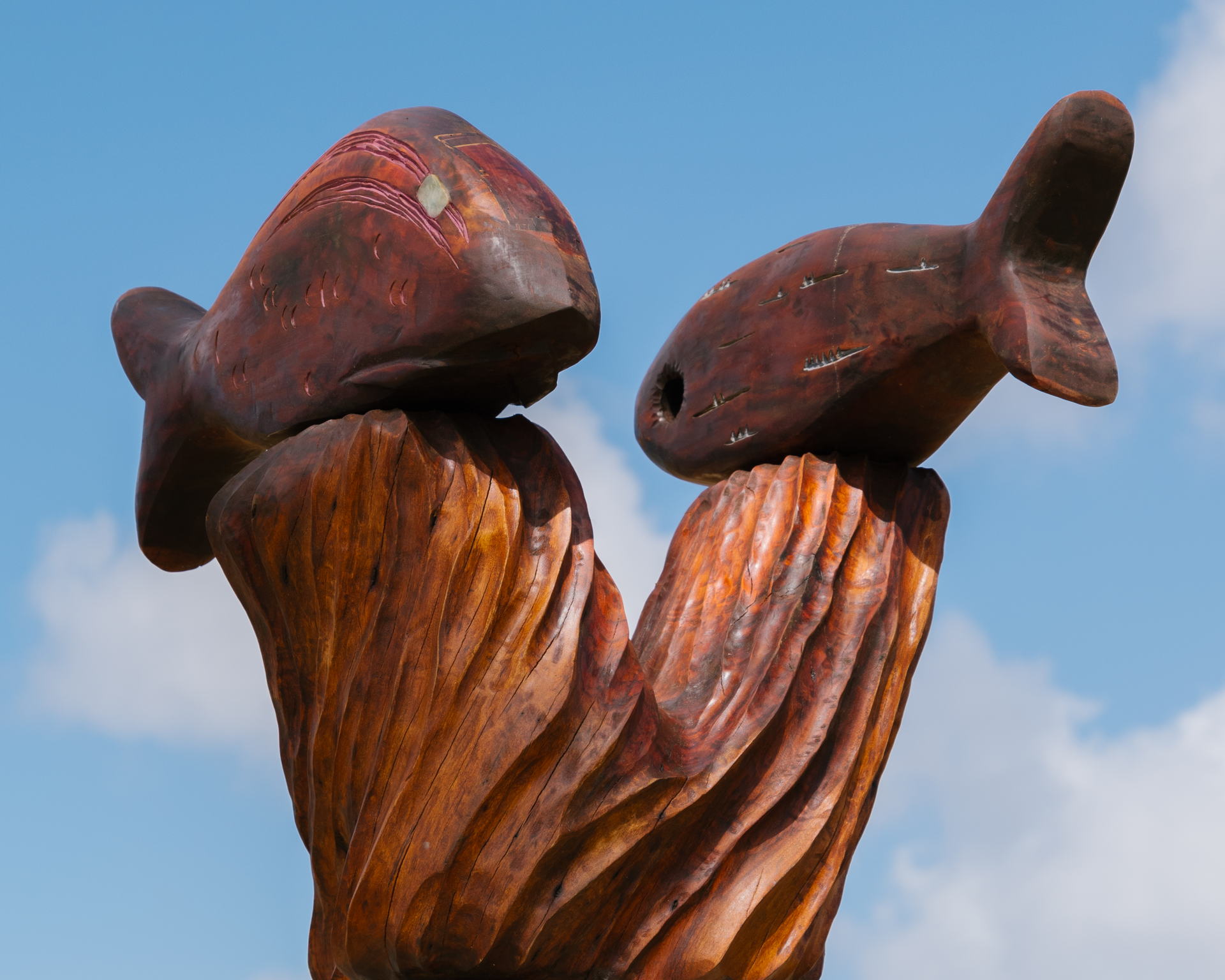
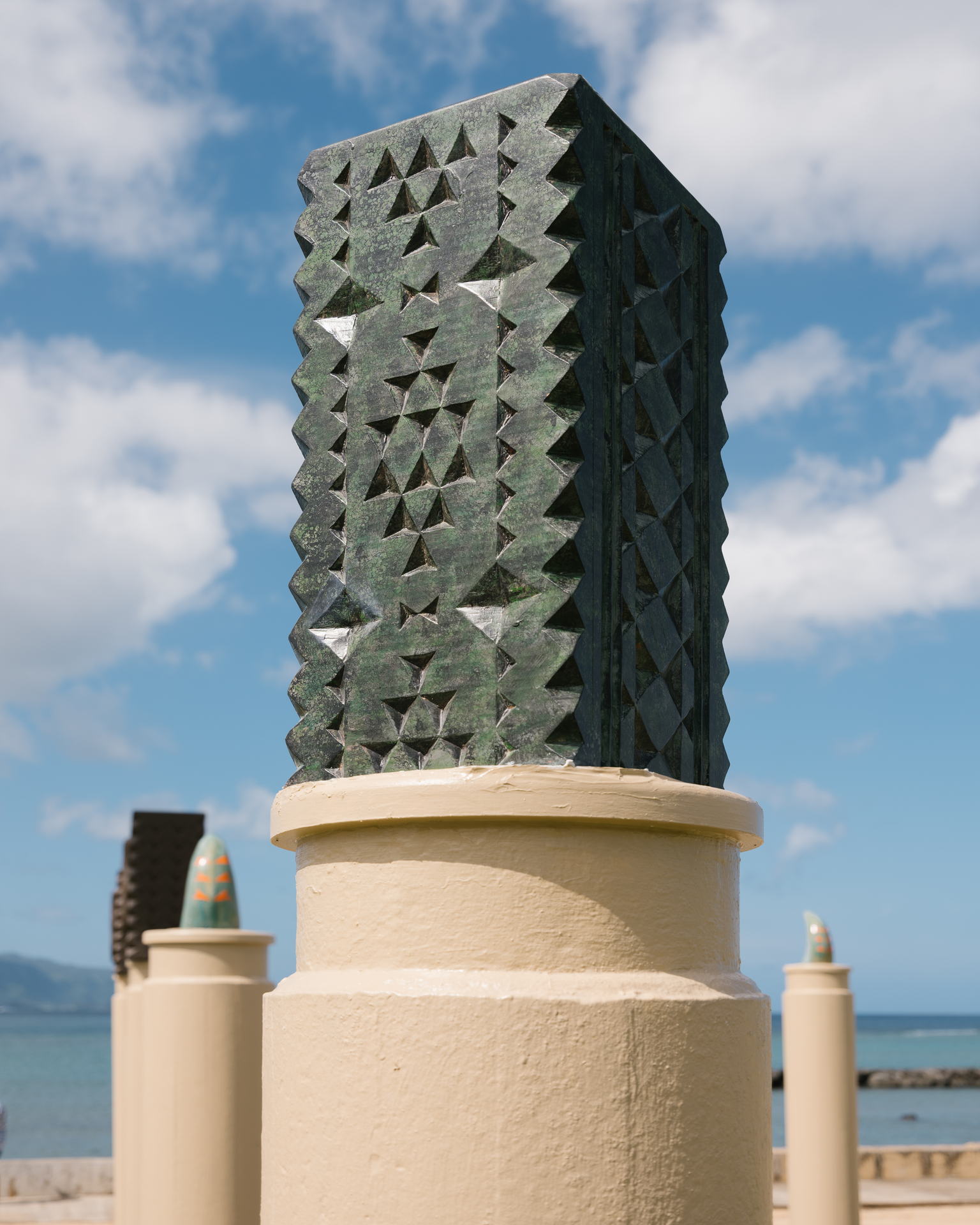
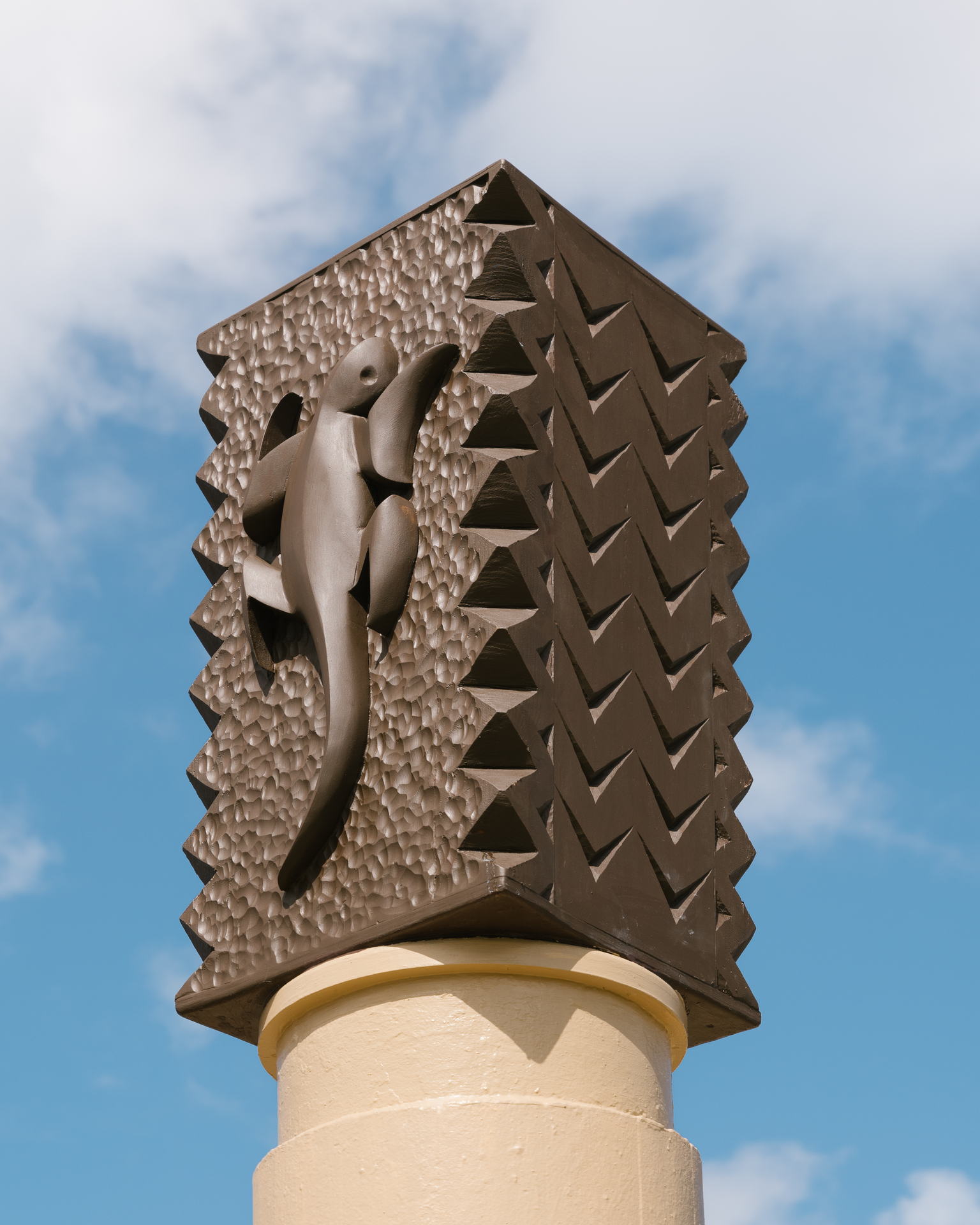
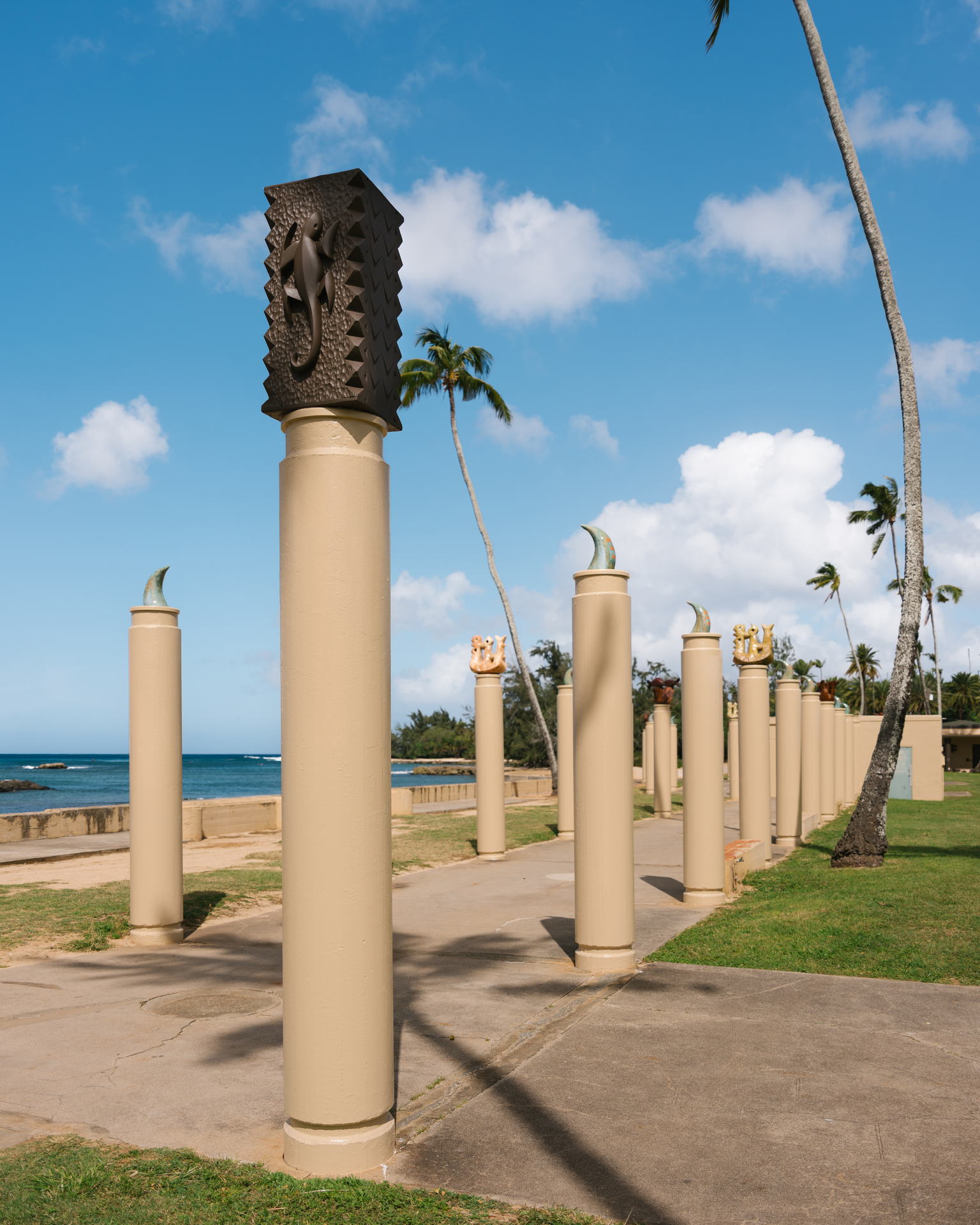
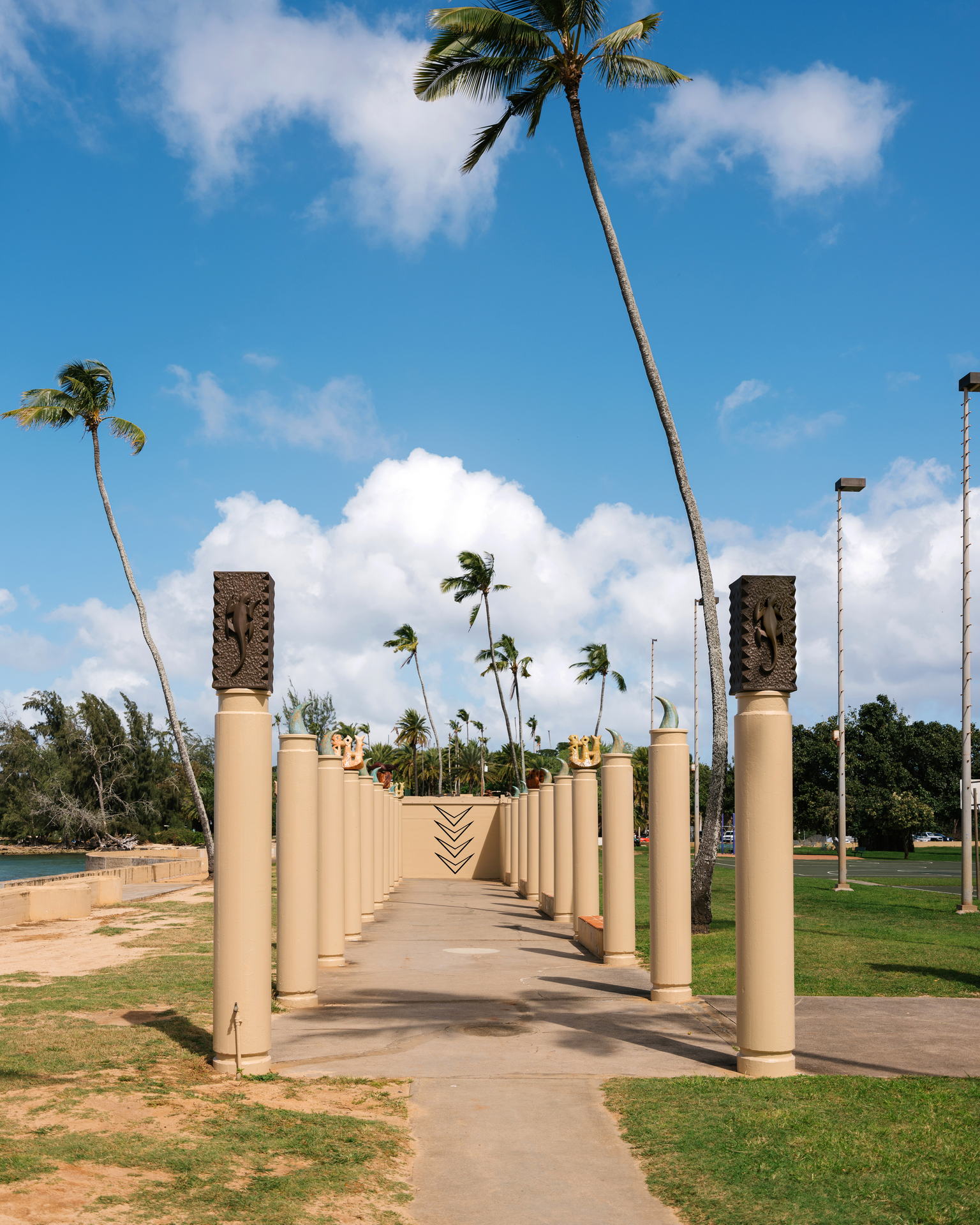
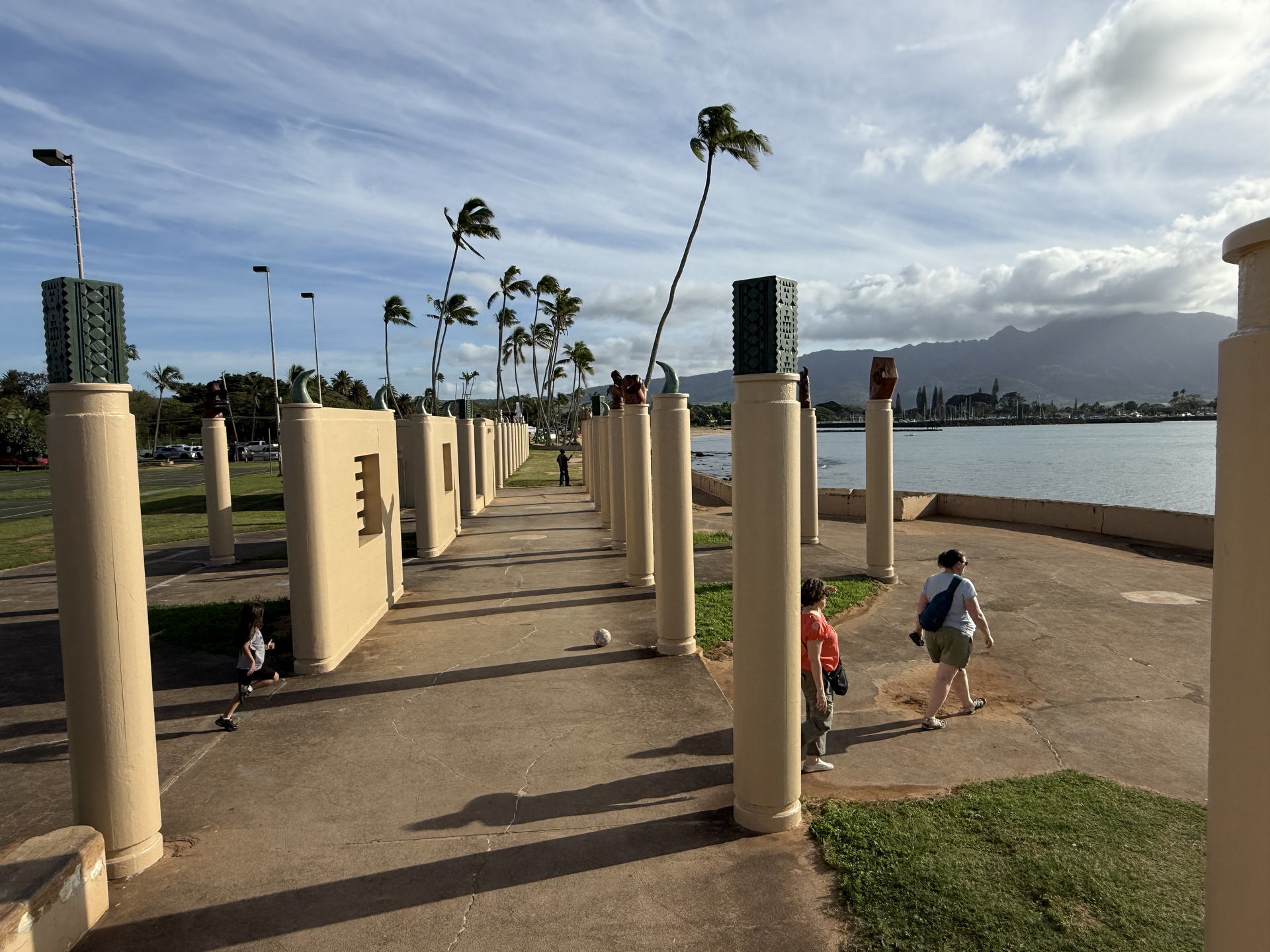
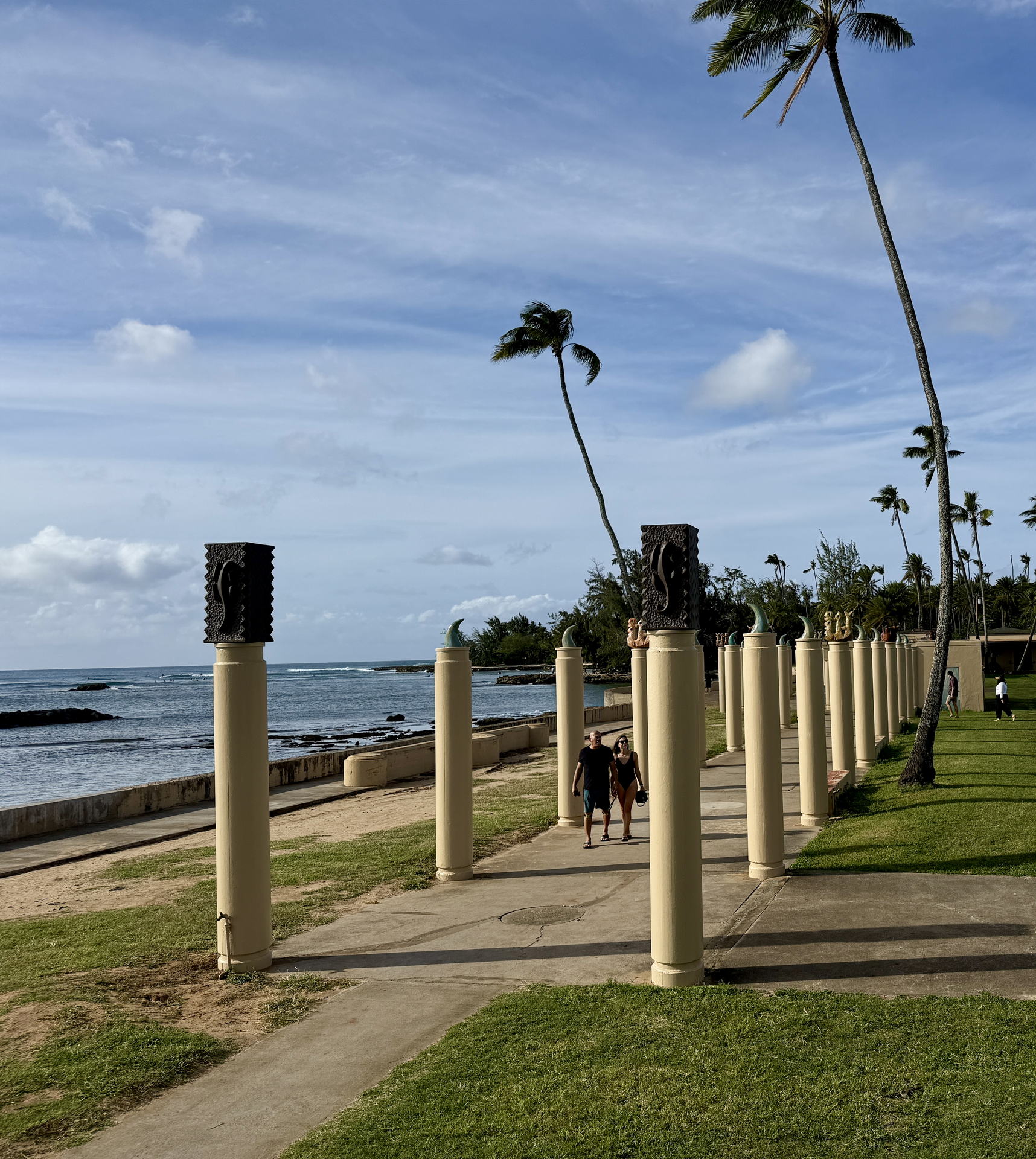
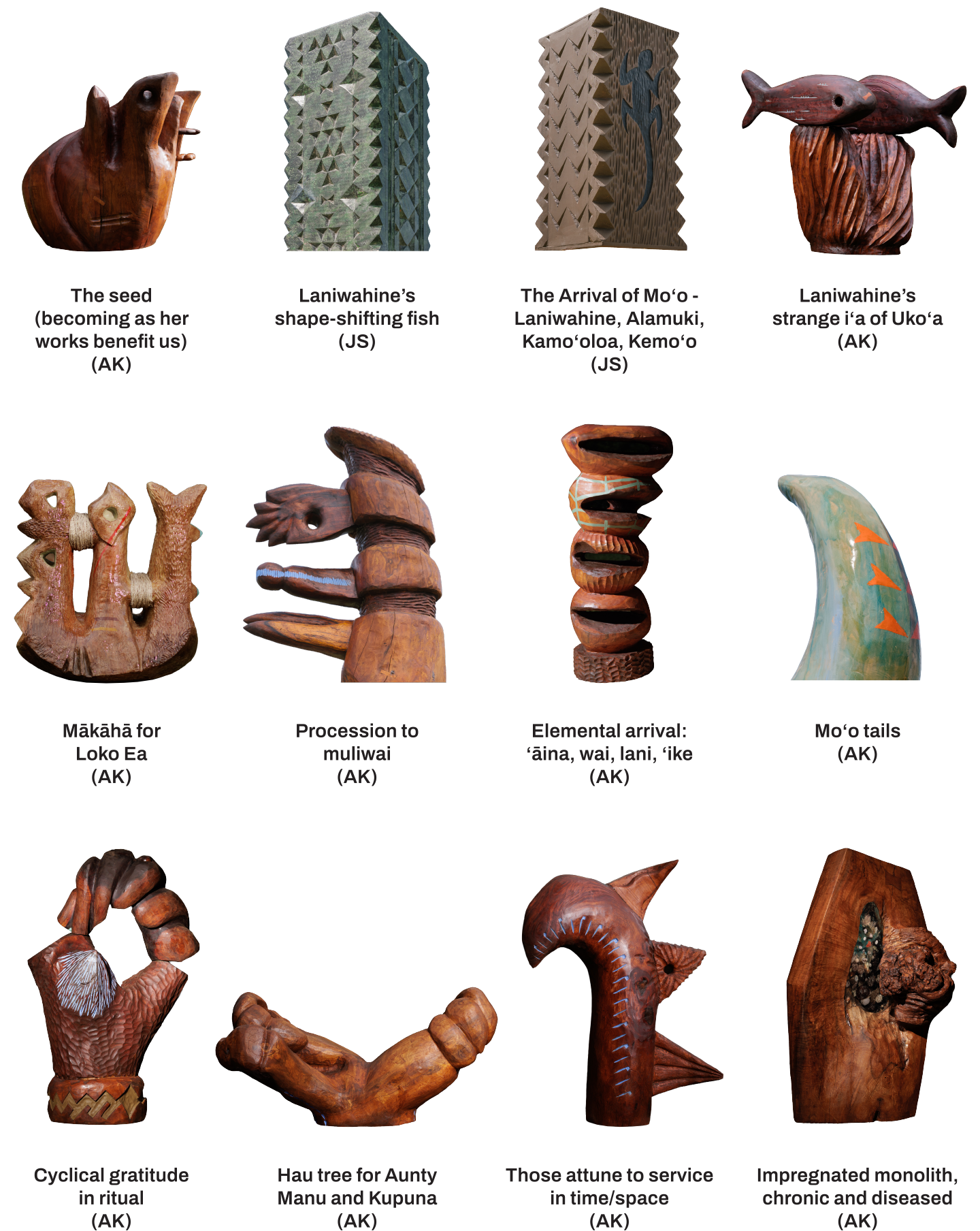
Set within the remains of a 1930s pavilion, this installation features 48 sculptural works by Amber Khan and Jordan Souza that unfold the story of Laniwahine, an ali‘i mo‘o (a shape-shifting water guardian), and her three servants. The sculptures visually integrate archival records from nūpepa (1870–1885), translated by Paige Okamura, with the living memory shared through talk-story with Waialua community members.
According to the mo‘olelo of Keaomelemele, this area Pua‘ena, Waialua, was the first landing site of the mo‘o clan in the Hawaiian archipelago. A procession of mo‘o was brought here by Kamo‘oinanea (the matriarch mo‘o) from Nu‘umealani (an ancestral land), where they gathered in pairs before traveling across O‘ahu spreading throughout the archipelago.

Nā Hunahuna no Laniwahine
Paige Okamura
In the moʻolelo of Keaomelemele, all moʻo are said to have been created from the body of Kamoʻoinanea, who is the elder of the gods Kāne and Kanaloa. The land of Nuʻumealani, far off in Kahiki, is her domain. From this land, she is able to communicate through her preternatural voice, which can be heard in far-off lands. Kamoʻoinanea also controls the clouds and their formations. The divination of such cloud formations was a profession in old Hawaiʻi, performed by experts called mea kilokilo (observers). In the moʻolelo of Keaomelemele, Kamoʻoinanea teaches Kū and Hina the craft of reading clouds and their omens so that they may communicate to their daughter Keaomelemele in the land Kealohilani. Moʻo, therefore, are strongly connected to clouds, as they are water deities. For example, the powerful moʻo Kuwahailo had the ability to shape-shift into a large and ominous cloud.

Amber Khan
Amber Khan, a mixed-media artist from Honolulu, incorporates materials such as papier-mâché, wood, joint compound, fiber, paint, and natural objects to explore visual transformations of the natural world. Khan’s upbringing in Honolulu, as the child of an American mother and a Pakistani immigrant father, has significantly shaped her sense of belonging. Her work explores the hybrid nature of identity, examining how we connect to place and to one another through a multitude of ways, shaping our perspectives by synthesizing a myriad of influences. She also explores the impact of the natural world on both our individual and collective histories.

Jordan Souza
Jordan Souza is a Native Hawaiian artist. Originally a mixed media artist, today he choosesto focus primarily on wood carving. Jordan uses contemporary and ancient imagery and concepts in his work. Born on the island of Oʻahu, he grew up along the eastern side of the island. He received his B.F.A. in sculpture from the University of Hawaiʻi in 2007. While attending the University he received awards such as the Doris C. Crowell award for excellence in figure sculpture. In 2010 he was selected to do an Artist Residency with Tautai in New Zealand. Upon returning to Hawaiʻi he helped to create the first college-accredited Hawaiian Carving Class in 2011. In 2023 he was invited to represent Hawaiʻi at the Firi A Tau gathering of native practitioners in Tahiti. Since 2011 he has been one of the lead instructors In the Kālai Laʻau class at Windward Community College. Jordan also keeps very busy doing commercial and private commissions.
Photos: Lila Lee