Ka‘imina‘auao Kahikina:
To tell the story of Ualani Davis’ Kuʻu Pua i Kohelepelepe, we must first ground it in place. Kohelepelepe is located in Maunalua in the ahupuaʻa Waimānalo. Maunalua is a Wahi Pana that once held pristine fishponds guarded by the mo’o freshwater guardian named Laukupu. Nestled within this landscape and rising prominently above the town of Maunalua is Kohelepelepe, or Kohe Lele, the vaginal labia or the flying vagina.
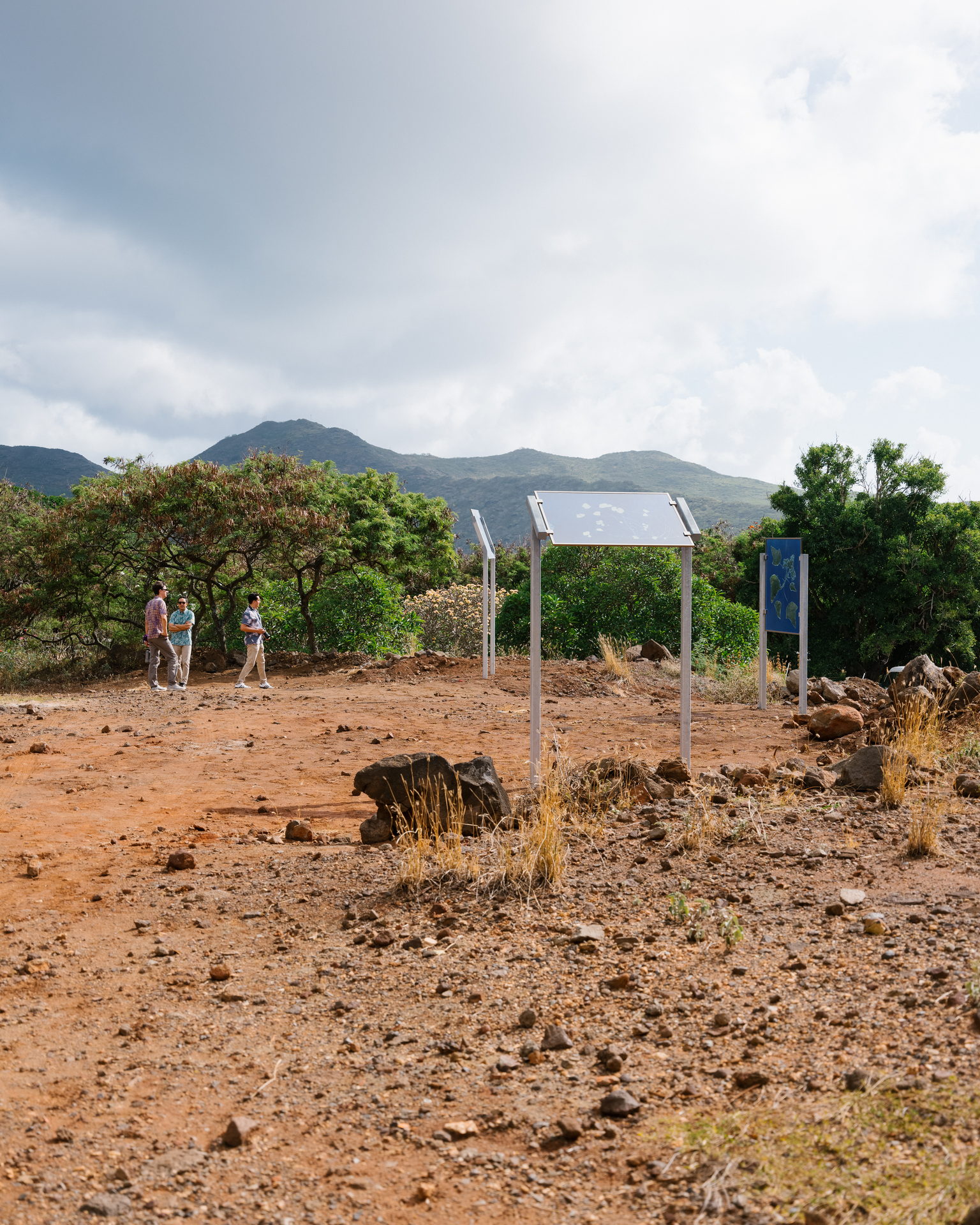
At the base of this crater is a quaint botanical garden which houses plants from around the world. Ualani’s pieces are situated here in an embrace of native and non-native flora and fauna. The moʻolelo of Kohe Lele or Kohelepelepe is a story of consent and resistance, one that teaches us traditional modes of understanding regarding the complexities of domestic violence and the intricacies of familial bonds.
Martha Beckwith, informed by Mary Kawena Pukui, writes that Kapoulakina’u, also known as Kapo Maʻi Lele, the sister of Pelehonuamea, saves Pele from a violent attack on her person by Kamapua’a. Kamapua’a and Pele are known to have a tumultuous relationship both as lovers and enemies. According to this moʻolelo, the pig deity Kamapua’a forces himself onto Pele near Kalapana on the island of Hawaii. This violent attack catches the attention of Kapoulakina’u, a powerful matron god of hula and sorcery. Thus, her senses would have been attuned to the cries of help from her sister who in her own right commands the fires of Kilauea.
Kapoulakina’u detaches her vagina from her body and throws it with all her might toward Oʻahu. This leaping vagina captures the attention of Kamapua’a and a chase ensues. He leaves Pele and follows Kapoulakina’u’s vagina toward the crater, popularly known today as Koko Head. Her vagina lands on the summit of this crater, Pu’uwai, Genitalia Hill, making a shapely indent on its slopes nearest the jagged sea cliffs of Makapu’u. Once the indent is made, Kapoulakina’u withdraws her genitalia and hides it in Kalihi Valley. Because of her sacrifice and mana, Kapoulakina’u saves her dear sister Pele from Kamapua’a’s apathetic lust. This moʻolelo teaches us that consent is a loina Hawaii, Hawaiian principle, that relations must carry with it all forms of consent.
In an ultimate act of resistance, Kapoulakina’u unmoors her sexual organ from her body, revealing the extent to which kinship relations are upheld. Therefore, Kohelepelepe is a symbol of the feminine carrying immense power. In Hawaiian thinking, genitalia were prized for the reproductive power. Many Mele Mahiʻai reproductive chants were composed for high ranking Aliʻi as the Ma’i are the foundation of all genealogical connections. These chants were composed using Kaona, symbolic and layered language, which honors the Ma’i and its genealogical potential. For example, Queen Liliuokalani’s Ma’i was named Anapau, frisky, and a chant was composed to describe its actions, movements and erotic power in relation to the continuation of a chiefly lineage.
Queen Liliuokalani was a prolific writer and composer. Her many mele, songs, haunt and entice with poetic prose of pleasure, sorrow, love, and affection. Her composition Aloha’Oe has inspired the imagination of many who dream of visiting Hawaii shores. While imprisoned for eight months at Iolani Palace in 1895, the queen wrote the mele Kuʻu Pua i Paoakalani, which speaks of her two gardens, Paoakalani in Waikiki and Uluhaimalama in Pauoa Valley. This mele is a fond recollection of Paoakalani, her estate, where the queen spent considerable time composing and writing.
As an expert in Hawaiian composition, the queen employs Kaona in this particular mele by alluding to a rare blossom in her garden. This likely refers to a faithful companion or trusted confidant during her imprisonment. Uluhaimalama, also referenced in the song, was a ku’oku’a, independence garden, planted as a gift to the community and a form of resistance.
Within the context of a US occupied [inaudible 00:04:23], Paoakalani and Uluhaimalama were gardens that the queen found refuge amidst the non-consensual military occupation of Hawaii and looming American imperialist interests in her national lands, waters and people. While imprisoned at Iolani Palace, the queen received flowers from Uluhaimalama wrapped in newspaper. Johnny Wilson, the son of her lady in waiting, Kitty Townsend Wilson, faithfully delivered these flowers to his queen, wrapped in the news of the time.
The queen was under a strict news embargo. All of her correspondents were surveilled under the watchful eye of the Republic of Hawaii. The queen was careful to unwrap these bouquets herself to relish the news snippets that came into her possession. Some believe that Johnny Wilson is the rare flower mentioned in the mele, as the queen delighted to receive flowers from her beloved estate, Paoakalani and garden Uluhaimalama was likely inspired to compose this mele, Ku’u Pua i Paoakalani in his honor.
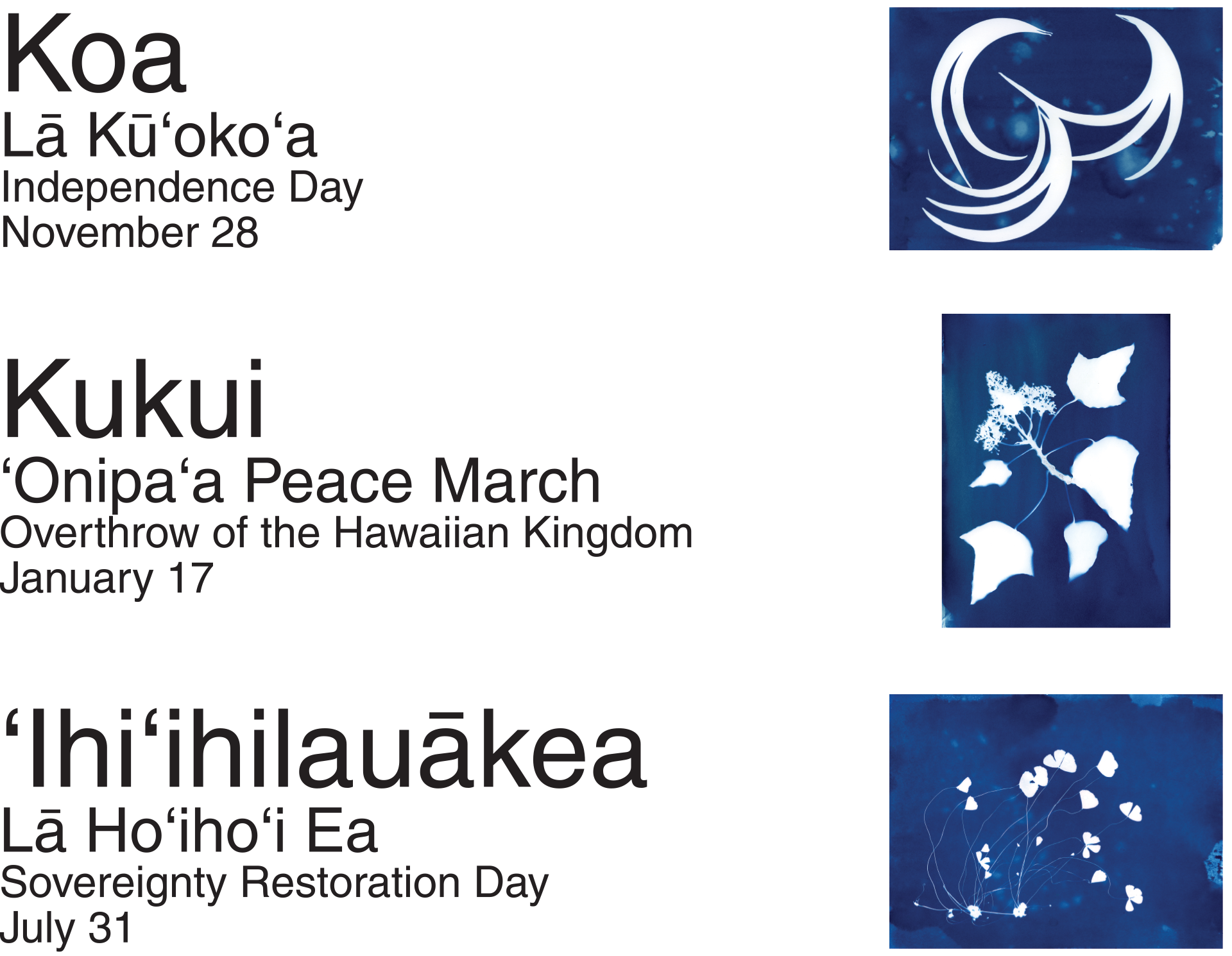
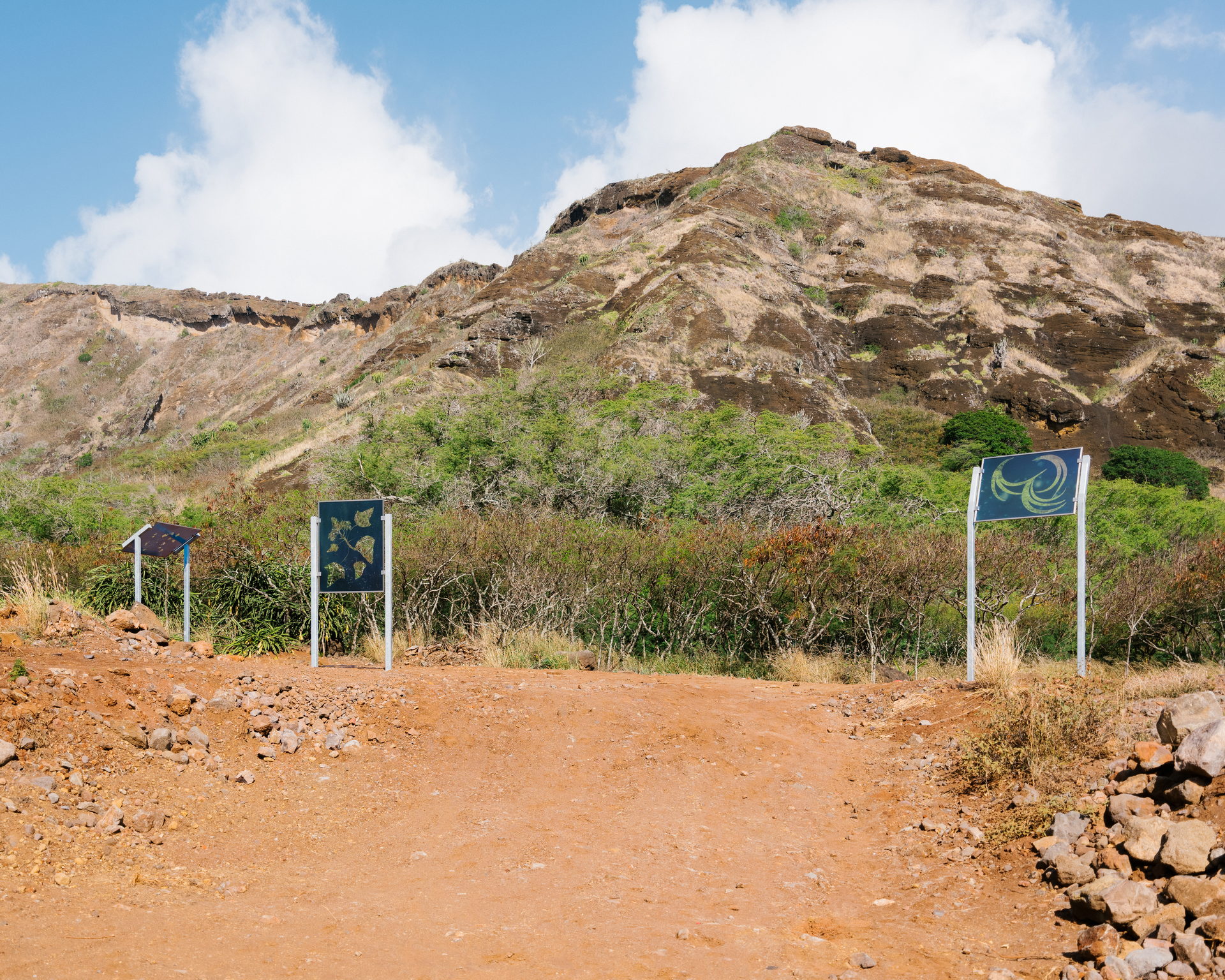
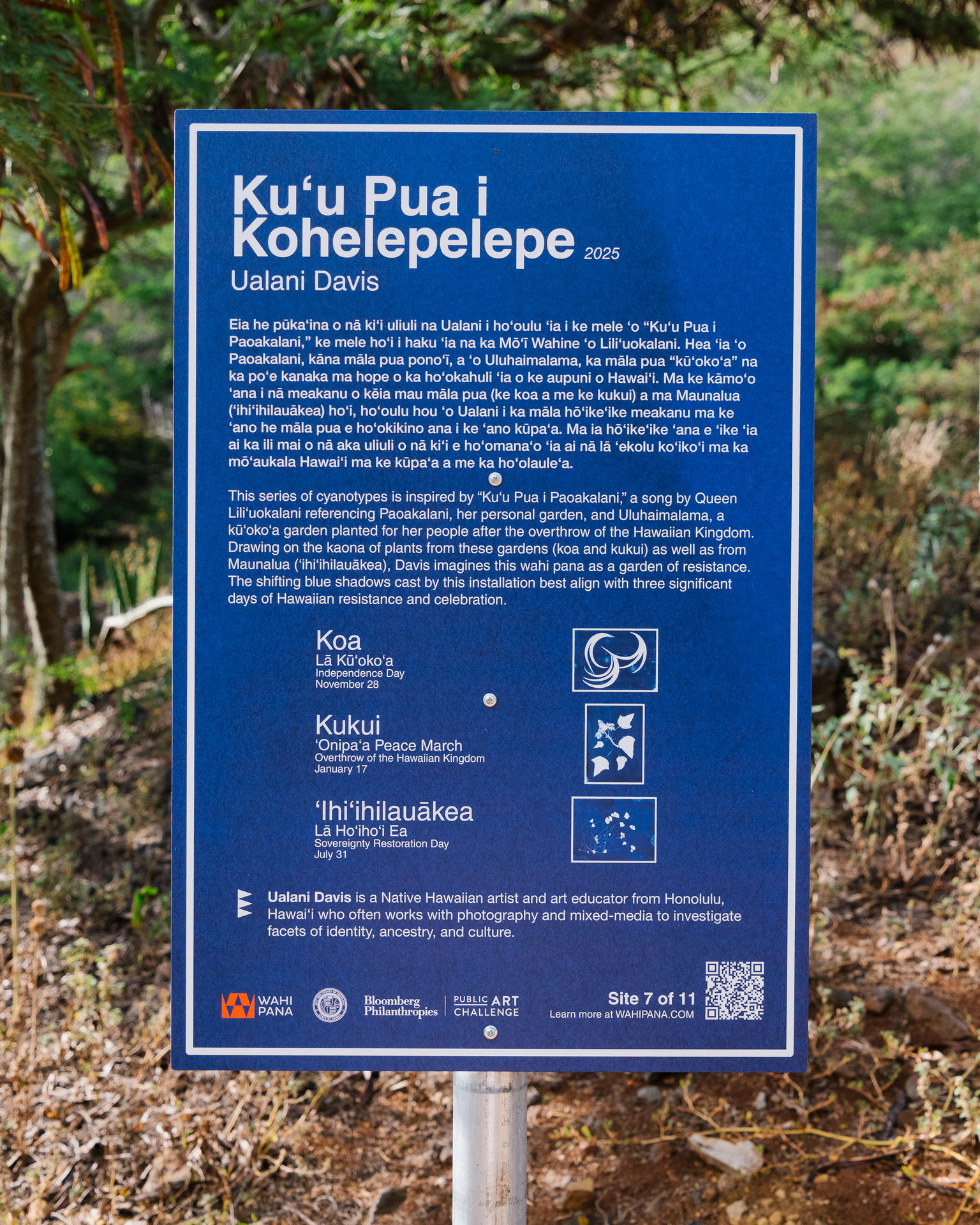
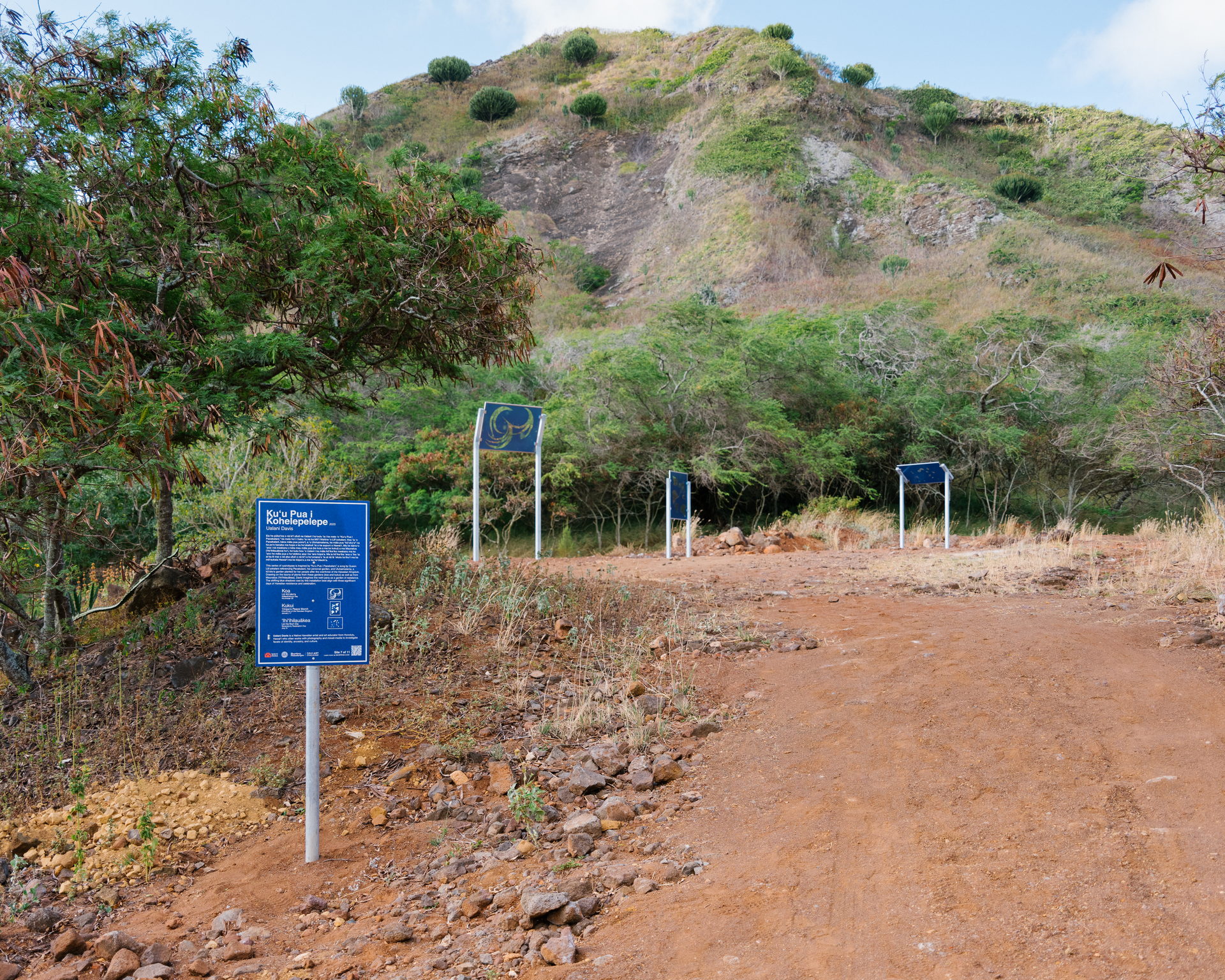
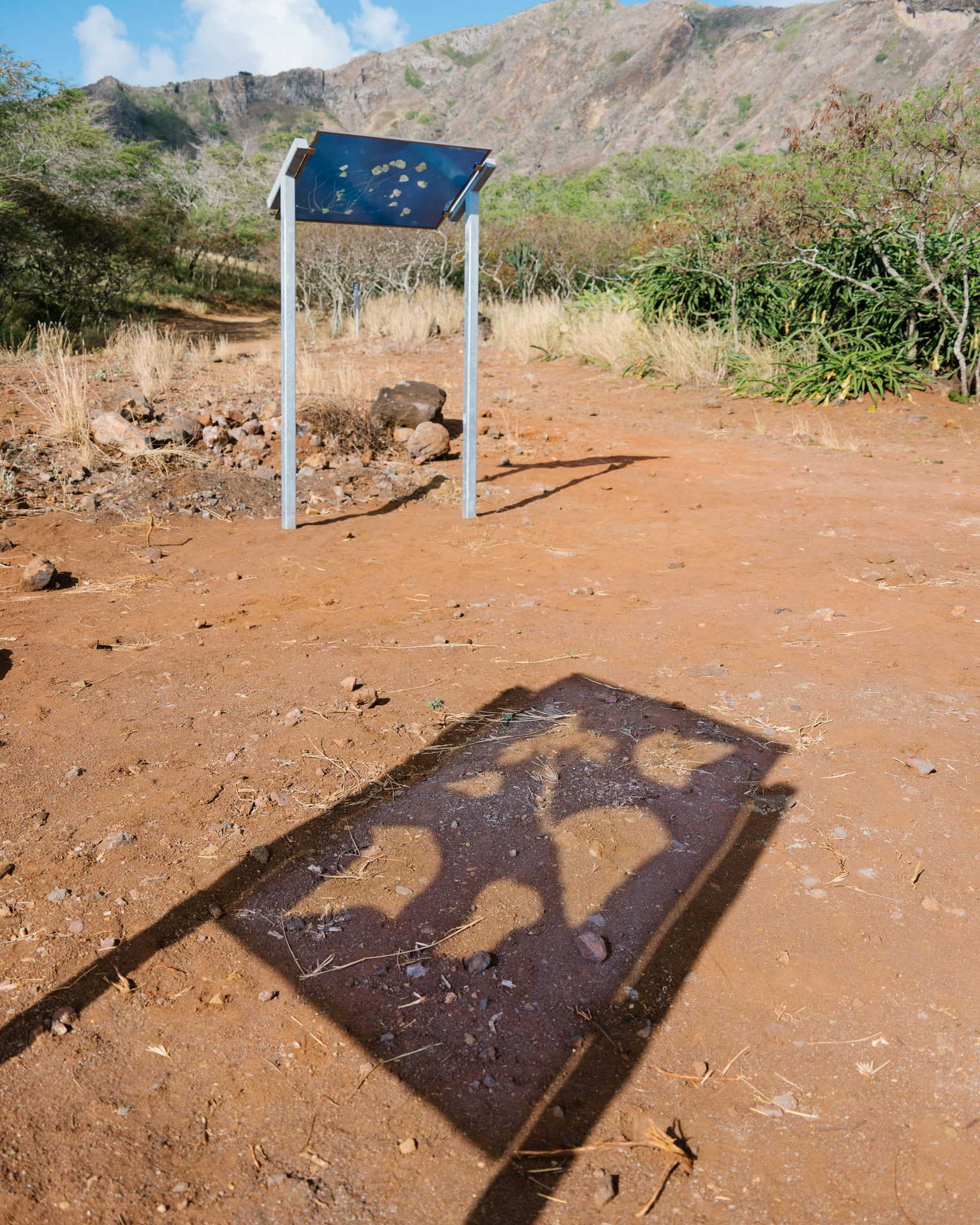
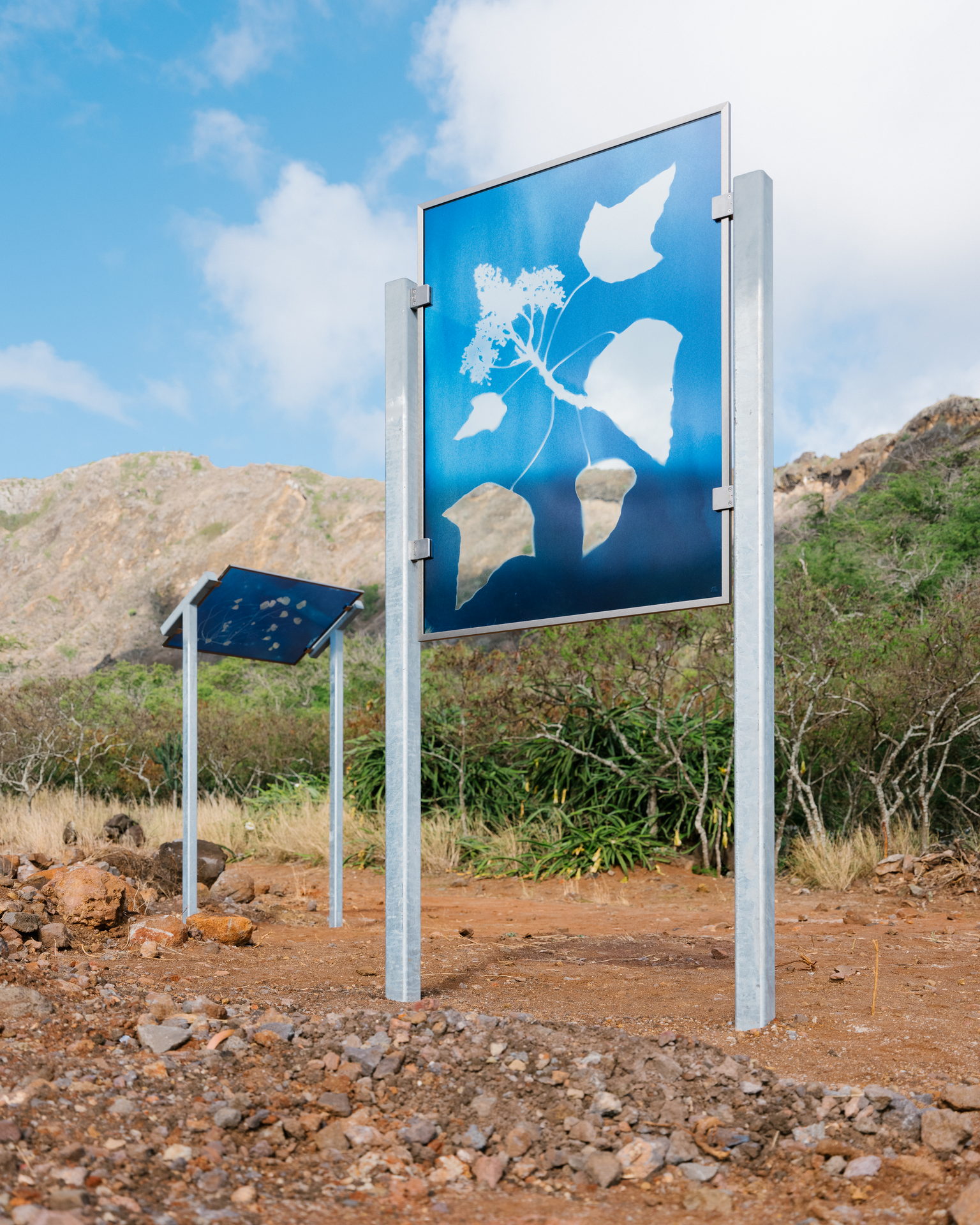
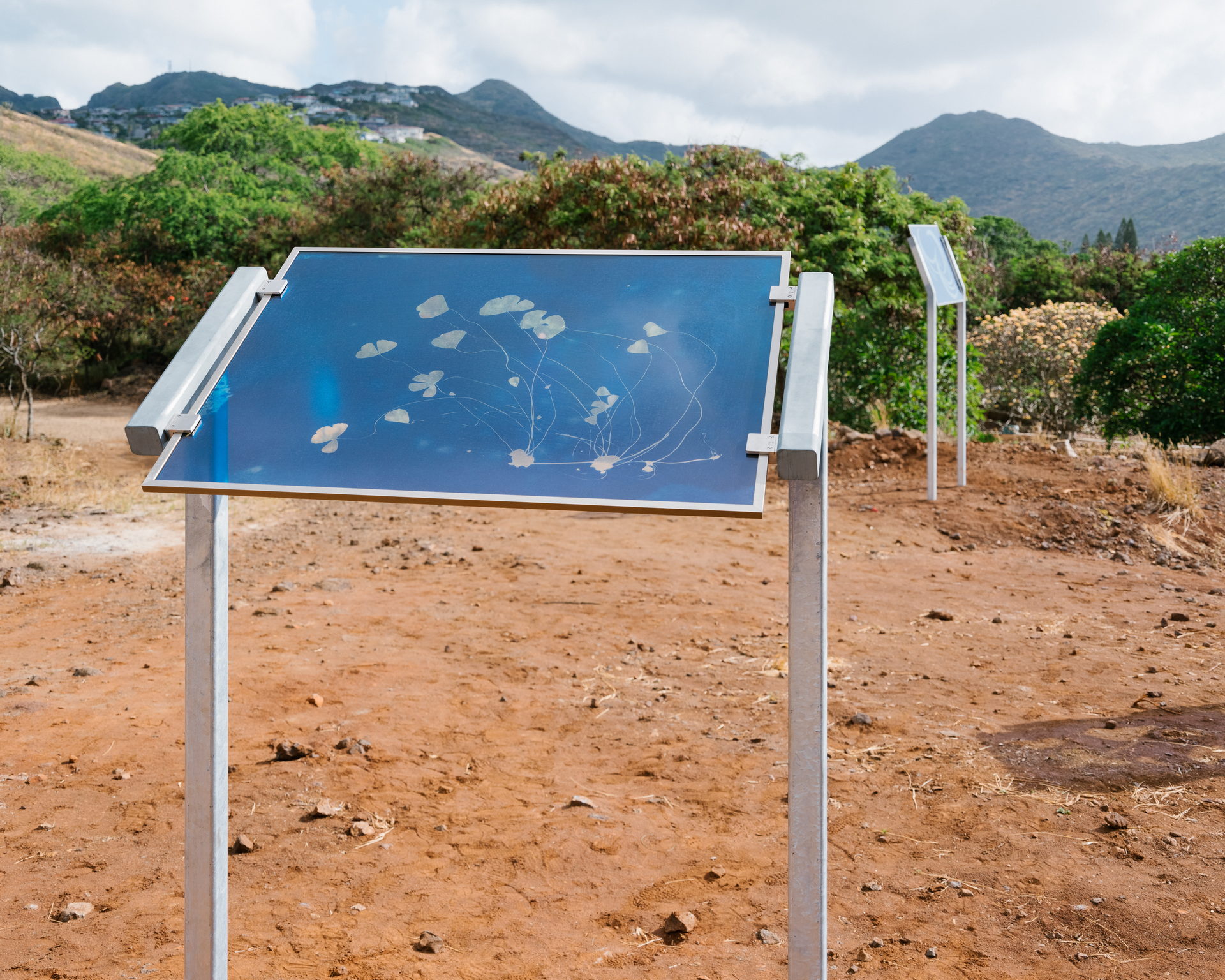
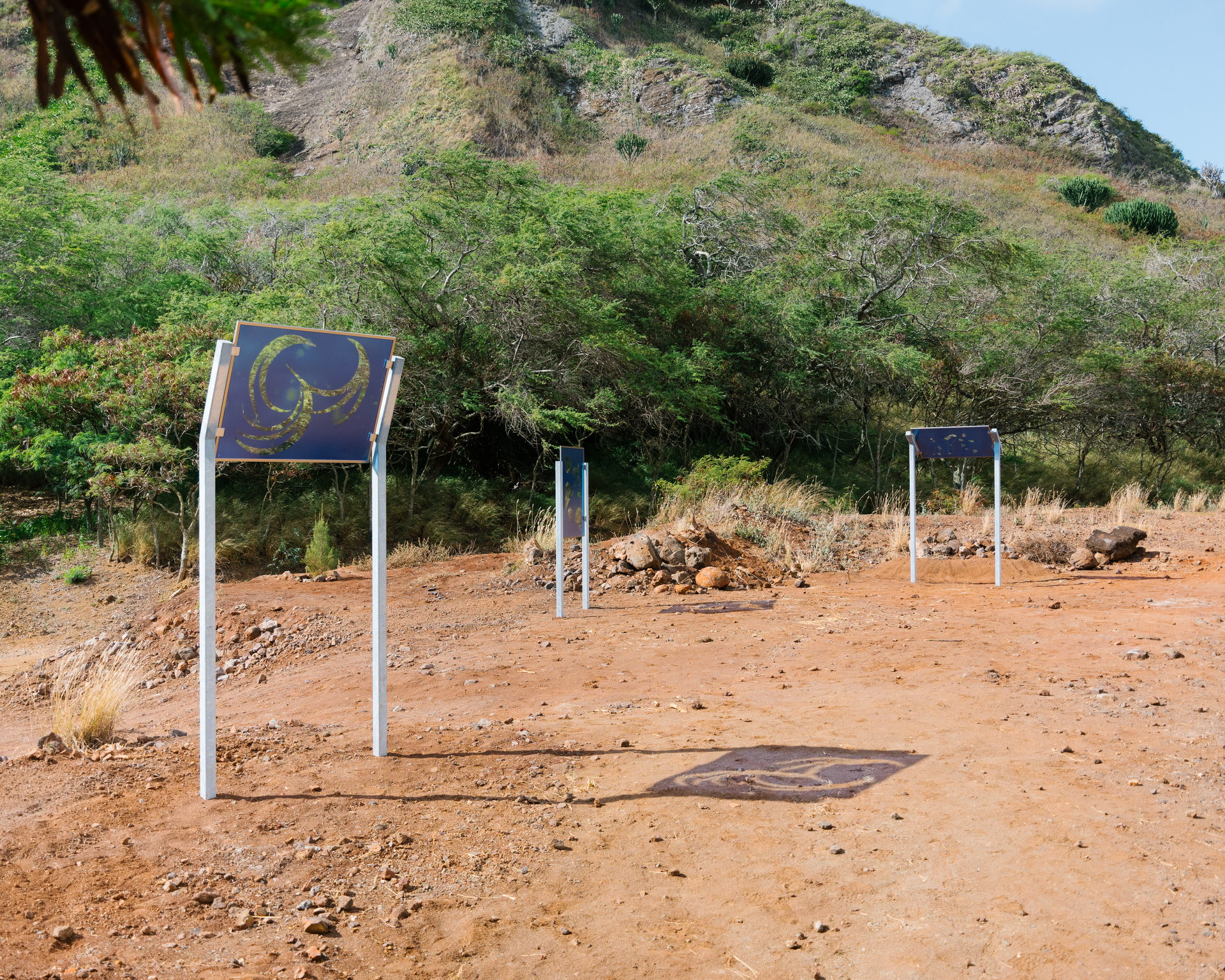
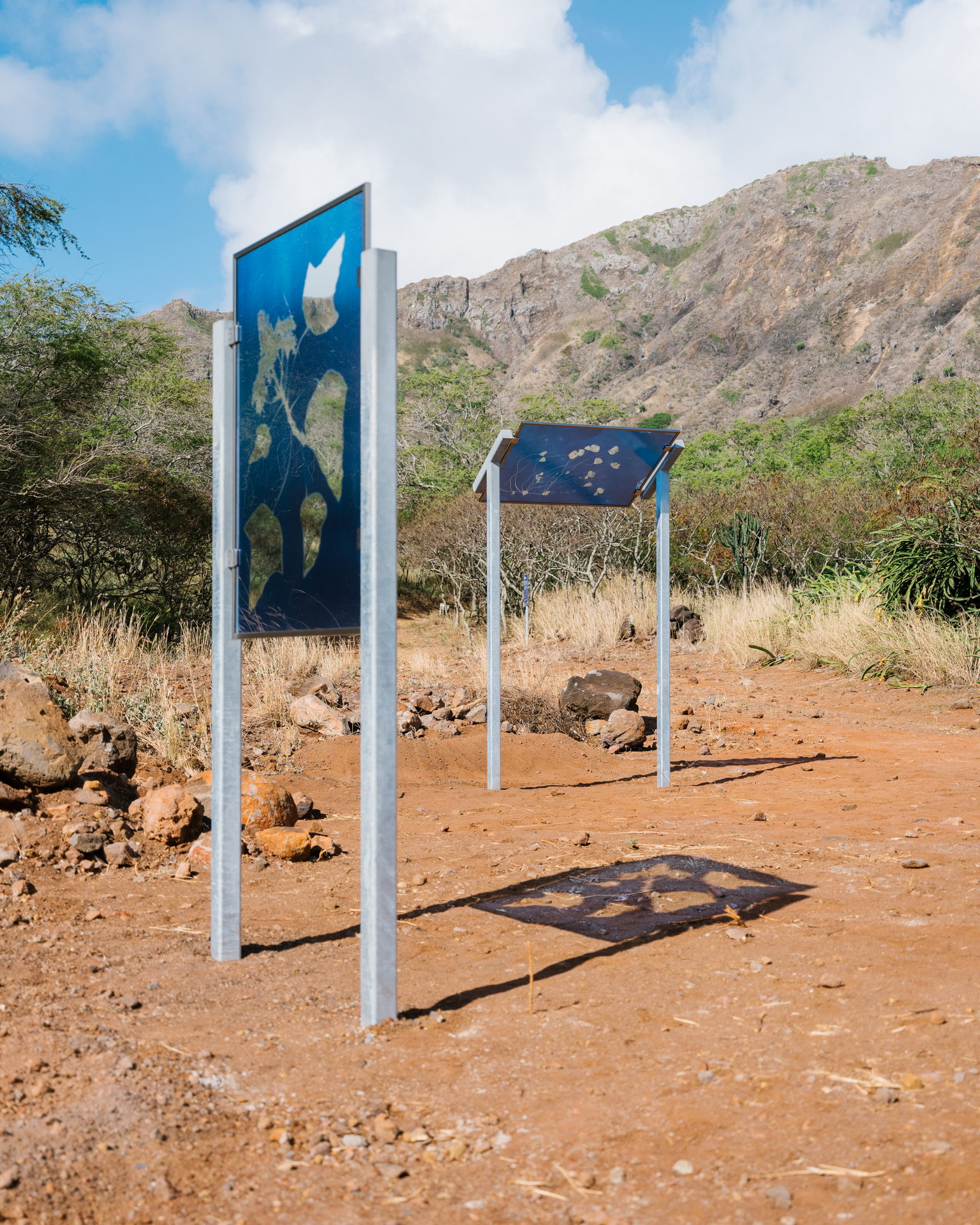
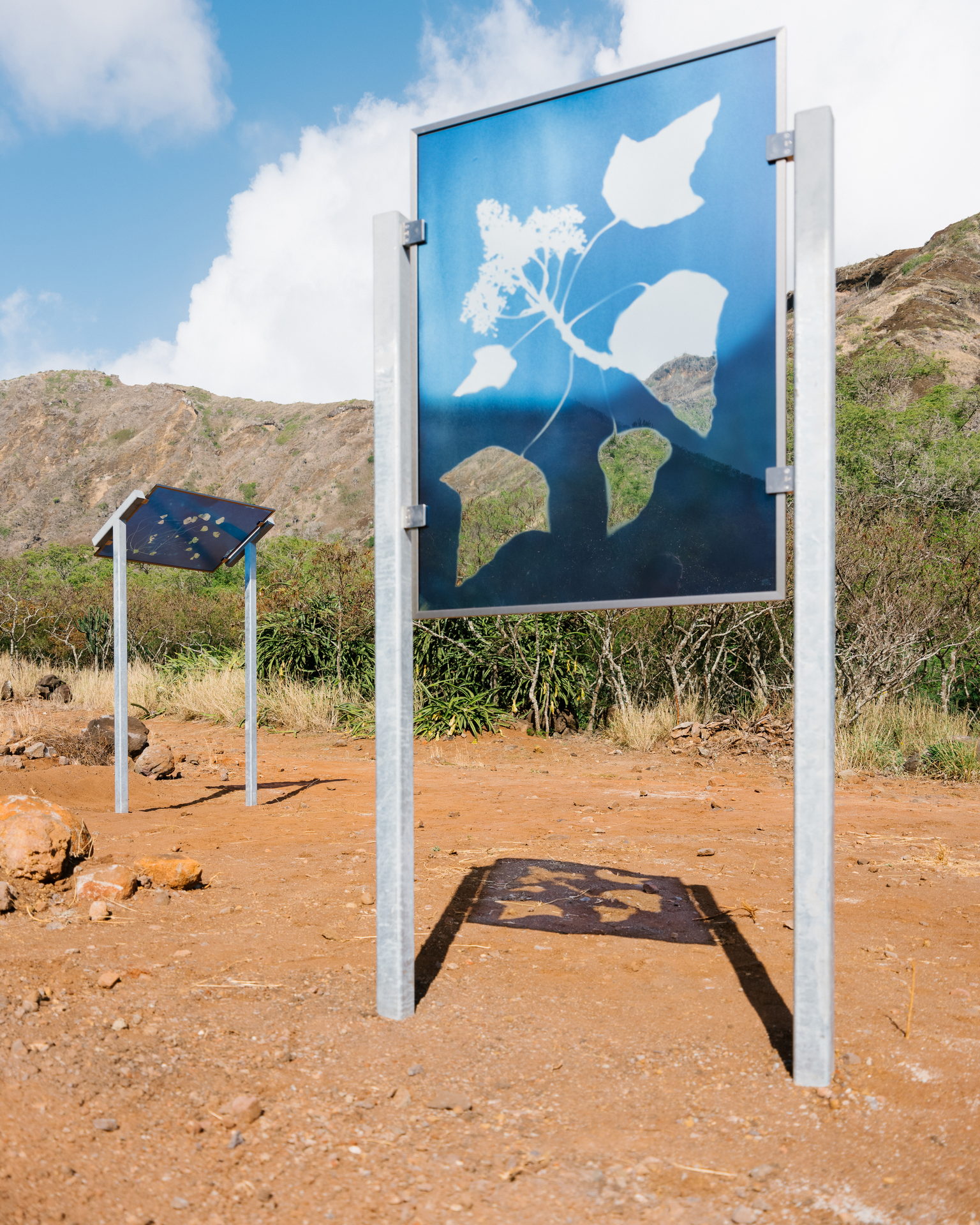
Though Paoakalani and Uluhaimalama no longer flower, their lasting legacy of resistance conveys an essential message of resilience in times of political turmoil and unrest. Ualani captures the essence of this resistance through cyanotypes. Davis’s peace works with the sickle shape of the koa leaf, the delicate ihiihilauakea and the illuminating kukui. Each plant carries a symbolic meaning meant to be in conversation with its surroundings in the garden, which is composed chiefly of non-native plants. The koa symbolizes bravery, strength, and resilience. The ihiihilauakea native to the area symbolizes reverence and the kukui symbolizes illumination and knowledge.
These three pieces are aligned with the position of the sun at three important days of resistance celebrated by Kānaka Maoli, Lā Kūʻokoʻa, Independence Day, Lā Hoʻihoʻi Ea, Sovereignty Restoration Day, and the Onipa’a Peace March.
The botanical garden at Kohelepelepe was strategically chosen for its vital and feminine energy. It is a garden that tells many stories through its plants from around the world. With a growing Hawaiian section, the garden is shifting its narrative toward a place-based orientation. Ualani’s pieces are part of that shift. Her work pays homage to a resistance garden with layers of meaning and complexity. Each plant chosen by Davis holds a moʻolelo waiting to be shared with Kama’aina and Malihini alike. Like the famed feminine power of Kapoulakina’u and Queen Liliuokalani, Davis’s work honors the principles of Pilina, relationality and consent found in our rich cultural teachings.