ON THIS PAGE

Site: 9

Ho‘omaluhia Botanical Garden

Phase 3: Now Open

Sculpture

Title

I ka Uhiwai o ke Ko‘olau

2026

Artist(s)

Kaili Chun

Site: 9

Ho‘omaluhia Botanical Garden

Phase 3: Now Open

Sculpture

Title

I ka Uhiwai o ke Ko‘olau

2026

Artist(s)

Kaili Chun

I ka Uhiwai o ke Ko‘olau

2026

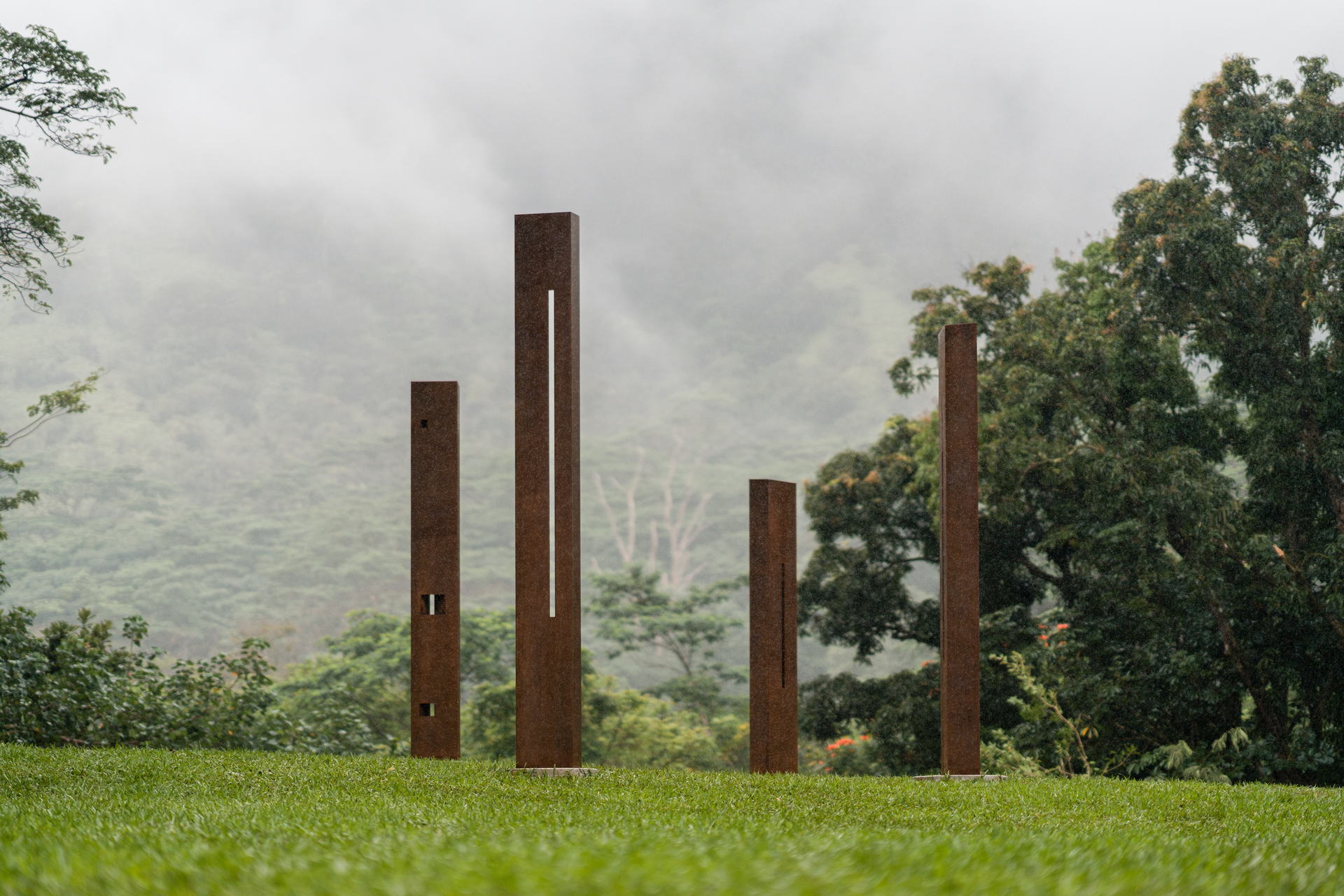
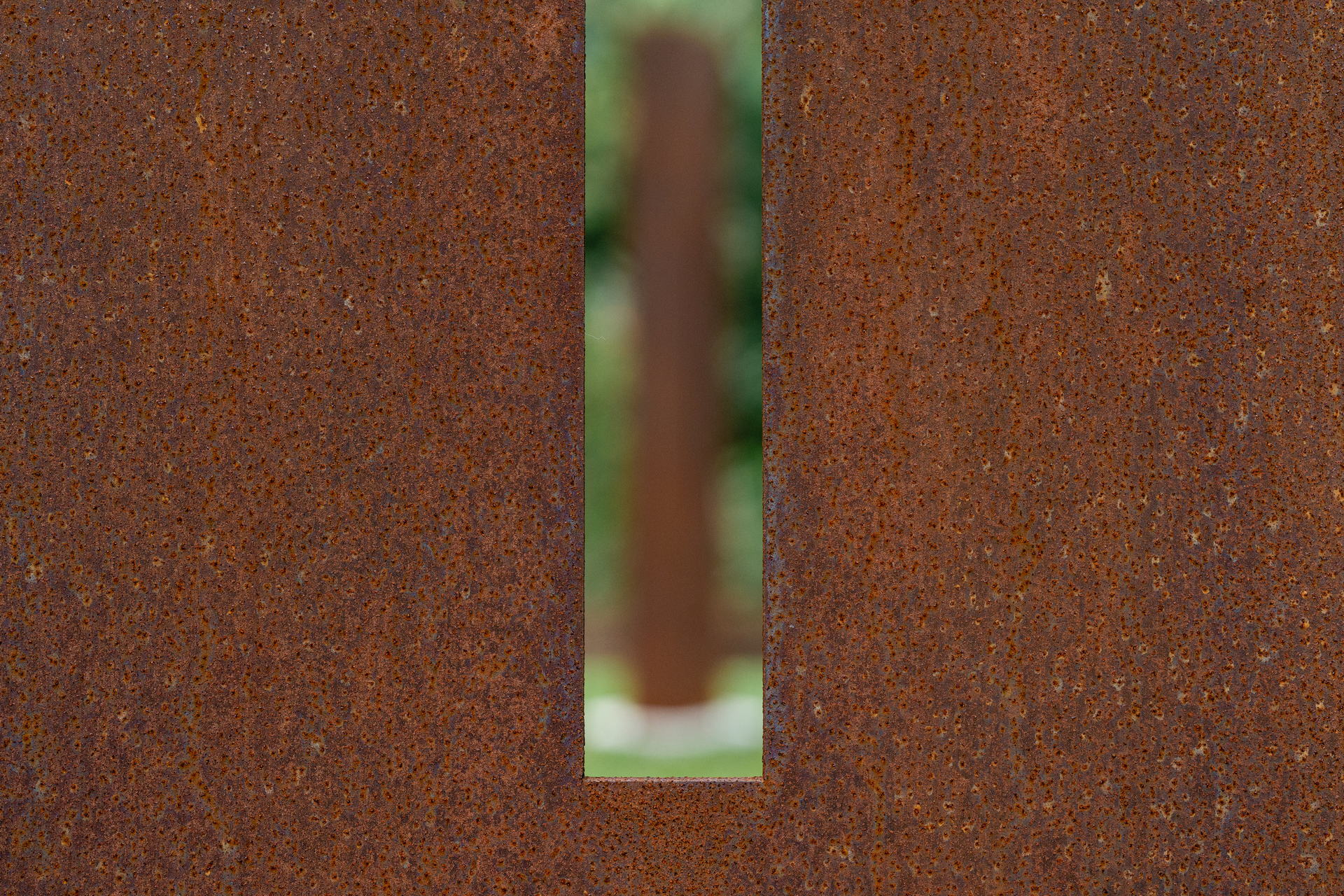
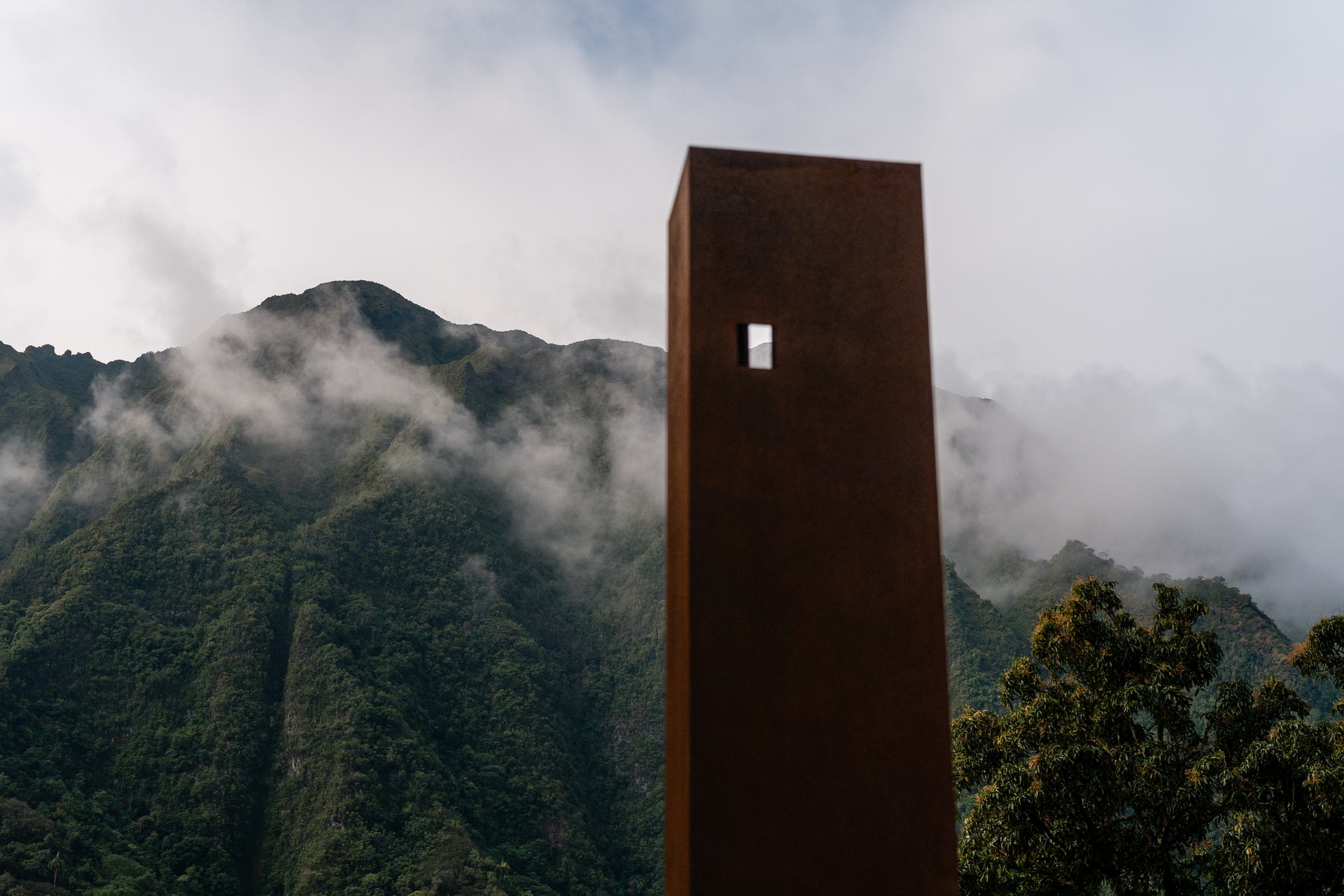
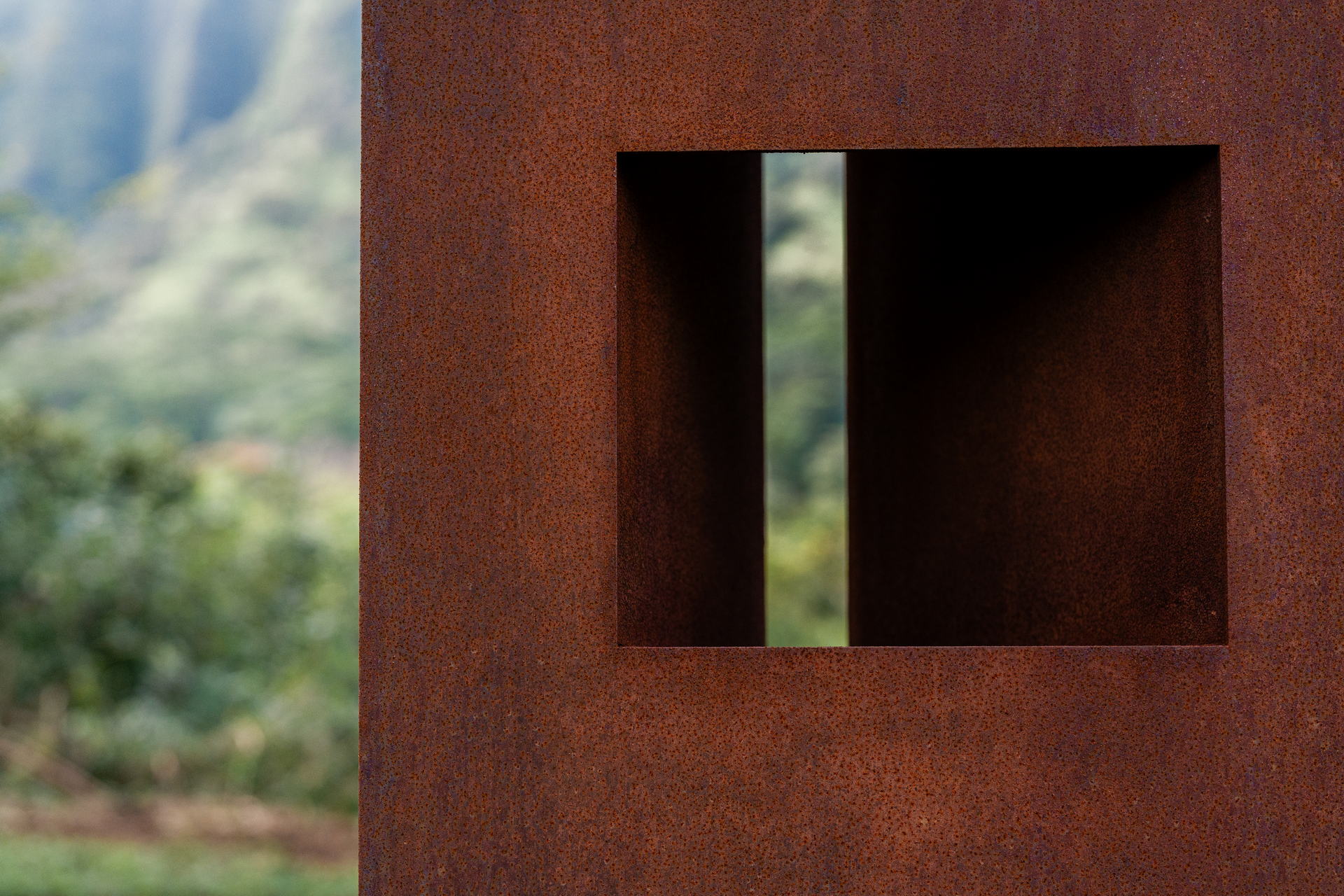
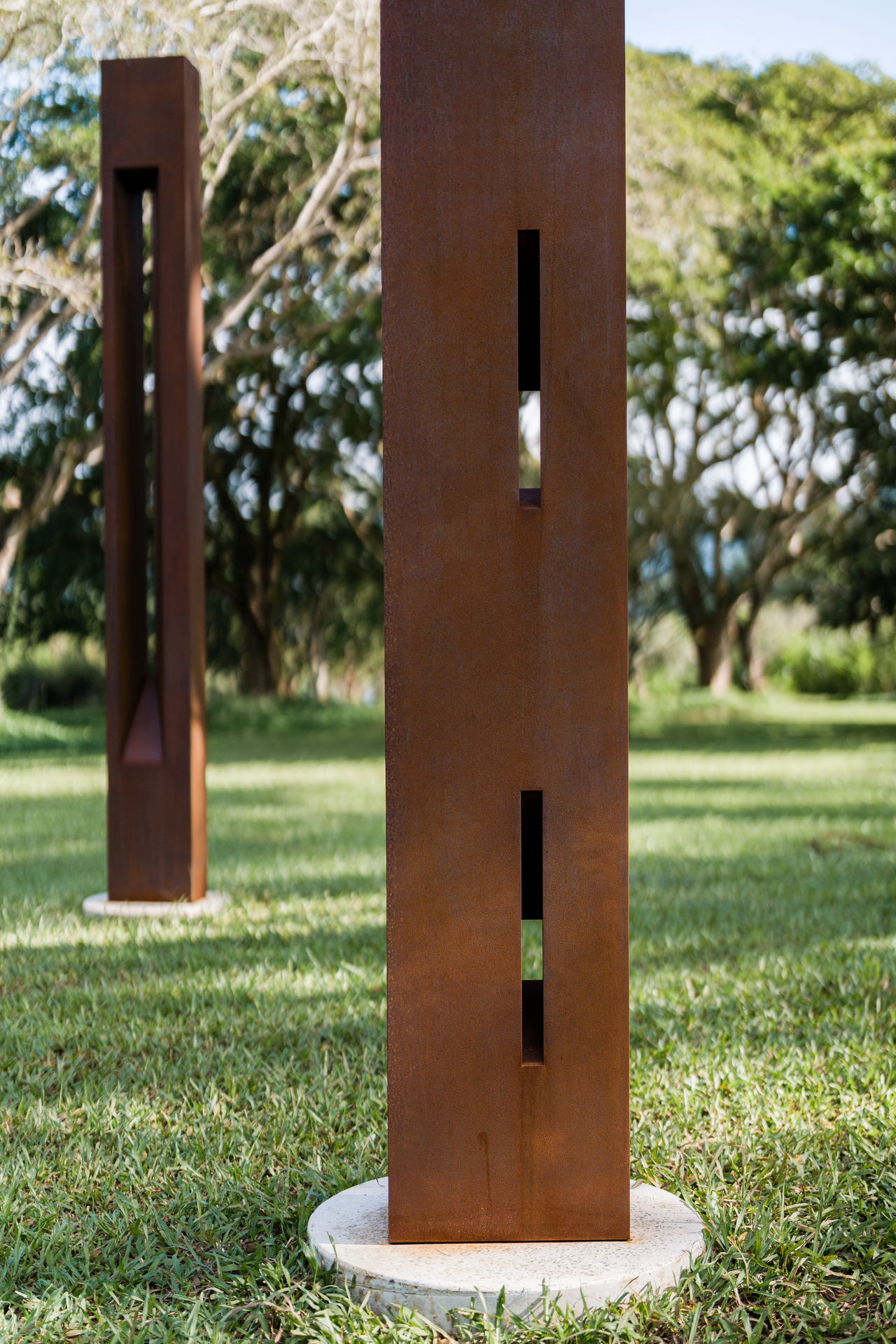
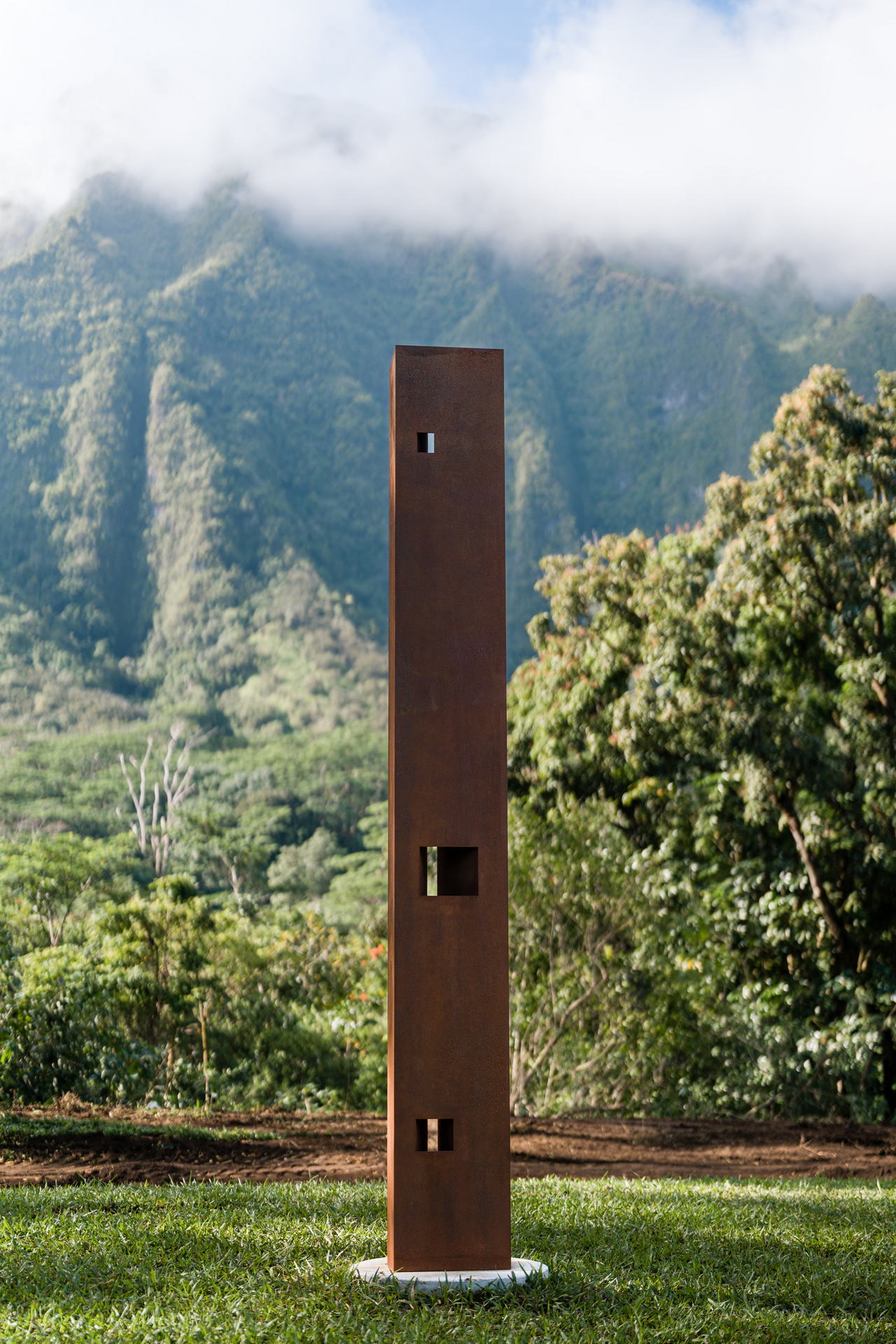
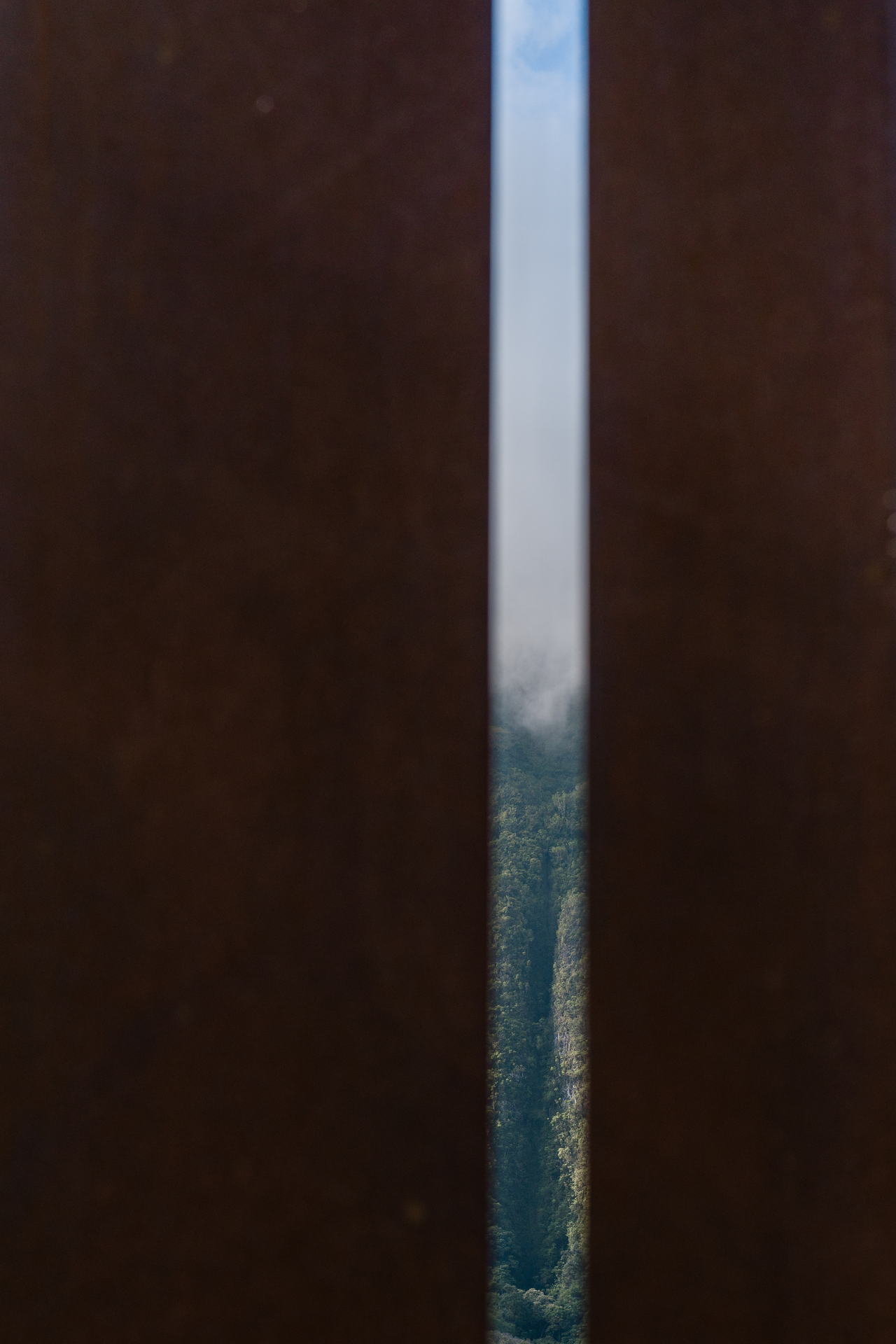
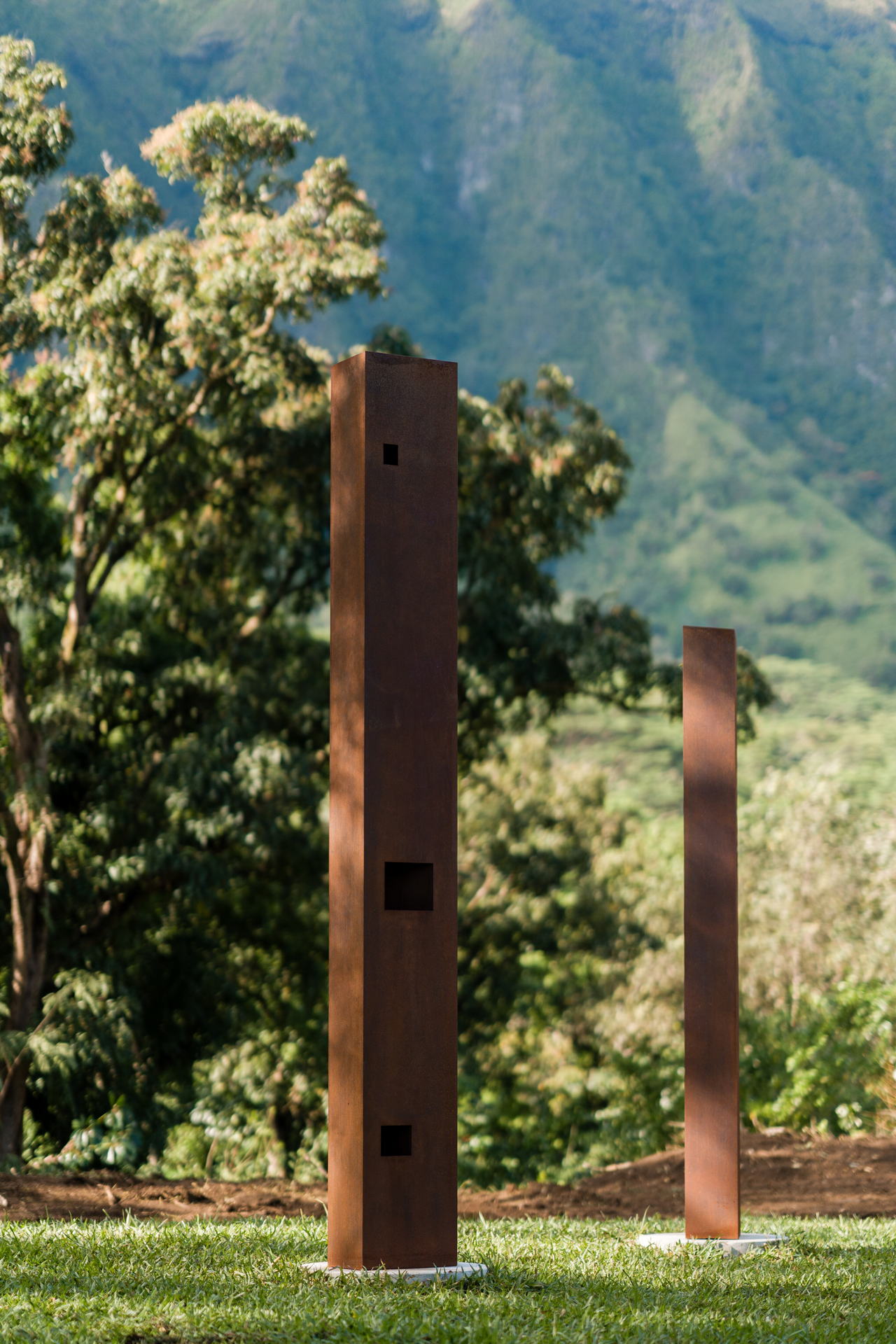
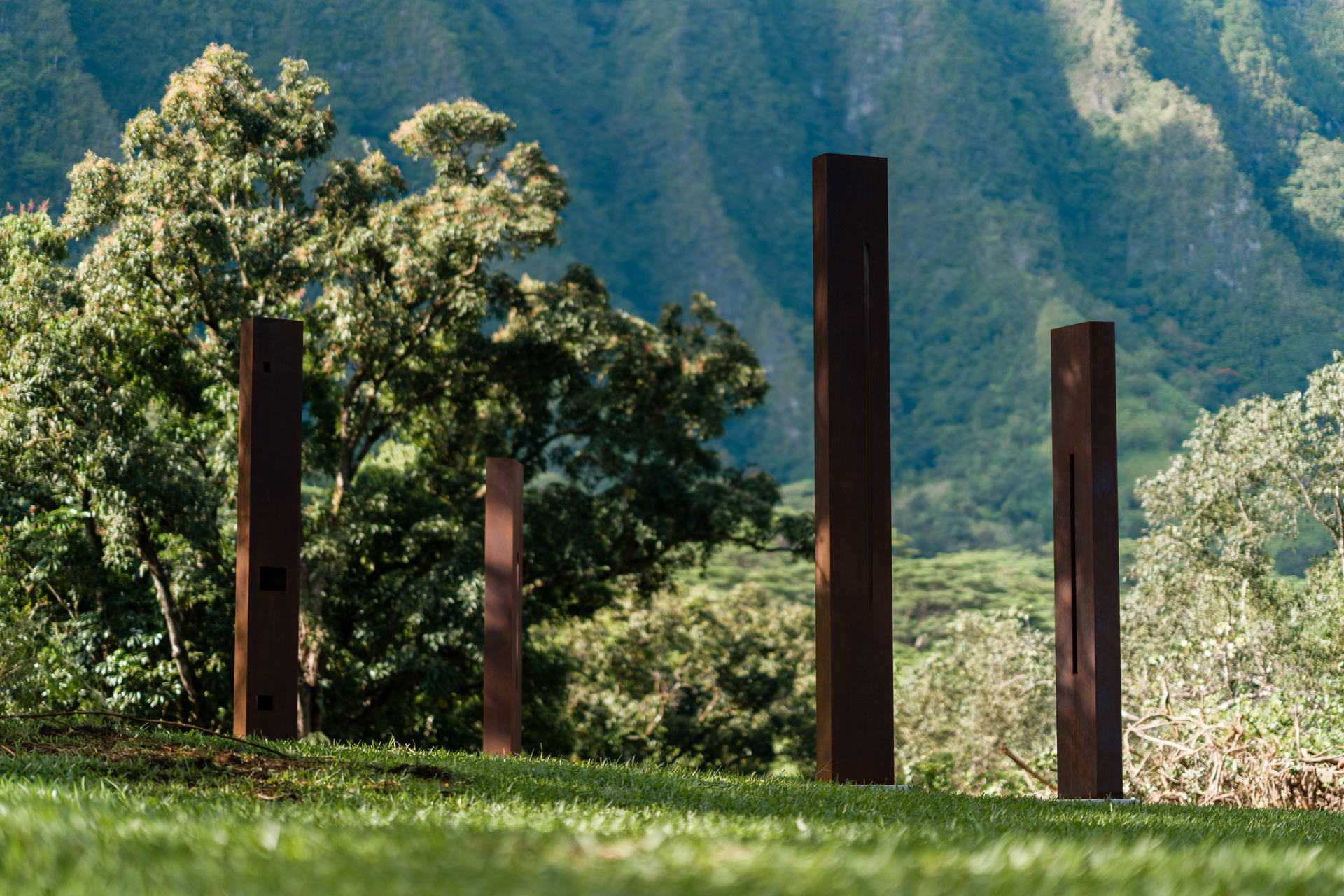
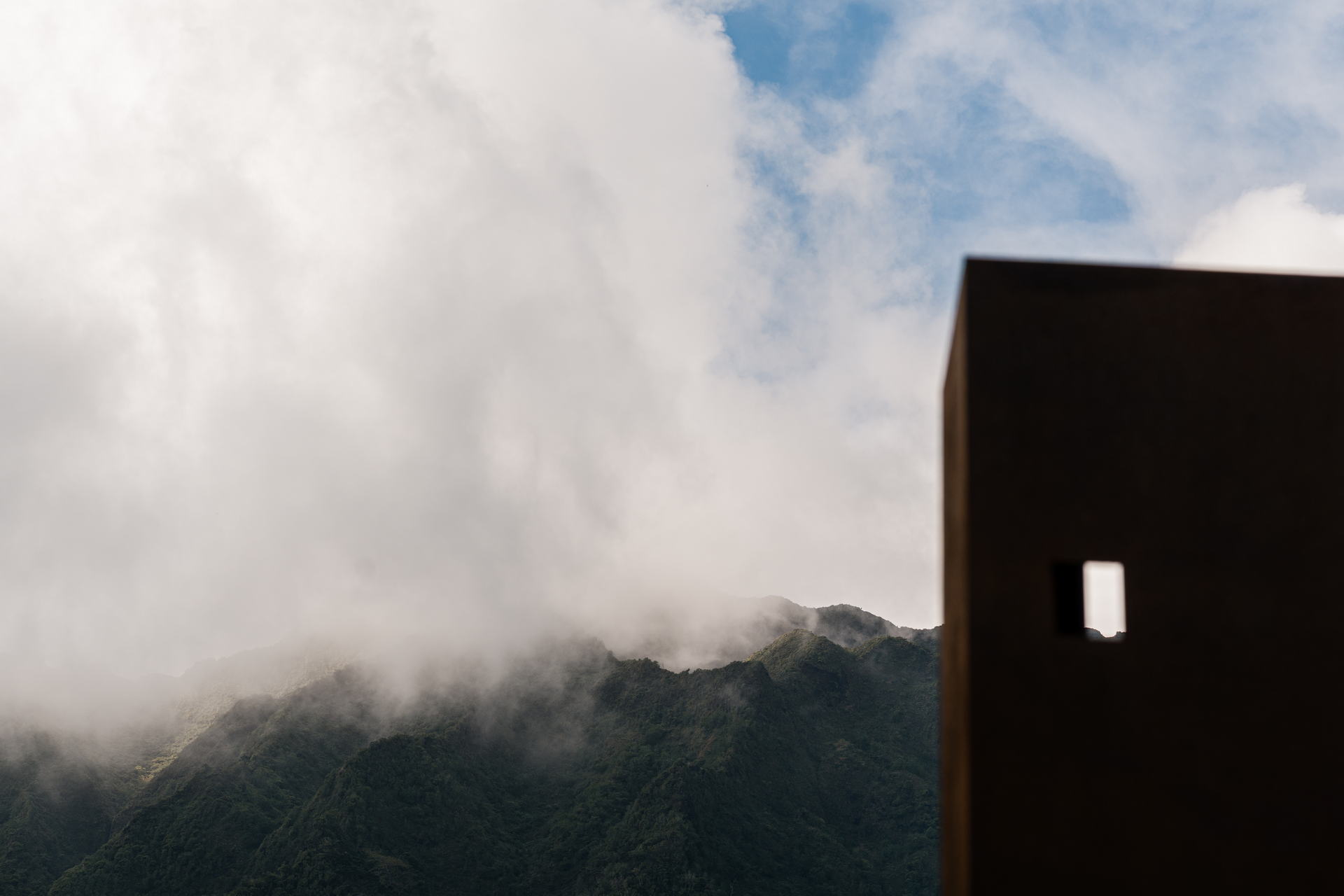
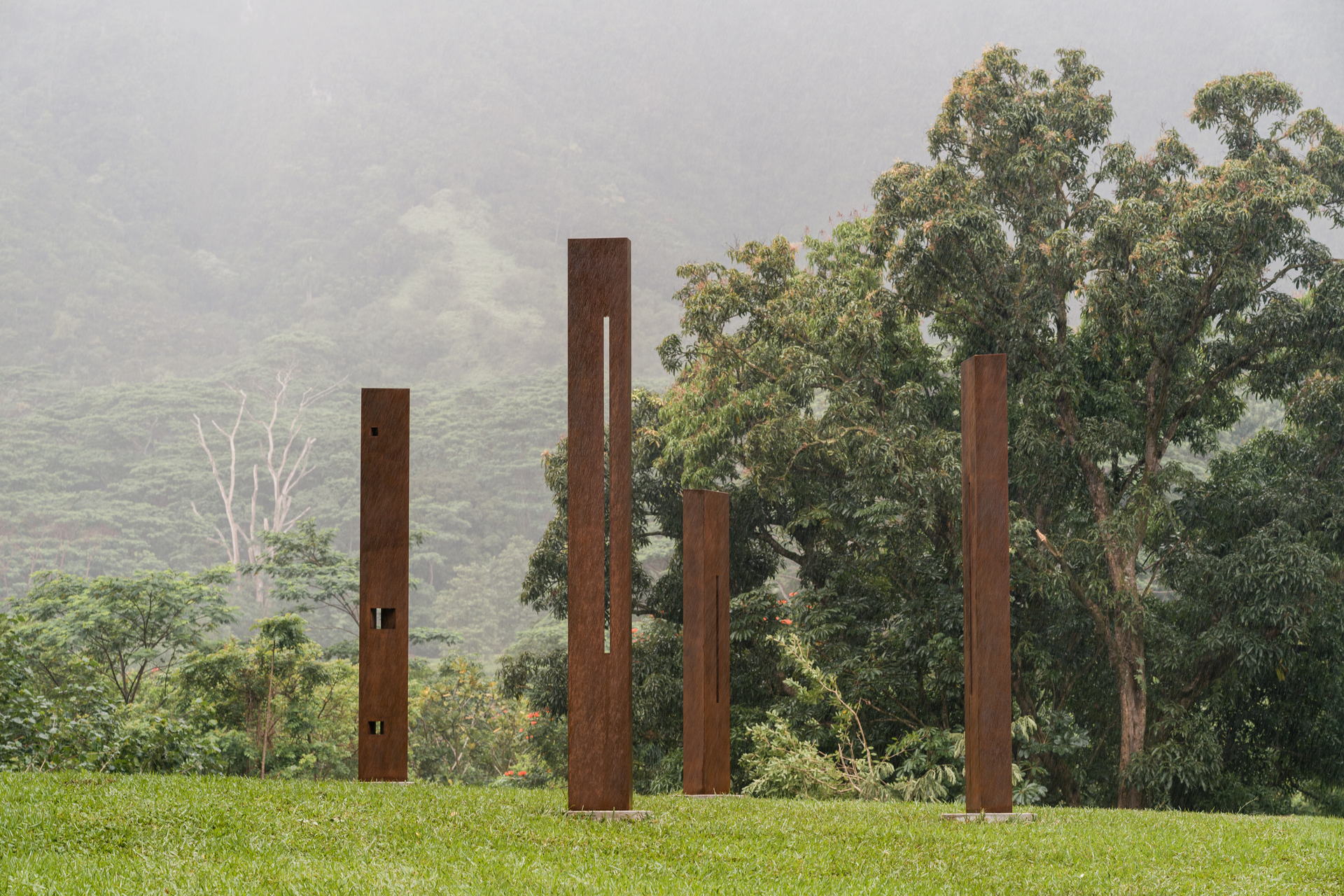
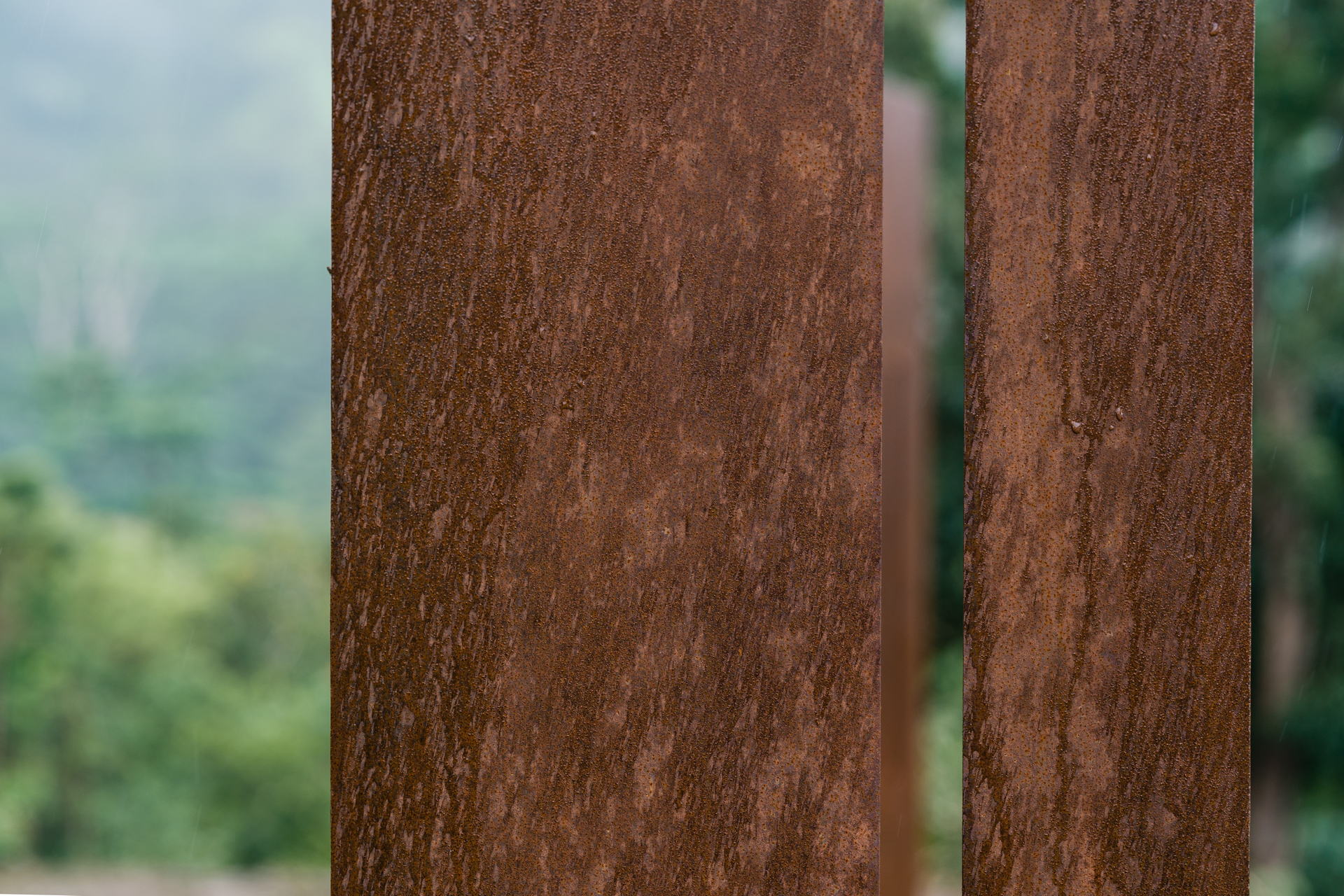
These four corten steel sculptures, placed as nānā or viewing portals, invite visitors to slow down, stand still, and kilo—to observe with intention. Each opening aligns with a puʻu (peak) of the Koʻolau Mountain Range: Konahuanui, Puʻu Lanihuli, Keahiakahoe, and the sacred waters of Hiʻilaniwai.

The steel forms, which were shaped, cut, and installed by human hands, stand firmly within the realm of kānaka. Beyond them rises the lush, cloud-laden, and enduring Koʻolau Mountain range, embodying the realm of the akua, formed through deep time by wind, rain, water, and genealogy.

Each puʻu carries its own presence and story. Puʻu Lanihuli, often wrapped in shifting clouds, evokes the movement between ʻike and ʻike ʻole—what is revealed and what remains unseen. Konahuanui, the highest peak, stands as a place of vigilance and authority. It has long been associated with watchfulness over Koʻolaupoko. Keahiakahoe, whose name recalls fire carried upslope, speaks to transformation, memory, reconciliation, and the enduring marks left upon the land.

By looking through these apertures, the viewer occupies the space between these realms. The work does not claim the mountains; it frames them as portals. It asks us to listen to the wind moving across the ridgeline, to the rain settling into the valleys, and to the ʻike (knowledge) held within the contours of stone and forest.

This installation honors Hoʻomaluhia and Koʻolaupoko as places layered with moʻolelo, ʻike, and ancestral presence. These are places that continue to watch us, even as we look toward them.

niho or down

Nā Puʻu Kaulana o Koʻolaupoko Moelana/Kekele, Koʻolau

Kaiminaʻauao Kahikina

Kaili Chun’s installation at Hoʻomaluhia Botanical Garden is grounded in the deep moʻolelo of Koʻolaupoko. In Nā Puʻu Kaulana o Koʻolaupoko: Moelana/Kekele, Koʻolau, cultural researcher Kaiminaʻauao Kahikina weaves together ʻike from Hawaiian-language newspapers, chants, place-name traditions, and historic texts to illuminate the storied landscape surrounding Moelana and Kekele—lands that once thrived beneath the shadow of Nuʻuanu Pali

The research traces the layered identities of prominent peaks and places including Moelana, Keahiakahoe, Hiʻilaniwai, Lanihuli, Konahuanui, and the guardian moʻo Kilikilipua. These names are not simply geographic markers; they are living genealogies of rain, wind, hala groves, ʻawa gardens, healing waters, and powerful deities. Through chants honoring Kāne, moʻolelo of Paliuli and Keaomelemele, and the epic struggle between Keakaoku and Lanihuli, the document reveals how Koʻolaupoko’s cliffs and valleys are imbued with memory, kuleana, and spiritual significance.

By situating Kaili Chun’s work within this ʻike, Kahikina reminds us that the landscape itself is an active participant in the story—its rains, peaks, and waters continuing to shape identity and understanding today. This research offers essential cultural context for the installation and invites deeper engagement with the ʻike embedded in this wahi pana.

Nā Puʻu Kaulana o Koʻolaupoko

Download the full research document by Kaiminaʻauao Kahikina

DOWNLOAD
niho or down
Image of Artist Kaili Chun

Kaili Chun

Raised in Honolulu, Hawaiʻi, Kaili Chun draws deep inspiration from her Hawaiian heritage, using her art to explore the interconnectedness of people, place, and time. Her diverse training began with an A.B. in Architecture from Princeton University, where she studied under renowned ceramicist Toshiko Takaezu, a mentorship that had a profound influence on her approach to form, materiality and installation. Chun also apprenticed under Wright Elemakule Bowman, Sr., a Master woodworker and canoe builder, where she learned traditional Hawaiian woodworking techniques, further grounding her practice in the cultural traditions of her ancestors. She later earned a Master of Fine Arts degree from the University of Hawaiʻi at Mānoa, where she is Assistant Professor of Native Hawaiian Visual Art.

Chun’s artistic practice spans an array of mediums, including installations and sculptures. Her work is characterized by an integration of traditional Hawaiian forms and practices with contemporary design elements, resulting in site-specific installations that evoke contemplation on the relationship between humans and the environment. Through her work, Chun engages with Hawaiian values such as mālama ʻāina (care for the land), hoʻōla (healing), and kuleana (responsibility), encouraging viewers to reflect on sustainability, cultural resilience, and the preservation of indigenous knowledge.

Her installations have been exhibited in Honolulu; New York; Brisbane, Australia; Kassel, Germany;  Hong Kong; Stuttgart, Germany; and in exhibitions across the United States and other international venues.

Photos: Sean Mars

Ho‘omaluhia Botanical Garden