Ku‘u Pua i Kohelepelepe
Ku‘u Pua i Kohelepelepe
Site: 7
Koko Crater Botanical Garden
Phase 2: Now Open
Photographic Installation
Title
Ku‘u Pua i Kohelepelepe
(2025)
Artist(s)
Ualani Davis
Collaborators
Ka‘imina‘auao Kahikina
Site: 7
Koko Crater Botanical Garden
Phase 2: Now Open
Photographic Installation
Title
Ku‘u Pua i Kohelepelepe
(2025)
Artist(s)
Ualani Davis
Collaborators
Ka‘imina‘auao Kahikina
Ku‘u Pua i Kohelepelepe
(2025)
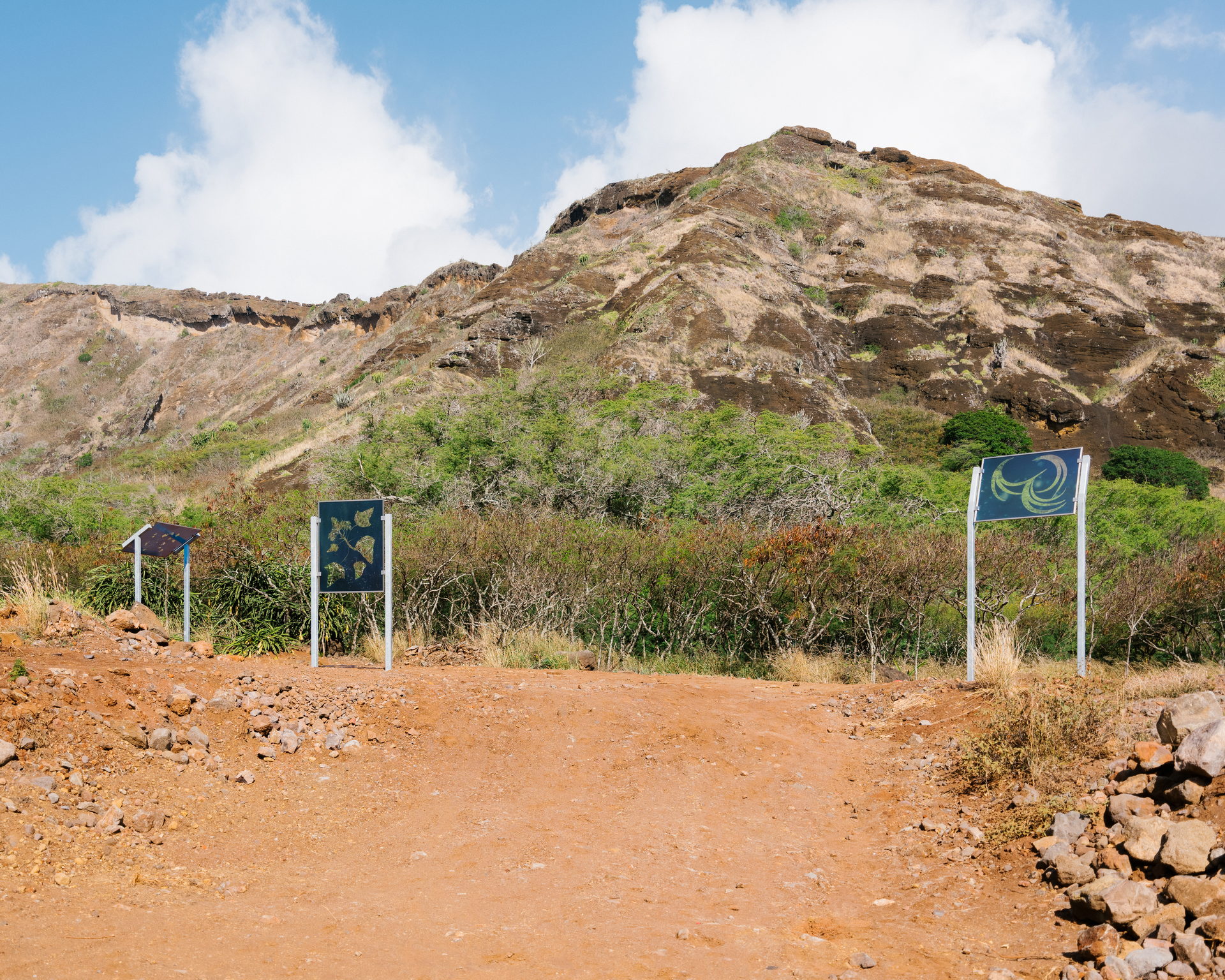
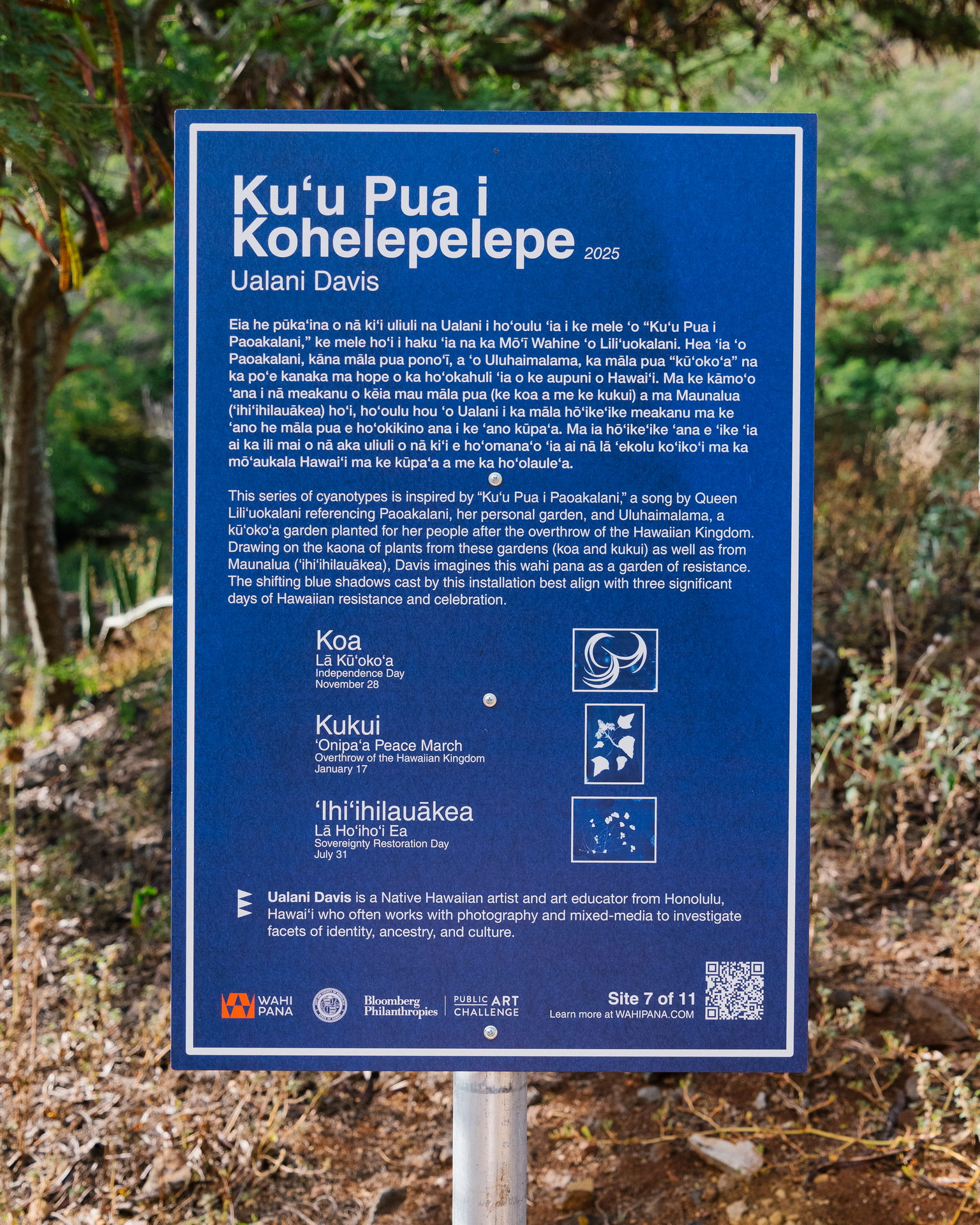
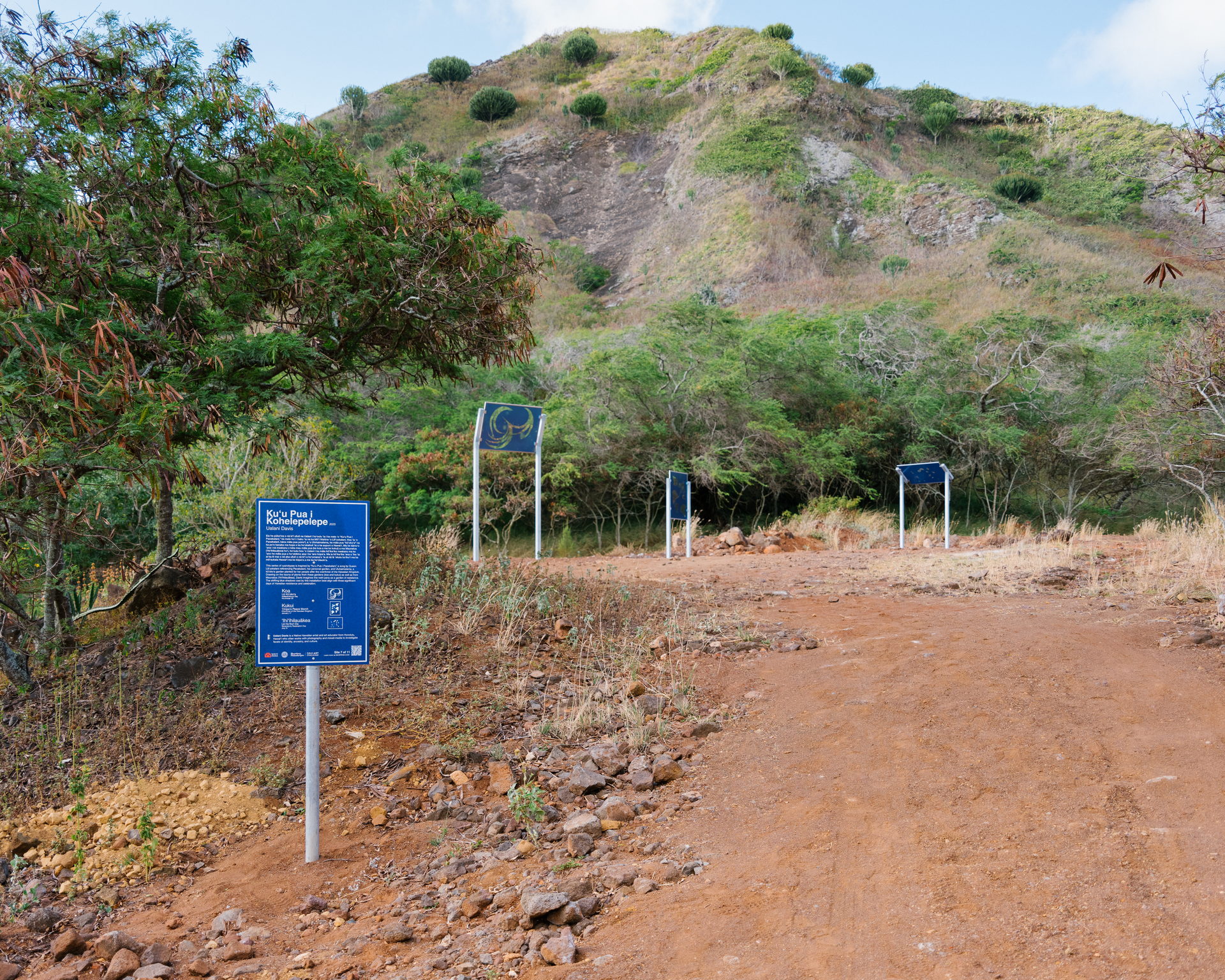
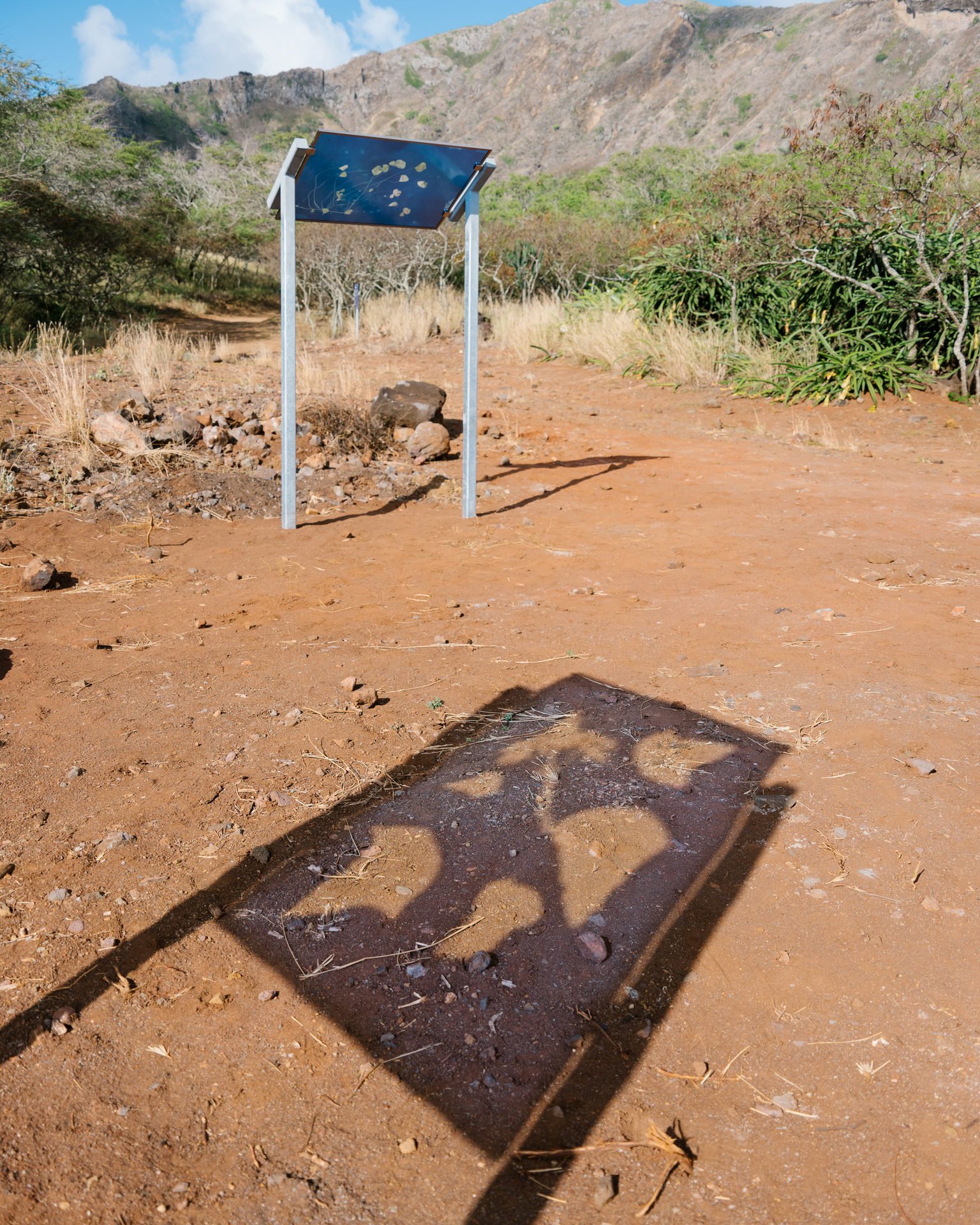
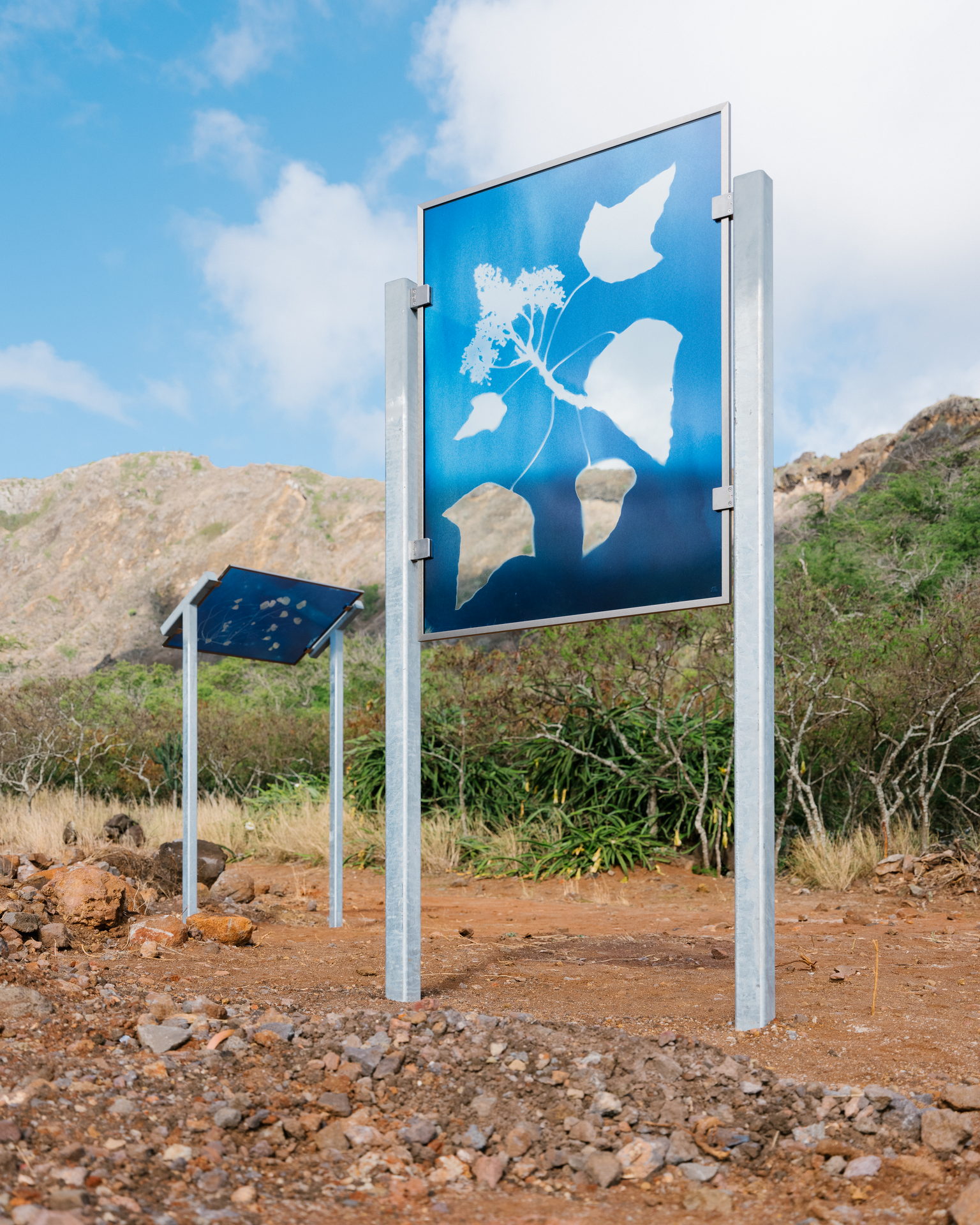
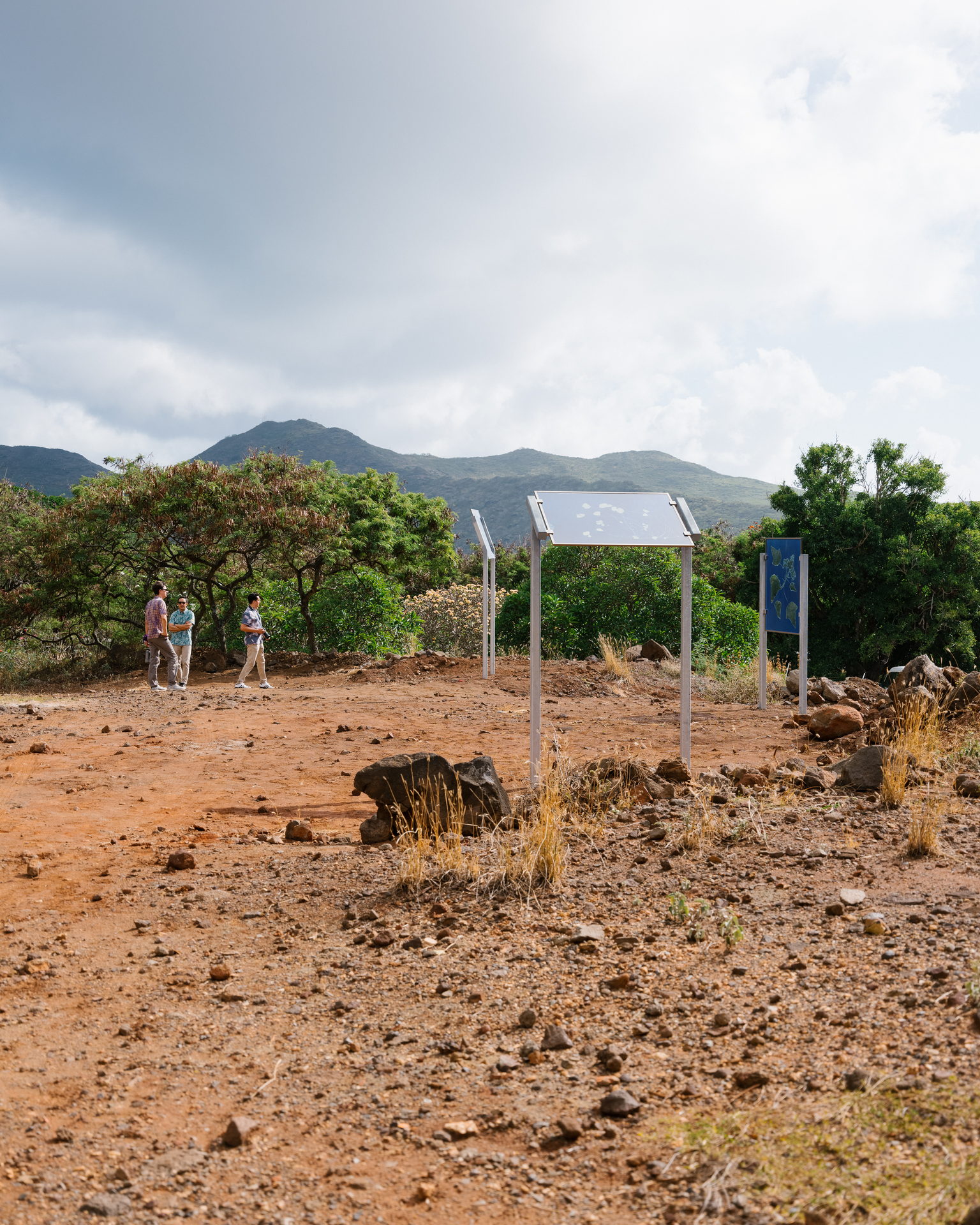
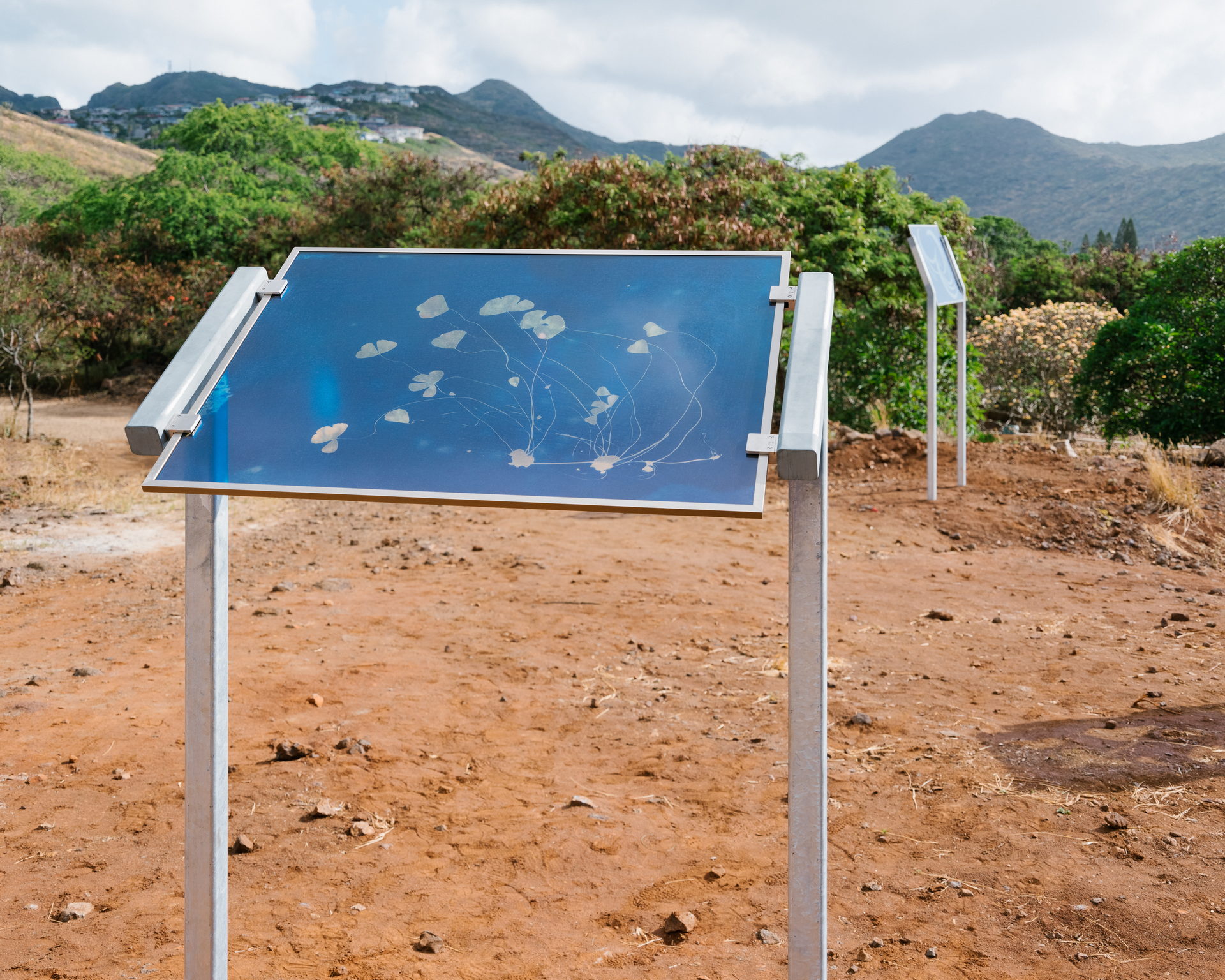
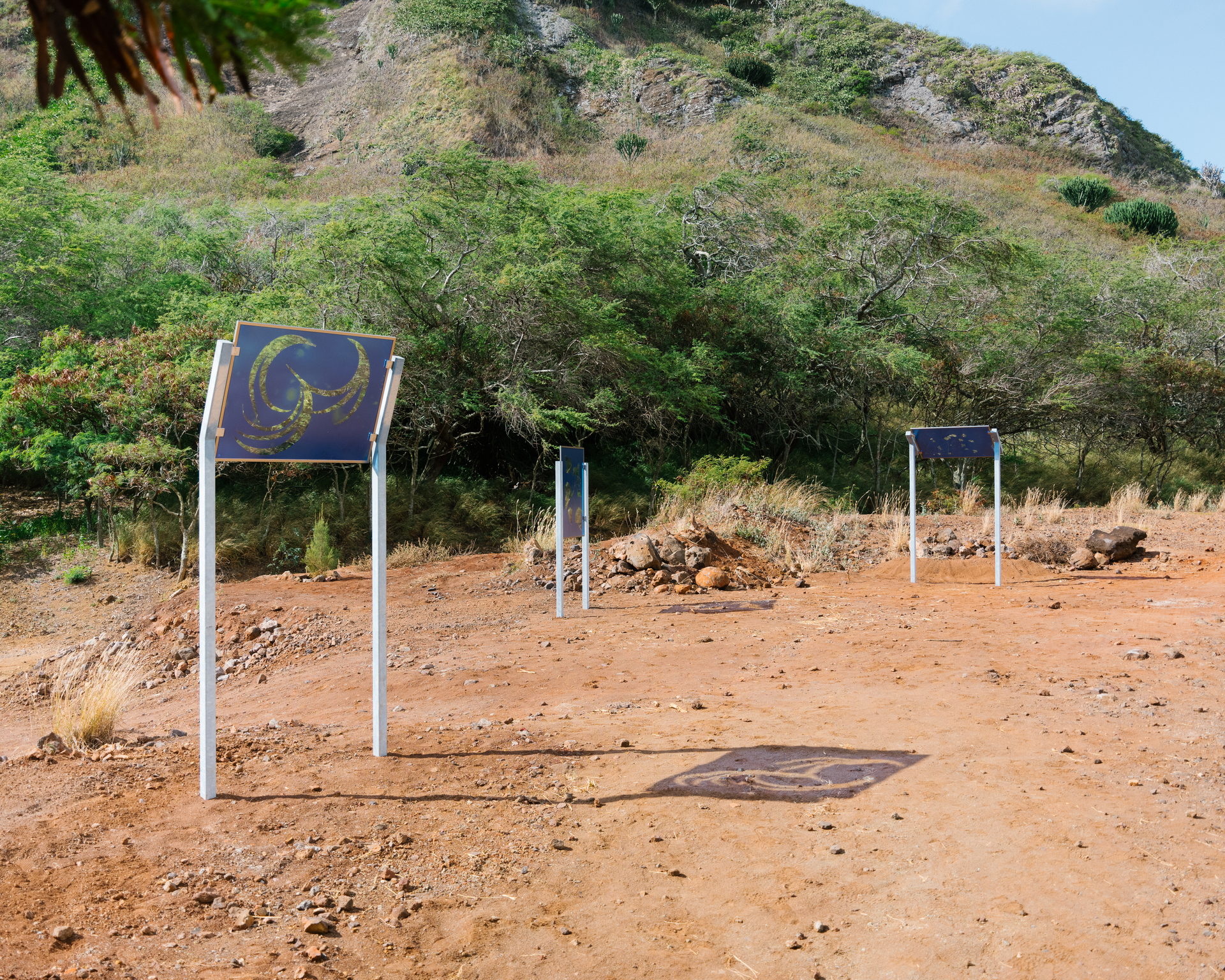
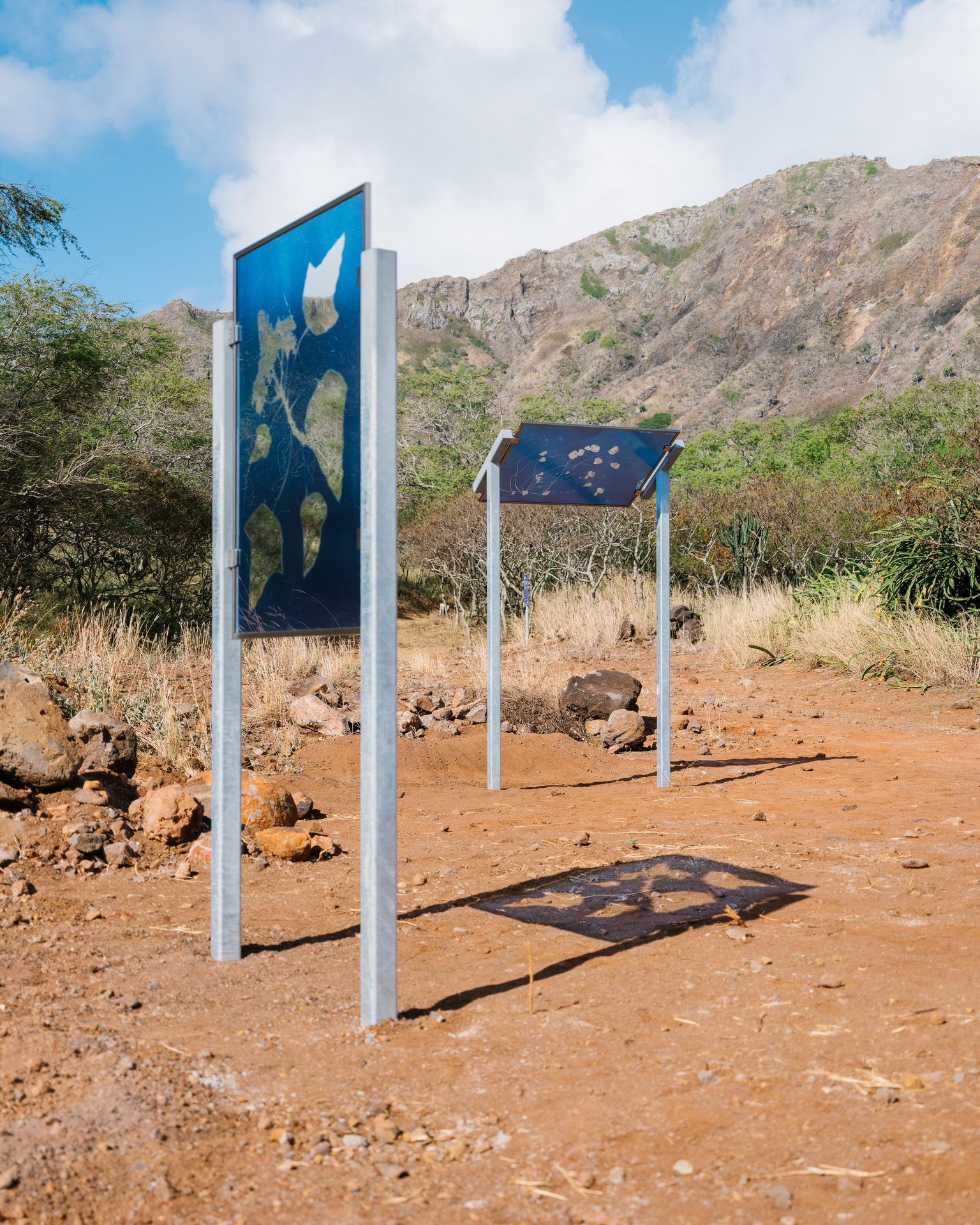
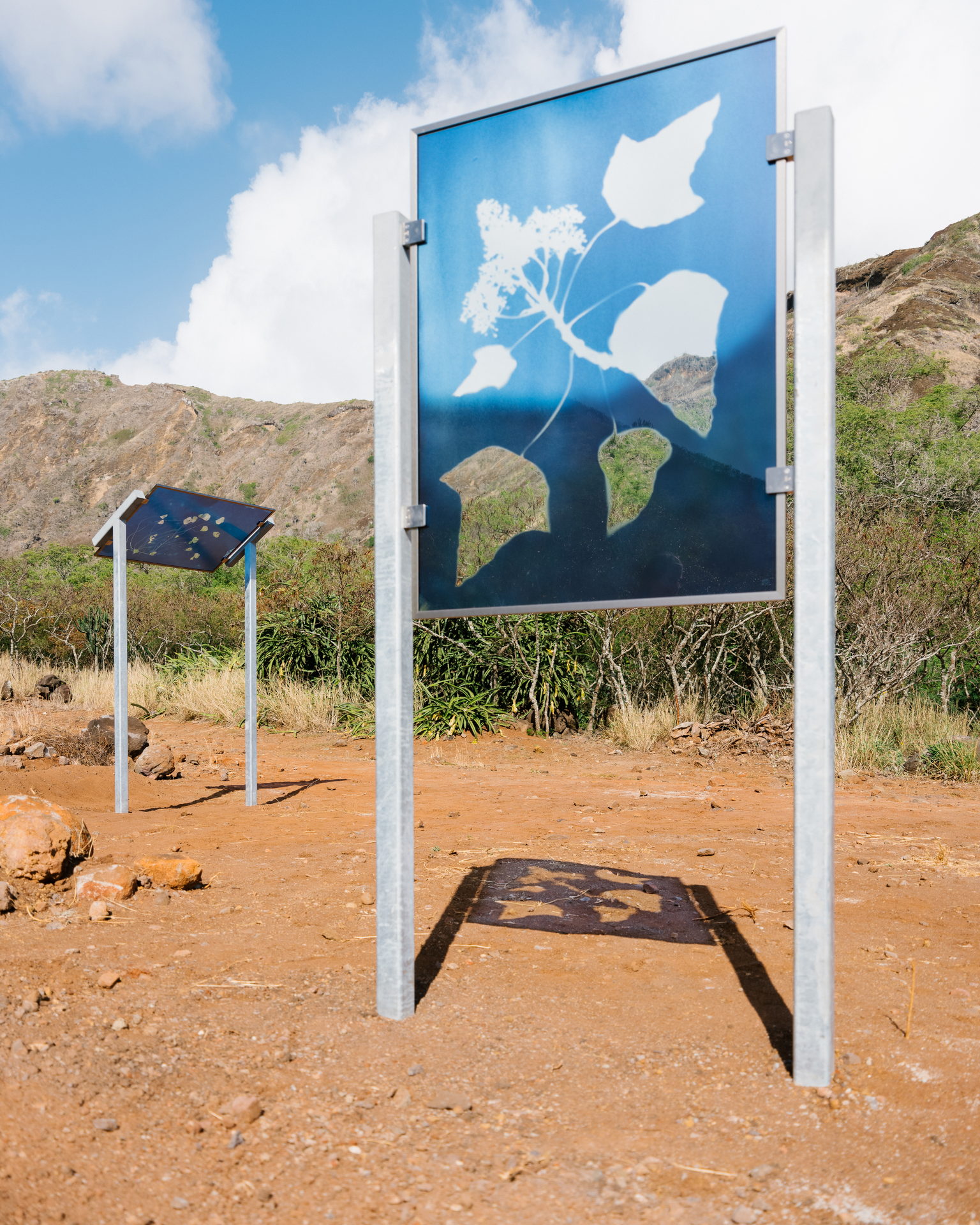
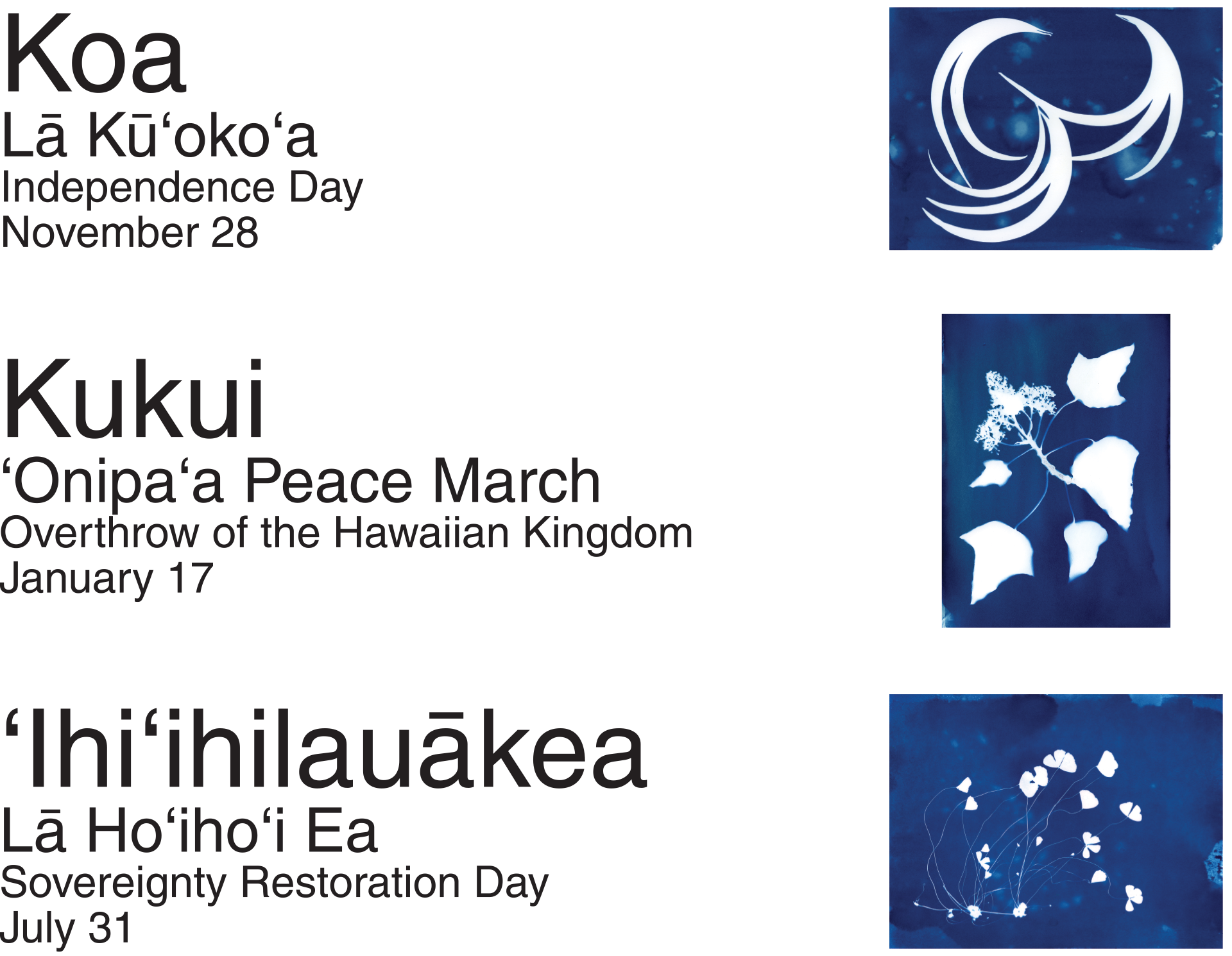
This series of cyanotypes inspired by “Ku‘u Pua i Paoakalani,” a song by Queen Lili‘uokalani referencing Paoakalani, her personal garden, and Uluhaimalama, a kū‘oko‘a (independence) garden planted for the people after the overthrow of the Hawaiian Kingdom. Documenting plants significant to these gardens (koa and kukui) and to Maunalua (‘ihi‘ihilauākea), Ualani reimagines the botanical garden as a garden of resistance. The installation casts shifting blue shadows of the images commemorating three historic days of Hawaiian resistance and celebration.

The Moʻolelo of Kohelepelepe
Ka‘imina‘auao Kahikina
To tell the story of Ualani Davis’s Kuʻu Pua i Kohelepelepe, we must first ground it in Place. Kohelepelepe is located in Maunalua in the ahupuaʻa of Waimānalo. Maunalua is a wahi pana that once held pristine fishponds guarded by the moʻo (freshwater guardian) named Laukupu. Nestled within this landscape and rising prominently above the town of Maunalua is Kohelepelepe or Kohelele (the vaginal labia or the flying vagina). At the base of this crater is a quaint botanical garden, which houses plants from around the world. Ualani’s pieces are situated here in the embrace of native and non-native flora and fauna.

Ualani Davis
Ualani Davis is a Native Hawaiian artist and art educator from Honolulu, Hawaiʻi who often works with photography and mixed-media to investigate facets of identity, ancestry, and culture. As an indigenous artist, she is especially fascinated by photography’s historical influence on the creation and spread of indigenous identity amongst the rest of the world. Ualani uses her artistic practice as a way to visually explore and express her experience as a Native Hawaiian, contemporary artist, teacher, daughter, and woman.
Photos: Lila Lee